Why Integration Platform Selection Is a Bet on the Future
Let’s be honest with each other. Choosing the right data platform in healthcare is the most consequential decision you will make this year. It dictates your speed, your compliance burden, and your ability to innovate for the next decade. This isn’t just about moving bits of data. It’s about building the nervous system for your entire organization. Get it wrong, and you’re trapped in technical debt.
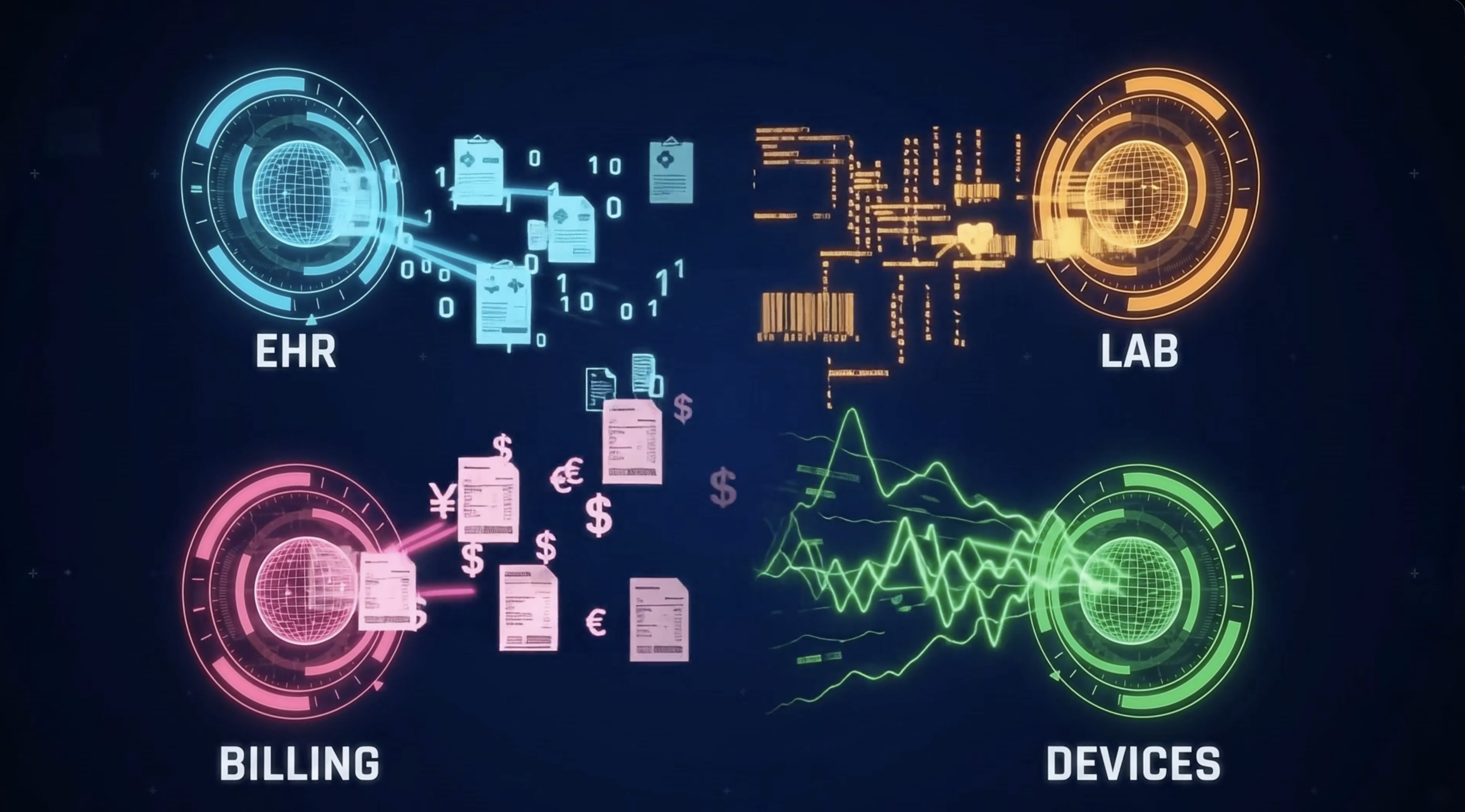
The market today throws a confusing list of acronyms at you: EAI, ESB, ETL, and of course, iPaaS. Knowing which of these healthcare integration platform types is the best fit for your specific needs-whether you’re aggregating patient records for analytics or enabling real-time clinical alerts is critical. If you don’t choose wisely, your systems will soon be drowning in data chaos.
This guide is written for you, the Solution Architect, the CTO, and the Integration Lead. We are going to clearly define the core healthcare integration platform types. We will conduct a direct, pragmatic comparison of iPaaS vs ETL for clinical use cases. By the end, you’ll have a clear strategy for making the right integration platform selection that future-proofs your entire technology stack.
Primary Types of Healthcare Integration Platforms
When we talk about integration platforms, we are really talking about where the data processing happens, and when. Historically, healthcare has relied on a few key architectural patterns, often mixed and matched with custom code.
1. The Workhorse: Extract, Transform, Load (ETL) Tools
What is ETL? ETL is the veteran of the data world. It is designed for massive, scheduled, batch processing.
- Extraction: Pulling bulk data from a source (like an EMR or a financial database).
- Transformation: Cleaning, standardizing, and aggregating the data, often changing structures for reporting.
- Loading: Dumping the processed data into a specific destination, usually a Data Warehouse or a BI tool.
Where does ETL fit in healthcare? ETL is the gold standard for analytics and reporting. You use it to pull all patient discharge data from the last quarter and load it into your data lake for population health analysis. It’s about moving big, cold data from one location to another for strategic insights.
2. The Modern Standard: Integration Platform as a Service (iPaaS)
What is iPaaS? iPaaS is a cloud-native platform specifically designed for connecting applications, services, and data in real-time. It lives in the cloud and offers managed services.
Where does iPaaS fit in healthcare? This is the future of clinical and operational data flow. You use iPaaS when a new patient is admitted (real-time ADT message), when a wearable sends a critical vital sign alert, or when a physician needs instant, aggregated data from multiple systems. It’s built for velocity and volume across external and internal systems.
3. The Old Guard: Enterprise Service Bus (ESB)
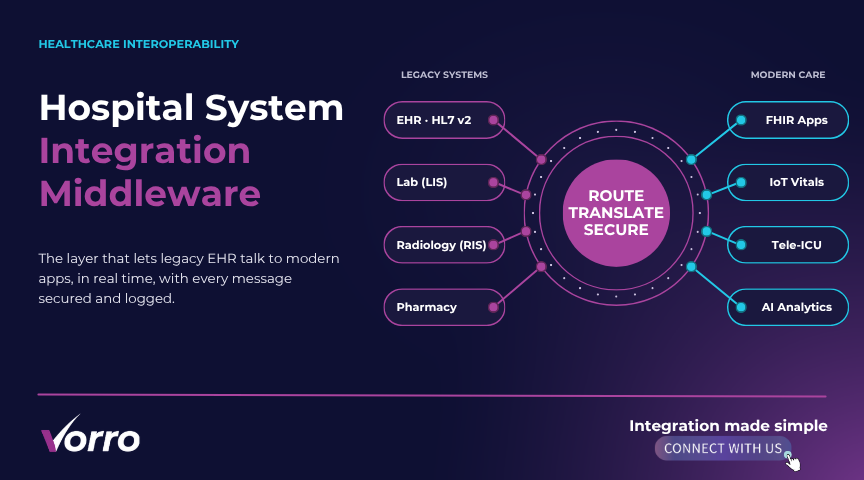
What is ESB? ESB is a centralized software layer that provides routing, transformation, and protocol mediation between different applications. It was the architectural hero of the last decade.
Where does ESB fit in healthcare? Many large hospital systems still run on ESB architectures. They handle complex, synchronous request-reply scenarios. The main issue today? They are heavy, typically deployed on-premise, and lack the inherent scalability and cost model of a cloud-native iPaaS. Many organizations are now facing the complex integration platform selection of migrating off their aging ESB.
iPaaS vs ETL: A Direct Comparison for Clinical Use Cases
For Solution Architects, the choice often boils down to a fundamental question: iPaaS vs ETL. The distinction is less about what they do and more about when and why they do it.
The Key Difference: Real-Time vs. Batch
| Feature | iPaaS (Integration Platform as a Service) | ETL (Extract, Transform, Load) |
| Primary Goal | Real-time, continuous business process automation and data flow. | Batch processing and data warehousing for large-scale reporting. |
| Data Type Focus | Event-driven, transactional, and streaming data (e.g., patient alerts). | Bulk, historical, or time-delayed data (e.g., quarterly reports). |
| Processing Style | Low-latency, fast processing between applications (App-to-App). | High-latency, heavy processing into a single repository (DB-to-DB). |
| Cloud-Native? | Yes, inherently cloud-based, offering elasticity and managed services. | Often requires heavy, on-premise infrastructure, though cloud versions exist. |
| Best For | Clinical decision support, patient portal sync, remote monitoring. | Population health analytics, billing aggregation, compliance reporting. |
When to Choose iPaaS (The Modern Flow)
You choose iPaaS when the integration platform selection must support immediate action. A good healthcare integration platform types should be the choice if you need:
- High-Velocity Data: Sending an ADT message from the EMR to the billing system the moment a patient is registered.
- External Connectivity: Easily and securely integrating with third-party cloud services, payer APIs, or pharma partners.
- Scalability: You have unpredictable data spikes and need the platform to scale its computing power automatically without manual intervention.
When to Choose ETL (The Strategic Analysis)
You choose ETL when the need is strategic, not immediate. ETL is still essential for long-term data strategy, especially for analytics.
- Historical Aggregation: You need to cleanse, standardize, and load all patient encounter data from the last five years into a centralized warehouse.
- Complex Data Cleansing: The transformation step is so complex that it requires powerful dedicated processing before the data is stored.
- Data Lake Filling: Your primary goal is to stock a massive analytical repository for business intelligence and long-term modeling.
The mistake many organizations make is trying to force an ETL tool to do real-time messaging, leading to high latency and failed connections. They are optimized for completely different jobs.
Choosing the Right Integration Platform for Your Needs
For Solution Architects and CTOs, the choice between these healthcare integration platform types isn’t just technical; it’s a strategic infrastructure decision. The current trend clearly favors iPaaS for its agility, but the decision must be tailored to your organization’s needs.
How to Evaluate Your Current and Future Needs
Before making an integration platform selection, you need a clear-eyed view of your existing pain points and future goals.
- Audit Your Data Streams: How much of your data is transactional (real-time alerts, updates)? How much is bulk/historical? If transactional volume is high and growing, iPaaS becomes mandatory.
- Check Your External Footprint: Do you plan to integrate with dozens of cloud vendors, labs, or specialty apps outside your network? The pre-built connector ecosystem of an iPaaS drastically reduces development time here.
- Calculate Total Cost of Ownership (TCO): TCO for an ESB or on-prem ETL includes hardware, hosting, patching, and the dedicated team needed to manage it. iPaaS TCO is transparent, subscription-based, and includes management and scalability by the vendor. This is a massive shift in budgeting.
I often advise clients that if their primary goal is digital transformation and achieving true interoperability, the strategic bet must be placed on an iPaaS.
Real-World Example: A Hybrid Architecture Success Story
A large integrated delivery network (IDN) was upgrading their systems. They decided on a modern, hybrid architecture:
- iPaaS Layer: Used for all real-time clinical workflows. They deployed an iPaaS to handle HL7 ADT messages, synchronize patient data across their new cloud-based patient portal, and manage alerts from their remote monitoring program. Result: New clinic onboarding time was reduced by 60%.
- ETL Layer: Retained and optimized for analytics. They continued to use their existing ETL tools to extract and aggregate historical financial, billing, and patient outcome data into their central data warehouse for annual regulatory reporting and population health studies. Result: Compliance reporting remained stable and efficient.
This hybrid approach acknowledges the strengths of both healthcare integration platform types. It leverages the speed and agility of iPaaS for operations while relying on the power of ETL for strategic intelligence.
Why iPaaS is Now the Default Choice for Interoperability
If your ultimate goal is true, pervasive interoperability, then the debate between iPaaS vs ETL is essentially settled. iPaaS wins because it was purpose-built for the demands of the modern, connected world.
The Critical Benefits of an iPaaS for Technical Leaders
- Standardized Security and Compliance: iPaaS solutions are designed to handle PHI. They manage encryption, authentication, and comprehensive logging automatically, providing the mandatory audit trails needed for HIPAA and GDPR. This capability is inherited, not built piece-by-piece.
- Developer Experience (DX) Matters: iPaaS tools feature low-code, visual environments. This accelerates the work of your integration team, allowing them to focus on complex data logic rather than writing basic connectivity code.
- Native FHIR Mastery: The platform is natively equipped to handle FHIR translation, resource validation, and governance. It provides a managed ramp for your organization to move from legacy HL7 to the modern FHIR standard. This is the single most important technical capability for future-proofing your integration strategy.
For your integration platform selection, choosing an iPaaS is choosing a system that scales with your strategic goals, not against them.
Conclusion: Making the Confident Decision
Selecting the right data platform is a major capital decision that impacts everything you build. As Solution Architects, CTOs, and Integration Leads, your responsibility is to ensure that your infrastructure is ready for the future of digital medicine. Sticking with older tools because they are familiar is a form of expensive procrastination.
The clear divergence of healthcare integration platform types means you must match the tool to the job. ETL remains the essential tool for strategic analysis and data warehousing. However, for all real-time, transactional, and external connectivity needs the very engine of digital health innovation-the iPaaS platform is the undisputed architecture of choice.
Key Takeaways for Your Selection Strategy
- Define Your Data Velocity: Use iPaaS for low-latency, real-time data flow; use ETL for high-latency, batch-heavy analytical needs.
- TCO Favors iPaaS: The cloud-native model of iPaaS shifts infrastructure management and scalability costs to the vendor, offering predictable, lower TCO in the long run.
- Future-Proofing is FHIR: The native FHIR capabilities and connector ecosystems of an iPaaS are essential for achieving true, modern interoperability.
- Integration Platform Selection is Strategic: Don’t choose technology based on what you built last year. Choose the platform that enables your patient engagement and AI strategies for the next ten years.
At Vorro, we specialize in providing the purpose-built iPaaS solutions that are engineered specifically for the complexities of healthcare data. We help technical leaders navigate the iPaaS vs ETL decision with confidence.
Ready to stop struggling with legacy architectures and build a truly modern data fabric? Contact Vorro today to schedule a focused consultation on your integration platform selection strategy.

Akshita is a Senior Content Writer and Marketer with over a decade of experience crafting narratives that convert, rank, and build lasting brand authority. She has worked across SaaS, FinTech, HealthTech, and Education spaces, delivering everything from HIPAA-compliant medical content to multilingual campaigns for the International Labour Organization, United Nations. Her content has reached audiences across the globe, and she has worked for Fortune 500 brands, global agencies, and startups alike. Fluent in English, Spanish, and German, Akshita brings a rare cross-cultural edge to brand communication. A literature graduate from Delhi University, she balances strategic thinking with a storyteller's instinct, but when she isn’t architecting content roadmaps, she channels her creativity into poetry and painting or dedicates her time to caring for stray animals - pursuits she credits for making her a more empathetic and perceptive communicator.