Do you feel like the world of IT is becoming less human?
Recently, Forbes published an article expressing concern about data integration trends. The article stated that it is more than a technology issue, stating that “the human factor is crucial.”
To the dismay of many developers, there is an inordinate amount of competition when it comes to integration tools. While Vorro has developed a platform that integrates nearly anything, our approach to using these tools is another thing altogether. The “human factor” matters. The Forbes article discussed creating “one version of the truth” by standardizing quality data that is the same across all platforms. You cannot achieve that solely through automation and transformation. Real people, not AI, must analyze the systems and associated capabilities.
Unfortunately, these people don’t often configure the same system the exact same way, even when working for a common organization. A team of real people initially configured the system, often differently than before, and people must reconcile that configuration throughout the enterprise.
Many people overlook the critical ‘one version of truth’ in the beginning stages of a project. This inevitably leads to a project never reaching completion, as the minutiae related to standardizing data integration can drag the entire process to a halt before even going live. Developers often have difficulty agreeing with one another during these projects because their priorities lie in different areas. You need strong, human project managers to bring the team together and organize the chaos before it occurs. With a capable leader at the head of the team, every member has the same goal in mind when it comes to data requirements and the overall flow of the project.
The second topic the article touches on is “applying the technology.” The author leads the reader to believe the tools are fairly similar “with only minor technical differences between them.” However, if you know anything about data integration, you know this is not true in the slightest.
Additionally, this negates the importance of human intellect when an organization chooses what technology to use and how to use it. The “how” is of utmost importance based on your organization’s approach to integration. If you view integration as a one-off event, you will either see the vision for data strategy as important at best or nonexistent at worst. With his approach, many developers are required, and little operational efficiency will be gained, leading to later integrations becoming bother a time and financial vacuum. Many organizations never integrate correctly the first time but have plenty of resources to do it again.
If you’re reading this article, it’s unlikely you are part of one of those organizations.
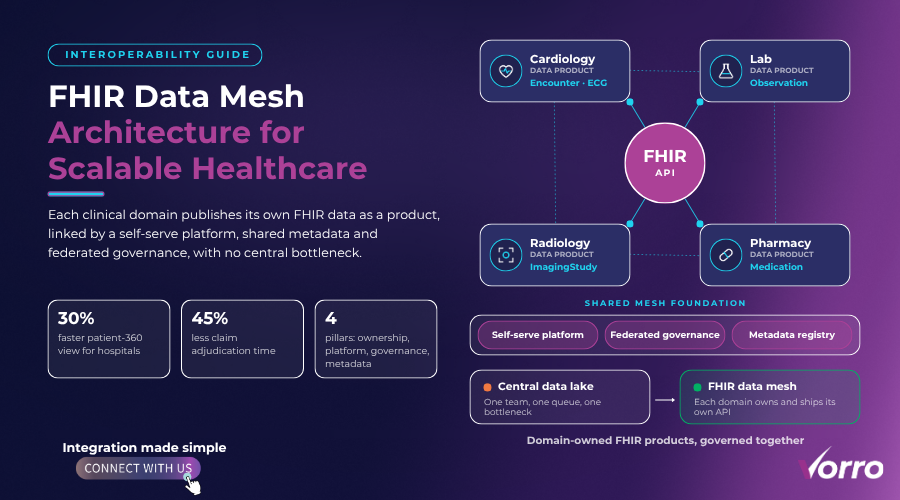
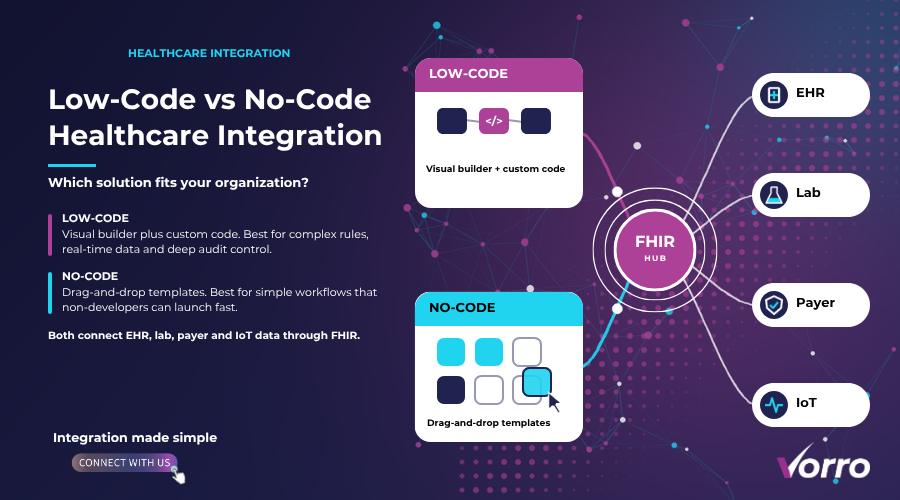
The “how” should define the “what.” The approach should be a consolidated data strategy across the organization. Frequently, a common data set can be exchanged across multiple partners. Despite the fact that the data being shared is exactly the same, each partner will have their own project for this data. The approach should be such that the processes and data can simply be duplicated – cut and paste – and then tested. The technology should fit this approach of configuration, not programming or coding.
Stop struggling with time and resources-wasting technology.
Find a partner who is willing to walk with you every step of the way in order to define a data strategy that can bring clarity to your business needs. Make data-driven decisions to remove the guesswork.
It all starts with defining your data for a specific project, and later, your organization as a whole. Once your organization has a solid data integration strategy, projects that use AI and machine learning, in addition to human intellect, become far more efficient.
Call us today for a complimentary Professional Consulting Service and Integrate Now – before it’s too late.