You experience the pressure each day. More patients, more data, thinner margins, and lower tolerance for errors. Smart healthcare leaders such as yourself understand that the current state is unsustainable. EMR system integration is now more than an IT project. It is a lever in healthcare workflow improvement and reduction in errors.
If systems don’t communicate with each other, it’s the clinicians who suffer. Your clinicians have to search for information through different portals, manually re-enter data, and find ways to work around the system. This makes it difficult to end up with good patient safety and financial performance. There’s hope for better patient safety with integrated EMR systems.
Workflow Challenges
Before you improve anything, you have to have a clear view of the current friction. Most organizations suffer due to similar patterns.
Fragmented systems and manual work
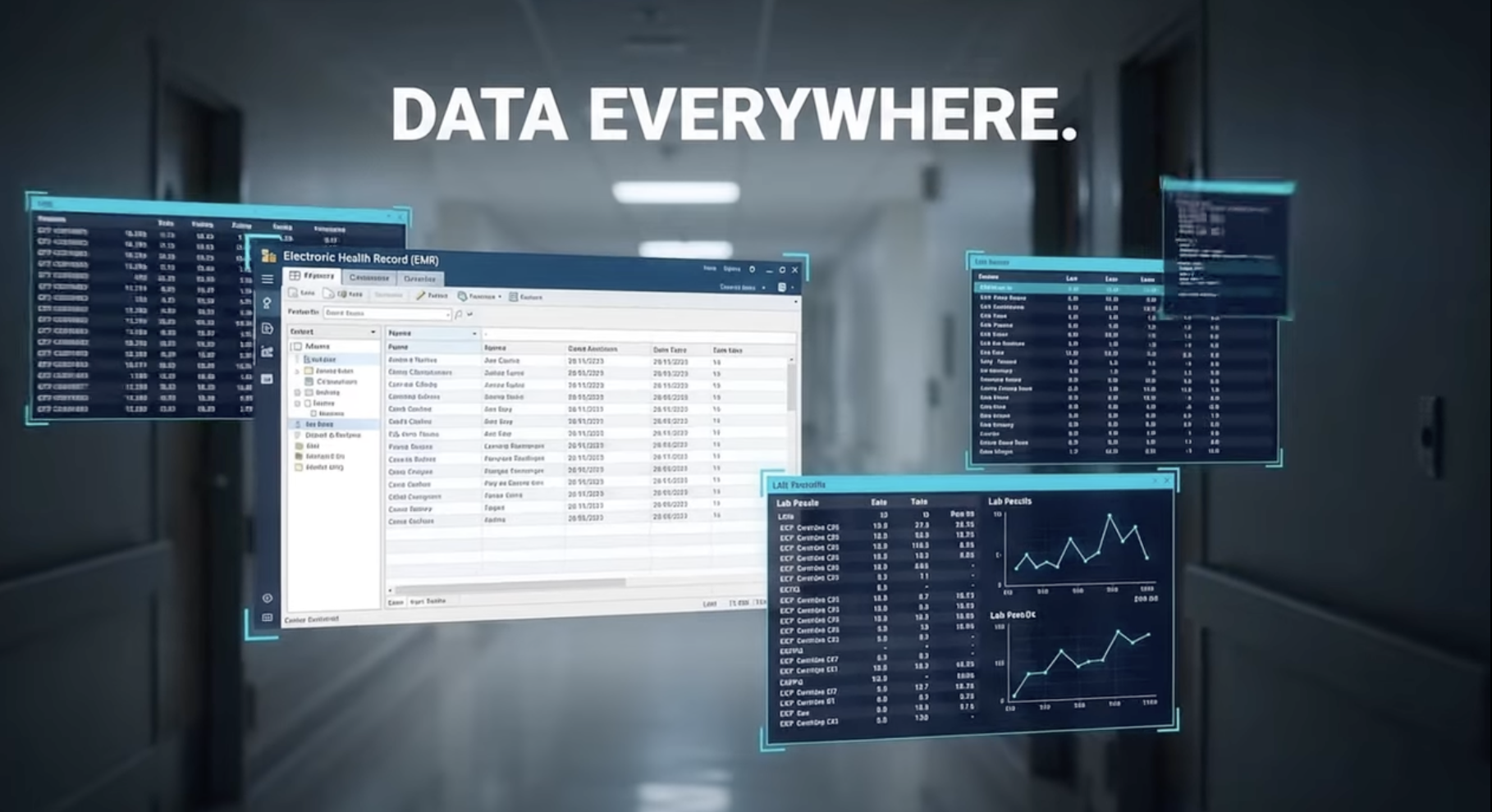
Clinical teams have to toggle between EMRs, lab portals, imaging systems, pharmacy platforms, and revenue cycle tools. Each system represents a partial truth. Data transfers through exports, screenshots, or manual entry. Each of these steps introduces delays and introduces risk.
In fact, one survey estimated that hospital nurses spend roughly 25 to 35 percent of their time on documentation and EHR-related activities. That is time away from patients and collaboration. You feel that drag in every shift and every staffing plan.
Inconsistent information across care settings
Without effective EMR interoperability, each site or service line maintains a version of the patient story. Allergies, medication changes, care plans, and diagnostic results most often show up late or not at all. Repeat tests, avoidable admissions, and poor handoffs result.
Adverse drug events involve nearly 1 in 30 hospital admissions, according to research, and many link back to breakdowns in medication information across systems and settings. Clinical workflow optimization is without meaning when the data itself is misaligned.
Workarounds as the shadow workflow
When the systems are slowing things down, the workarounds are invented. Note-taking, personal spreadsheets, texting images of the work, and side conversations are all attempts to compensate. These are good, but they veil risk and hinder process improvement.
Leadership only has part of the truth in the reports from the EMR systems, and you are left wondering about the queues, the handoff, and the time spent resolving discrepancies between the reports. Your stack looks complete, but the actual process is something else.
Role of EMR Integration
Well, integration to EMRs gives you a way to reconnect these broken pieces. When well done, this aligns information flow with clinical decision flow-the foundation of reliable care, which is very core to reduction in healthcare errors.
Creating a single clinical source of truth
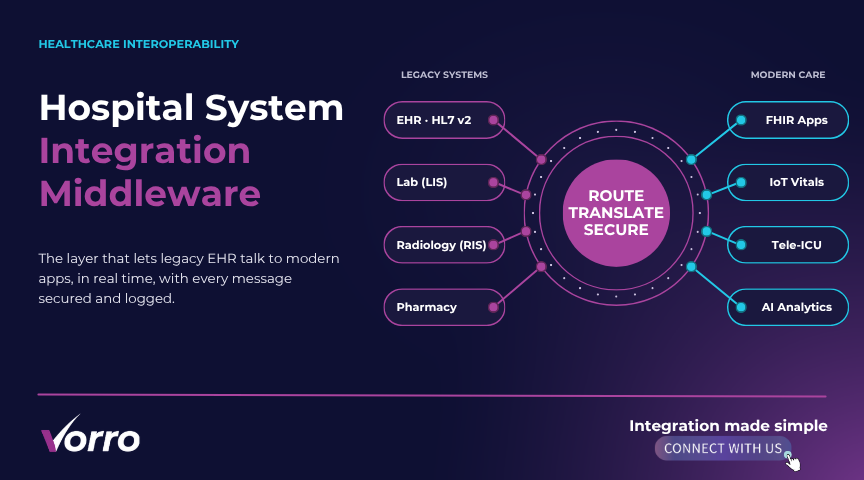
Effective integration of EMRs aggregates data from labs, imaging, pharmacy, devices, and partner EMRs into one clear, consistent record. Clinicians view the same medication list, problem list, and recent results. They do not hunt for missing context or question which screen to trust.
Integrated environments support faster, safer decisions. A study in one large academic medical center found that EHR-based clinical decision support helped reduce serious medication errors by about 55 percent after implementation of computerized provider order entry with integrated checks. The decision support only works when the underlying data flows in on time and in the right format.
Aligning data flow with clinical workflow
The interoperability of EMR should occur along the care pathway rather than the system boundary. To implement the integration, you design it in the following way:
- The orders in the EMR get automatically routed to labs, imaging, or ancillary systems once the appropriate metadata has been added.
- Results will be placed back into their correct positioning within the EMR, awaiting follow-up.
- Any changes made in the first system, including a change in medication, are replicated in the systems the data is shared with.
When you integrate integration with the optimization of clinical workflow, context switching diminishes, cycle times are shortened, and the potential for human error with handoffs decreases. Providers begin to experience the EMR as an ally instead of an enemy.
Error Reduction
Every health system sets patient safety goals. The integration of EMR helps you in translating the goals into daily practice by focusing on critical areas (hot spots) of errors.
Medication safety and order accuracy
Medication processes sit at the center of healthcare error reduction. Errors arise when systems hold different medication lists or when clinicians reconcile by memory. Integrated EMR workflows reduce these gaps.
Closed-loop medication management, enabled by integrated order entry, pharmacy systems, and barcode administration, has reduced medication administration errors up to 41 percent in some hospital units. In many cases, the pieces of technology already exist. What’s different is integrated data flow and reliable workflow design.
Reducing duplicate tests and missed results
If your EMR does not properly integrate outside test results, the result is that physicians will either repeat testing or overlook important information. A missed result can be a risk to patient safety and a driver of increased expenditures.
A study at multiple hospitals showed that repeated laboratory testing occurred for 13 percent of certain common tests, with direct and indirect cost implications, which can be reduced by integration of external labs as well as other electronic medical records, making clinical decision-making safe. Notification regarding external integrated data is also effective regarding follow-up of abnormal findings.
Supporting diagnostic decisions with complete data
Diagnostic errors tend not to be the result of a single factor but may have multiple causes. The absence of previous images, missing histories, or an outdated problems list will impact clinical reasoning. The integration of EMR interoperability allows for the aggregation of a more complete clinical picture for the healthcare provider at the point of care.
The National Academies specifically cited diagnosis error as a pressing patient safety problem, suggesting that more effective incorporation of information is essential to improving diagnosis safety. You can combine your approach to integrating electronic medical records with technologies for patient safety, like context-aware alerts, timelines, and more, to better help your medical staff.
Staff Productivity
EMR integrations are not just about technology and quality. EMRs are about workforce resilience strategies. With the way you design, you are improving the focus on the “top of license work” rather than “system gymnastics.”
Less rework and fewer clicks
This helps to minimize the repetition of entry work. This occurs when a referral message received from the partner EMR arrives in a structured form. The fact that a referral has been received triggers the team to confirm the demographics, medications, and histories without retyping them.
A single-time motion study in the primary care sector determined that the 5.9 hours of an 11.4-hour working day was spent on EHRs and desk-related tasks by the physician. Well-planned integration and optimization of clinical processes can eliminate redundant activity and allow the redirection of time spent on patient care, planning, and communication.
More reliable handoffs and team coordination
Integrated EMR workflows support team-based care. Orders, tasks, and messages route to the right roles at the right time. Discharge summaries, referrals, and follow-up instructions flow to downstream providers with structured data instead of fax images.
It reduces clarification calls, missed handoffs, and after-hours clean-up work. Staff is less surprised at the time of shift change. The result is: higher productivity and better retention because people want to work in environments that respect their time and judgment.
Best Practices
You need a deliberate strategy to get real value from EMR integration. Technology alone does not fix workflow issues. You start with your clinical goals, then design integration to serve those outcomes.
1. Anchor integration to clear clinical objectives
Define explicit clinical workflow optimization and healthcare error reduction targets. For example:
- Decrease the number of medication reconciliation discrepancies by a certain percentage within one year.
- Reduce duplicate lab testing in key service lines.
- Reduce average time from result availability to clinician review.
Translate these goals into concrete integration requirements: If your priority is medication safety, focus on the pharmacy interfaces first, followed by allergy data integration, closed loop barcode workflows.
2. Involve clinicians early and often
Technical teams know how to handle data structures. Clinicians are the ones who understand the work. You need both around the table.
Engage physicians, nurses, pharmacists, and care coordinators in workflow design sessions. Map the actual work – including workarounds – not the intended process. Employ simple swimlane diagrams along with scenario walkthroughs to test proposed data flows against real cases.
Listen for: ‘where the staff say they recheck, re-enter, or rely on memory. That is when more smart interventions of interoperability and patient safety technology in EMR can be made.
3. Standardize data where it matters most
Integration fails when each system uses different codes, units, or naming conventions. You reduce risk through data standardization in critical domains:
- Utilize standard vocabularies such as SNOMED CT, LOINC, and RxNorm for key data types.
- Standardization of order sets and naming of results by facility.
- Convergence on core data elements for referrals, transitions, and consults.
That level of discipline pays dividends when you share data across partners and platforms, and further, it strengthens your analytics and reporting because you no longer have to reconcile multiple local variants of the same concept.
4. Design for exception handling, not only the happy path
All integrations will eventually break at some point. Interfaces go down, messages are no longer validated, or new data types emerge. If the occurrence of these situations is not planned for, the team resorts to dangerous workarounds.
Create error message queues and notification schemes. Assign responsibility for the review and resolution of these issues. Front-end users must be provided with status information regarding whether incoming data is current and complete. There must be system integrity in optimizing clinical workflows when volumes are high.
5. Measure impact and refine continuously
EMR system integration projects are never done. You have to have feedback loops constantly for data, users, and technology.
Measure the following metrics:
- Order to Result Turnaround Times.
- Medication reconciliation discrepancies.
- Duplicate test rates.
- Time in EHR per visit for key roles.
- Integrated workflows and legacy workarounds.
Link the quantitative information to the qualitative input from the employees and the patients. Use rapid improvement cycles to improve the alerts, the screens, and the flow of the information. A good EMR interoperability can be achieved over a period of learning.
Conclusion
Integration of EMR: Integration of the electronic medical record is a nexus of patient safety, staff satisfaction, and financial success. By considering it a strategic capability rather than an information technology project, you are able to convert disjointed information to a more sound system.
Through healthcare error reduction, harmonizing the interoperability of EMR systems with actual work patterns, and patient safety technology investment, you are able to strengthen the connection between information and action. This increases time and confidence for healthcare providers. It provides safer and better-coordinated care for your patients. Your organization gets a solid support platform for value-based management.
If you are looking for integration solutions between EMR systems and clinical reality for faster results, Vorro can assist you in creating the way forward. Discuss integration solutions for simplifying data, enhancing processes, and enhancing patient safety with Vorro.

Akshita is a Senior Content Writer and Marketer with over a decade of experience crafting narratives that convert, rank, and build lasting brand authority. She has worked across SaaS, FinTech, HealthTech, and Education spaces, delivering everything from HIPAA-compliant medical content to multilingual campaigns for the International Labour Organization, United Nations. Her content has reached audiences across the globe, and she has worked for Fortune 500 brands, global agencies, and startups alike. Fluent in English, Spanish, and German, Akshita brings a rare cross-cultural edge to brand communication. A literature graduate from Delhi University, she balances strategic thinking with a storyteller's instinct, but when she isn’t architecting content roadmaps, she channels her creativity into poetry and painting or dedicates her time to caring for stray animals - pursuits she credits for making her a more empathetic and perceptive communicator.