Operational costs in healthcare continue to rise each year. You feel pressure from payers, regulators, and patients at the same time. Labor shortages strain your teams. Legacy systems slow your workflows. Manual workarounds fill the gaps, and you absorb the cost in overtime, denials, and delays.
You do not control reimbursement trends, but you control how your data works for you. When data moves cleanly across your ecosystem, you reduce friction in every transaction. Healthcare cost-reduction data strategies start with one core capability: reliable data integration.
What Is Healthcare Data Integration
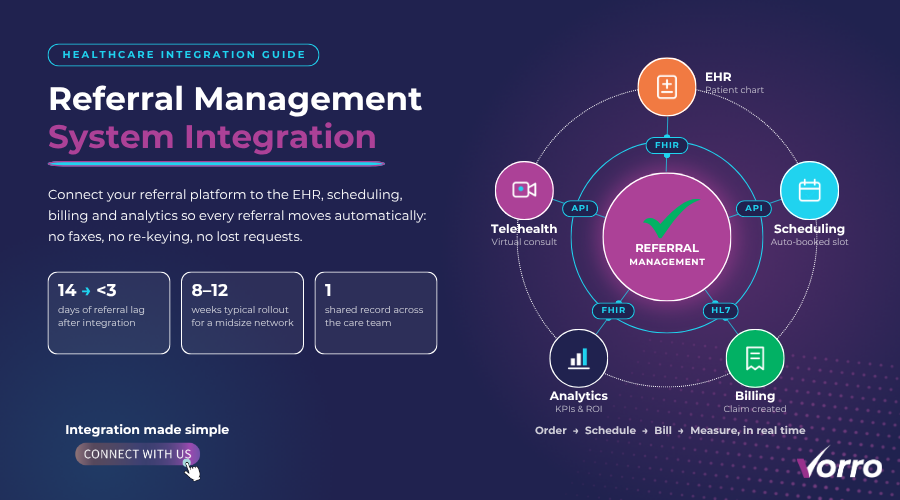
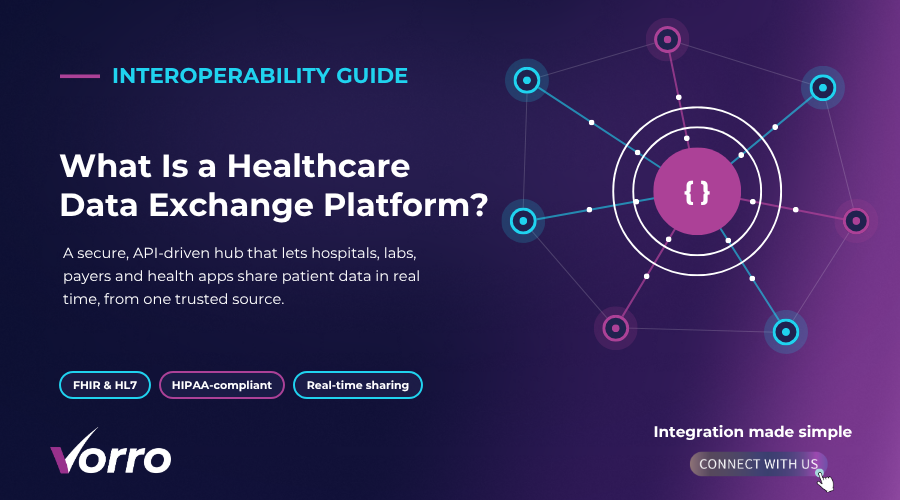
Healthcare data integration connects clinical, financial, and operational systems to ensure data is shared consistently and securely. Instead of isolated applications, you have a unified data flow that supports your business processes.
For most organizations, this touches systems such as:
- EHRs and practice management platforms
- Revenue cycle and billing systems
- Claims and eligibility clearinghouses
- Laboratory, imaging, and pharmacy systems
- CRM, call center, and patient engagement tools
- Data warehouses, analytics, and reporting tools
True integration aligns formats, standards, and workflows. It also controls access, auditing, and monitoring. You reduce healthcare data management costs by moving away from point-to-point custom interfaces and toward a coherent integration layer with repeatable patterns.
With that foundation, you support healthcare operational cost reduction by:
- Shortening cycle times for key processes
- Reducing rework and exceptions
- Improving data quality at the source
- Enabling reliable analytics and automation
Key Cost Drivers in Fragmented Healthcare Systems
Fragmented systems create hidden and visible costs across your organization. When each department runs its own tools and workflows, you pay in labor, delays, and missed revenue. Healthcare cost-reduction data strategies often begin by identifying these drivers.
Common cost drivers in fragmented environments include:
- Redundant data entry. Staff enter the same data into multiple systems. Each touchpoint introduces risk of error and consumes time that could focus on patients.
- Billing and coding errors. Inconsistent or incomplete data between clinical and financial systems leads to denials, underpayments, and write-offs.
- Manual reconciliation. Finance and operations teams export spreadsheets to reconcile charges, payments, and utilization, which drives overtime and delays.
- Limited visibility into utilization. Without integrated data, you do not see true capacity, throughput, or bottlenecks, so you overstaff in some areas and understaff in others.
- Vendor sprawl. Multiple integration tools and custom scripts increase maintenance and support costs and slow any change.
- Compliance risk. Disconnected data flows make it harder to enforce consistent access rules, increasing the risk of incidents and remediation costs.
All of these tie back to healthcare data management costs. You spend budget to maintain fragmentation. Integration flips that equation, turning data movement into an asset for healthcare cost-optimization technology efforts.
Role of Data Integration in Cost Optimization
Data integration in healthcare supports cost-reduction initiatives across multiple levels. It improves day-to-day operations and also strengthens your strategic planning.
You gain value in three main ways.
- Standardized data for reliable decisions
When your systems share a single source of truth for core entities, such as patients, providers, locations, and services, you reduce reconciliation work. Analytics use consistent definitions. Operational reports line up with financial reports. You spend less time arguing about numbers and more time acting on them.
- Automated workflows across systems
With integrated data, you can trigger events in one system from actions in another. For example:
- A completed visit in the EHR triggers charge capture and claims generation
- A new referral triggers patient outreach from a CRM tool
- A discharge event updates care management platforms in near real time
Each automation replaces manual steps and improves operational efficiency without disrupting workflows.
- Analytics that connect cost to action
Healthcare analytics cost savings depend on data you can trust. Integration aligns clinical, operational, and financial data. You can tie staff hours to service types, visit volumes to revenue, and throughput to patient segments. This supports targeted reductions in healthcare operational costs rather than broad cuts that harm quality.
Reducing Administrative Overhead Through Integrated Systems
When teams act as human interfaces between systems, administrative overhead tends to grow. Integration minimizes this burden by enabling software to handle repetitive work more effectively and improving first-time accuracy.
Key areas of impact include:
Registration and scheduling
Integrated registration, eligibility, and scheduling reduces back-and-forth with patients and payers. Staff do not re-enter any demographic data, coverage detail, or visit information when data flows into downstream systems automatically. You cut hold times, callbacks, and paper forms.
Revenue cycle operations
When clinical documentation, coding, and billing align through integration, your teams touch fewer accounts. Clean claims increase. Denial teams focus on exceptions instead of mass rework. You minimize data management costs in the healthcare sector.
Reporting and compliance
If you don’t integrate, you can’t generate reports using extracts, combined data, and the logic of spreadsheets. You can then use the central data platform that integrated systems deliver to businesses. You can generate reports automatically and respond to audits without scrambling.
The result is clear. Healthcare operational costs decrease as you reassign staff from repetitive tasks to higher-value work, such as patient support, process improvement, and clinical coordination.
Eliminating Data Duplication and Manual Processes
Data duplication sits at the center of many healthcare cost issues. The same patient, provider, or encounter appears in different formats across systems. Manual processes try to keep them aligned, but errors creep in, and costs follow.
Effective data integration in healthcare approaches this with structure.
Master data management support
The integration layer can support master data management processes. The primary systems are defined for specific data domains and are ensured to be consistent in their keys and attributes. This reduces mismatches and blind spots in analytics.
Standard message formats and APIs
You reduce custom transformations by using consistent formats across your ecosystem. Common standards can reduce reliance on one-time mappings and lower the costs of maintaining integrations. When patterns can be reused, project time and health data management costs can be reduced.
Workflow-centric integration
Instead of dealing in whole blocks of information, you’re focusing on specific operational processes. You automate steps within those processes that employees would have done themselves by phone, e-mail, or spreadsheet. For instance:
- Automatic routing of lab results to provider inboxes
- Automatic updates of the status of authorizations in scheduling systems
- Automatic posting of payments for related encounters. Each manual task that is eliminated helps lower healthcare costs through data. Your teams deal with exceptions, not routine processes.
Improving Resource Utilization With Unified Data
For instance, hospital efficiency, among other factors, depends on how well demand is aligned with supply. Integration helps one get a comprehensive picture.
With unified data, you:
- View Bed Status, Procedure Schedules, and Staffing Levels Together
- Understand referral patterns and service line volumes
- Tracking no-show risk and late cancellations by clinics
- Monitor usage of supplies related to procedures and providers
These insights are directly applicable to data-driven strategies for reducing healthcare costs. You can:
- Staffing structures based on established patterns rather than estimates.
- Consolidate low-volume sessions or time blocks to reduce idle time
- Refine purchasing plans based on actual utilization trends
- Align care pathways to minimize handoffs and waiting time
When your data represents reality across clinical and operations domains, cost savings from healthcare analytics endure. You are no longer addressing isolated issues; instead, you are managing an integrated system.
Impact of Real-Time Data Access on Decision-Making
Batch reports help with long-range planning. Real-time or near-real-time data helps your frontline leaders act in the moment. Integration provides timely information to those who need it.
With integrated, current data, you:
- Identify developing bottlenecks in emergency, surgery, or imaging situations before they become critical
- Redeploy staff quickly when no-show rates surge in a clinic session
- Tackle problems with claims before they develop into chronic cash flow problems
- Respond to equipment issues or downtime with accurate impact estimation
Real-time integration can also improve patient communication. Proactive communication with patients based on changes in their immediate status, such as when results are in or authorizations are complete, can help reduce phone calls and reschedules. This helps reduce healthcare expenses through data-driven workflows across the journey.
The outcome is faster decisions with lower risk. Healthcare cost-optimization technology has a stronger business case when leaders see immediate operational benefits, not just long-term projections.
Case Examples of Cost Savings Through Data Integration
Every organization has unique systems and constraints, but common patterns show how integration supports data-driven healthcare cost-reduction programs.
Example 1: Streamlined eligibility and authorizations
A health system connects registration, eligibility services, and scheduling. Eligibility checks trigger automatically at booking and again before the visit. Staff are provided with status indicators within their own scheduling screens. Denials due to coverage issues decline, and the number of visits that must be rescheduled or written off also decreases. Administrative support is needed for more appointments, and overtime is minimized.
Example 2: Integrated discharge and follow-up
and care management system. When a discharge order is entered, the system automatically schedules and assigns appointments and care teams. The number of patients with missed follow-ups is reduced. Readmission risk management improves. Financially, avoidable utilization drops, and staff spend less time calling patients after discharge.
Example 3: Unified financial and clinical analytics
An integrated data platform links service line data, cost data, and clinical metrics. Leaders identify which procedures consume the most resources, where length-of-stay trends diverge, and how site of care affects margin. They adjust protocols, supply contracts, and scheduling models based on evidence. This produces healthcare analytics cost savings that align with quality goals.
Each case reflects the same pattern. Integration reduces friction, which reduces operational cost and lifts the ROI of healthcare data integration projects across the portfolio.
Challenges in Implementing Cost-Effective Data Integration
The advantages of health care data integration are well defined; likewise, the process presents challenges that can be successfully navigated to develop a pragmatic plan to reduce health care operational costs.
Common challenges include:
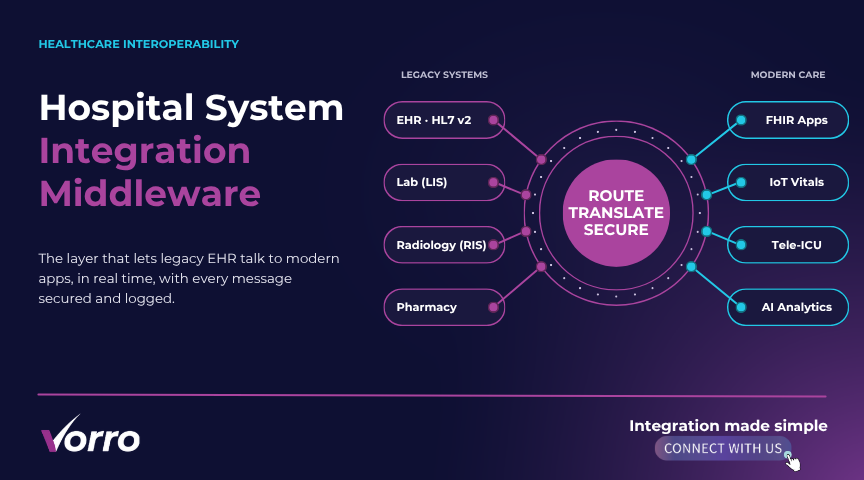
- Legacy systems. Some systems might not support new APIs or standards. Moreover, it is essential to have a flexible integration technology that can connect different formats without excessive code modification.
- Vendor alignment. Each vendor has its own roadmap and interface strategy. Coordinating timelines and responsibilities requires strong governance.
- Data quality issues. Inconsistencies are revealed through integration. Data governance is needed to ensure ownership and rules.
- Change management. When manual operations are removed or moved from the process flow, the workflow of the employees involved will change. This will require communication efforts if cost savings are desired.
- Cost justification. Integration is sometimes viewed as an expense rather than a cost-saving strategy for healthcare organizations. Management needs to see a justification for how integration can create savings.
The right healthcare cost optimization technology partner reduces these barriers with proven patterns, adaptors, and domain expertise. This shortens timelines and protects your investment.
Best Practices for Maximizing ROI From Data Integration
To improve the ROI of healthcare data integration, you need structure, not only tools. A clear strategy keeps projects aligned with your cost goals and reduces rework.
Use these practices as a guide.
Anchor projects to measurable cost outcomes
Start each integration initiative with a specific cost issue, such as overtime in a department, denial rates in a payer segment, or no-show-related waste. Define Baseline Metrics and Target Improvements. This links the concept of integrated healthcare data to cost reduction, rather than relying solely on technology.
Standardize integration patterns
Establish common patterns for interfacing with core systems, such as EHRs, Billing, and Lab. Utilize reusable adaptors, which can reduce the cost of healthcare data management. It can also reduce project implementation time.
Invest in observability and governance
Integrate the integration flow as critical infrastructure and monitor throughput, error rates, and latency. Data governance: Establish clear ownership for key domains. Therefore, if a problem arises, you can respond to it quickly and avoid costs.
Engage operations and finance early
When implementing GRC integration projects, avoid focusing solely on IT considerations and involve other business leaders in IT decision-making. They know where hospital operational efficiency breaks down. Their input shapes requirements that lead to real healthcare analytics cost savings.
Start focused, then expand
Begin with a few powerful workflows. Demonstrate the benefits of delivering healthcare cost reduction data projects by achieving quick wins for the organization. Leverage the results to secure buy-in and resources for more widespread integration throughout the enterprise.

Conclusion: Data-Driven Cost Reduction in Healthcare
Healthcare organizations are facing ongoing pressure on margins. Labor challenges, rising supply costs, and shifting payer contracts compress your options. You need every process to run with precision. Fragmented data holds you back.
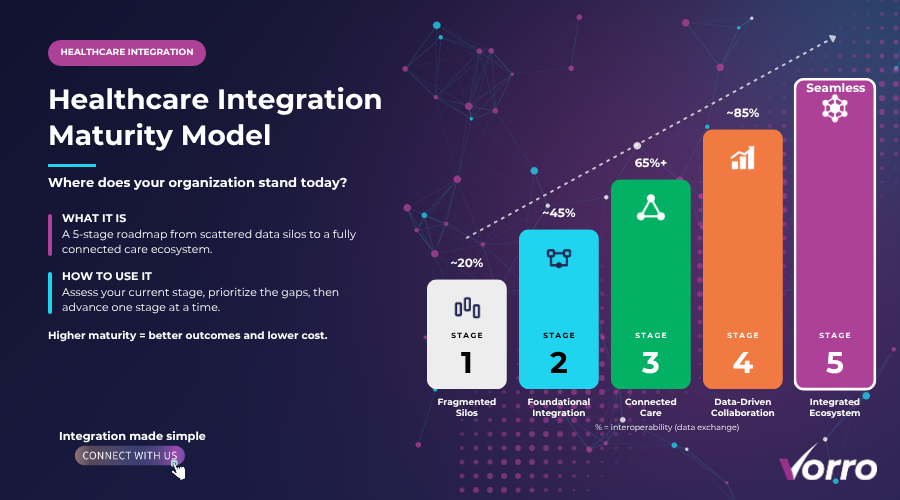
When you treat integration as a strategic capability, you shift the equation. Healthcare operational cost reduction becomes a natural outcome of better data flow, not a one-time cost-cutting exercise. Integrated systems reduce duplication, errors, and delays. Unified data supports targeted decisions. Real-time access improves responsiveness.
Healthcare cost-optimization technology performs best when it sits on a robust integration backbone. The ROI of healthcare data integration grows over time as more workflows integrate into a single foundation and share common standards.
Vorro helps health systems, providers, and partners build reliable, scalable data integration that supports healthcare cost-reduction initiatives without adding complexity. You get technology and expertise that align with your operational goals and clinical mission.
If you want to reduce healthcare data management costs and improve hospital operational efficiency through a practical integration strategy, schedule a conversation with Vorro to drive measurable cost savings.
FAQs
How does data integration support healthcare cost reduction data initiatives?
Data integration is about aligning clinical, financial, and operational systems so that information flows electronically between them, eliminating the need for manual reconciliation. When you do this, you minimize administrative costs, make better use of resources, and can identify areas where you can most effectively contain costs.
What types of costs are most affected by healthcare operational cost reduction through integration?
Integration tends to impact labor, denials management, and avoidable utilization. You reduce overtime tied to manual tasks, cut rework related to billing and coding issues, and improve scheduling and discharge processes. These changes translate into lower day-to-day expenses and stronger margins.
How does data integration in healthcare help with reducing healthcare expenses with data analytics?
Data feeds are integrated, which helps feed data analytics platforms with up-to-date, consistent data. This helps to identify cost elements per service, location, and patient. As a result, you can embark on targeted interventions and get improved results. In the end, your cost-saving strategy will continuously increase as you analyze data progress.
What should I look for in healthcare cost optimization technology and integration partners?
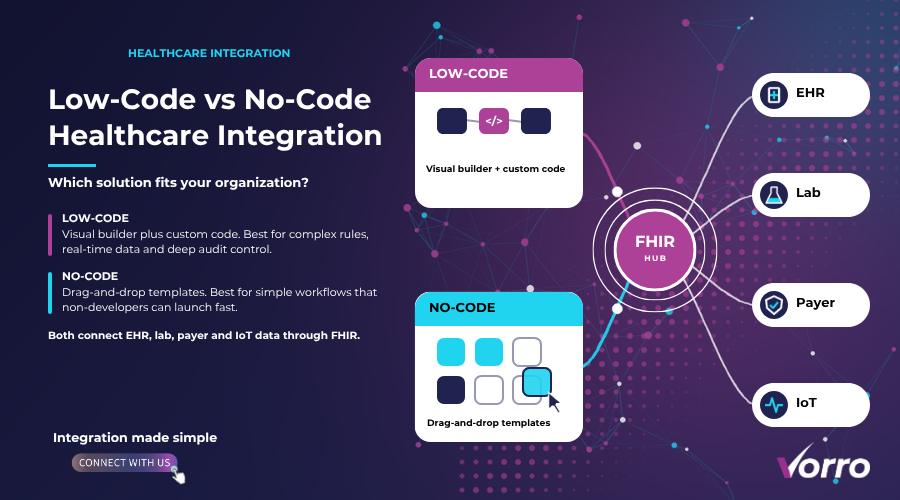
You need technology that connects to your existing systems without extensive custom code, supports common healthcare standards, and scales with growth. You also need a partner that understands clinical and operational workflows, not only interfaces. This combination protects your investment and increases the ROI of healthcare data integration.
How fast can an organization see ROI of healthcare data integration projects?
Timelines vary by scope, but organizations often see early value when they focus on a narrow workflow with clear cost pain, such as eligibility, authorizations, or discharge follow-up. As additional processes connect to the same integration foundation, benefits grow. A structured roadmap and strong governance help you realize and track that ROI.

Akshita is a Senior Content Writer and Marketer with over a decade of experience crafting narratives that convert, rank, and build lasting brand authority. She has worked across SaaS, FinTech, HealthTech, and Education spaces, delivering everything from HIPAA-compliant medical content to multilingual campaigns for the International Labour Organization, United Nations. Her content has reached audiences across the globe, and she has worked for Fortune 500 brands, global agencies, and startups alike. Fluent in English, Spanish, and German, Akshita brings a rare cross-cultural edge to brand communication. A literature graduate from Delhi University, she balances strategic thinking with a storyteller's instinct, but when she isn’t architecting content roadmaps, she channels her creativity into poetry and painting or dedicates her time to caring for stray animals - pursuits she credits for making her a more empathetic and perceptive communicator.