Imagine a world where your most skilled clinicians spend less than 10% of their day on manual, repetitive tasks. A world where patient intake is instant, prior authorizations are seamless, and data entry errors are virtually non-existent. Sounds like a futuristic dream? It shouldn’t. This is the tangible, achievable reality offered by healthcare workflow automation, and for today’s Healthcare CIO, mastering this domain is no longer optional, but it’s a critical imperative for survival and success.
The administrative weight currently placed on health systems is unsustainable. We’ve seen the statistics: up to 40% of a nurse’s time can be spent on documentation and administrative tasks rather than direct patient care. This isn’t just inefficient; it’s a direct threat to staff well-being, a major contributor to burnout, and a silent killer of your system’s financial health. You are likely staring down pressures from every angle: staffing shortages, razor-thin margins, and the non-stop demand for better patient experiences. The fundamental truth is this: the only way to meet these challenges head-on is by strategically leveraging automation. This comprehensive guide will equip you with the deep insights and practical strategies you need to effectively lead the charge in adopting and scaling healthcare workflow automation across your enterprise.
Why CIOs Should Prioritize Healthcare Workflow Automation
At its core, healthcare workflow automation is the use of technology, primarily intelligent business process management (iBPM), and AI/machine learning to execute defined, repetitive, rule-based, or high-volume tasks that were previously performed by human staff. It is not merely about digitizing a paper process; it is about fundamentally redesigning and optimizing the flow of work.
For a CIO, the prioritization of this technology should be absolute because it addresses your most profound and persistent pain points simultaneously. Automation acts as a force multiplier, allowing your existing, highly trained workforce to focus on tasks that truly require human judgment, empathy, and complexity. This is the strategic play. Instead of viewing automation as a cost-cutting measure, though it certainly is one, you must frame it as a staff retention, quality improvement, and revenue cycle optimization strategy. A common example we see is the automation of complex billing and claims processing. A system can be set up to automatically check claim accuracy against payer rules before submission, drastically reducing denial rates. One mid-sized health system, for instance, reported a 20% decrease in claim denial-related rework after implementing automation in this area. This frees up your revenue cycle team to tackle the truly complex and unique cases, boosting cash flow and reducing the days in accounts receivable (DAR).
Where Can Healthcare Workflow Automation Deliver the Biggest Impact?
The beauty of automation lies in its versatility. While the technology is often associated with the back office, its most transformative applications are found at the intersection of clinical care, patient experience, and financial operations. A strategic CIO knows that a phased rollout is key, starting with high-volume, high-return areas.
How to Identify High-Value Targets for Automation
Before you deploy your first agents, you must conduct a thorough workflow audit. Look for processes that are:
- High-Volume: Tasks performed hundreds or thousands of times daily (e.g., patient record queries, appointment reminders).
- Repetitive and Rule-Based: Tasks that follow the exact same steps every time (e.g., eligibility verification, simple data transfers).
- Prone to Human Error: Tasks where small mistakes can have large financial or clinical consequences (e.g., incorrect patient data entry).
- Time-Consuming: Tasks that require significant staff time but add minimal clinical value.
Clinical and Administrative Use Cases
1. Revenue Cycle Management (RCM) Automation
This is often the lowest-hanging fruit and offers the fastest ROI. Automation can handle:
- Insurance Eligibility and Verification: Checking patient coverage in seconds upon scheduling, dramatically improving point-of-service collections.
- Prior Authorization Submission: A notoriously painful and time-consuming process. Agents can gather necessary clinical documentation, submit the request, and track its status, often cutting turnaround time from days to hours.
- Claim Status Checking and Follow-Up: Automated systems can ping payer portals for claim status and update the internal EMR/Billing system without human intervention.
2. Patient Onboarding and Access
The front door of your system needs to be frictionless. Healthcare workflow automation smooths out this process.
- Automated Scheduling and Triage: Agents can interact with patients via chatbots to collect initial symptoms, recommend the appropriate type of appointment (virtual, in-person, specialist), and automatically book it.
- Digital Intake Forms: Pre-filling forms with existing EMR data saves patients time and reduces errors.
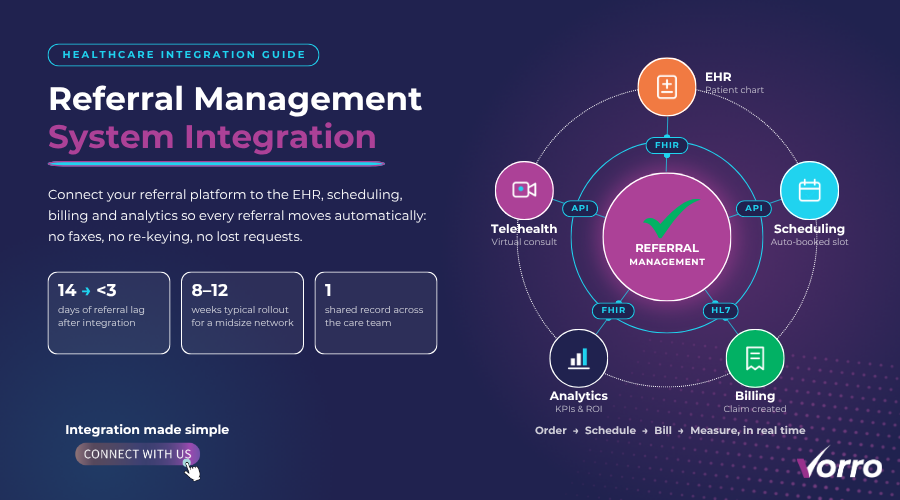
- Referral Management: Automatically processing incoming referrals, cross-referencing against internal capacity, and assigning them to the correct specialist or location.
3. Clinical Data Management
While direct clinical decision-making requires human expertise, the movement and standardization of data do not.
- Data Migration and Integration: Moving data between disparate systems, such as merging a newly acquired clinic’s data into the main EMR.
- Alert and Notification Management: Triaging non-critical lab results or imaging reports and routing them to the correct staff member for review, ensuring no critical step is missed.
- Auditing and Compliance Reporting: Automatically generating reports on regulatory compliance metrics, saving countless hours for your quality assurance teams.
How to Build a Future-Proof Automation Strategy: A CIO’s Playbook
A successful automation initiative is a marathon, not a sprint. It demands a structured, multi-year strategy led from the top. Your role as CIO is to establish the governance, select the right technology, and foster an organizational culture ready for change.
1. Establish the Automation Center of Excellence (CoE)
Don’t let automation projects pop up in silos. A centralized CoE is essential for maintaining standards, sharing best practices, and ensuring alignment with enterprise-wide strategic goals. This small, cross-functional team should include representatives from IT, Clinical Operations, and Finance, and should be the central hub for:
- Process Identification and Prioritization: Vetting proposed automation projects based on ROI and strategic impact.
- Tool Selection and Governance: Standardizing the platforms used across the organization.
- Training and Upskilling: Building internal capacity for “citizen developers” who can identify and even build simple automations within their own departments, reducing IT’s burden.
2. Choose the Right Technology Stack AI, and iBPM)
The technology landscape is complex, but for healthcare workflow automation, three components stand out:
- Artificial Intelligence (AI) and Machine Learning (ML): Used for tasks requiring intelligence, such as classifying unstructured data (reading notes in a doctor’s referral) or predicting staffing needs.
- Intelligent Business Process Management (iBPM): The overarching framework that connects different automated and manual steps into one cohesive process flow, offering monitoring and management tools.
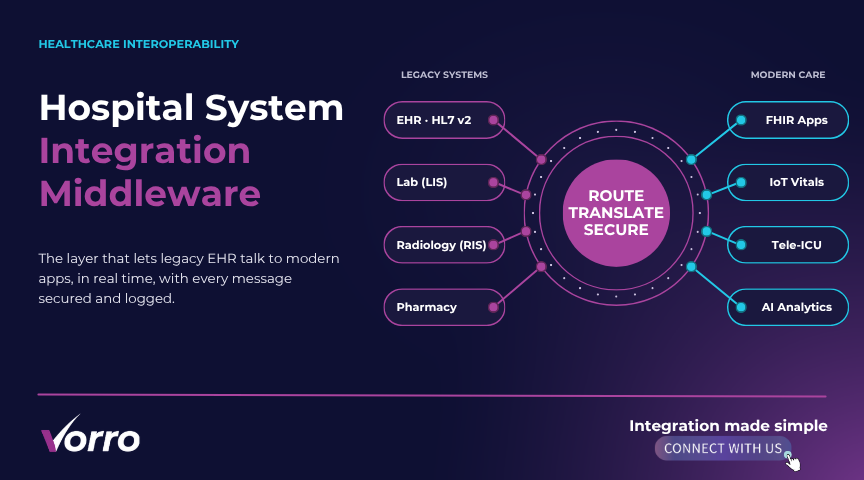
A Critical Note on Integration: Your automation tools must integrate seamlessly with your core Electronic Health Record (EHR) and other legacy systems. A platform that can’t “talk” to your existing infrastructure will create more problems than it solves. Prioritize solutions with proven healthcare-specific connectors and a robust security posture, ensuring HIPAA compliance is non-negotiable.
Addressing the Human Element: Managing Change and Building Trust
The most critical component of any digital transformation is the human one. Staff anxiety about “AI agents taking jobs” is real and must be managed proactively and empathetically. Your communication strategy must be transparent, emphasizing that automation is not about replacing people, but about elevating their roles.
What is the Impact on Staff, and How Should Leaders Respond?
Automation eliminates the grunt work, allowing nurses, coders, and administrators to focus on high-touch patient interaction, complex problem-solving, and quality improvement initiatives. This is a massive opportunity for upskilling.
Actionable Steps for Change Management:
- Communicate the “Why”: Clearly articulate how automation will reduce burnout, improve patient safety, and free up time for meaningful work.
- Retrain, Don’t Retire: Identify staff whose roles will be heavily impacted and create clear pathways for them to move into higher-value positions, perhaps even becoming the analysts or “agents managers” within your new CoE.
- Celebrate Early Wins: Publicize small, successful automation projects that directly relieved a team’s pain point. For example, celebrating the finance team for implementing an automation that saved 50 hours a week on reconciliation. This builds momentum and internal champions.
Mitigating Risk in Healthcare Workflow Automation
As a CIO, you are the steward of patient data and regulatory compliance. Deploying automation introduces unique challenges that must be addressed from day one.
1. Data Security and HIPAA Compliance
Every automated workflow that touches Protected Health Information (PHI) must be designed with security at the forefront.
- Access Control: Treat your automation agents like digital employees. They must have designated, secure credentials and access rights that are strictly governed by the “principle of least privilege.” The agent should only access the data it absolutely needs to perform its task.
- Auditing and Logging: Every action performed by an automation agent must be logged and auditable. This ensures you can trace every step of a transaction for compliance checks and error resolution.
2. The Risk of Automating a Broken Process
Remember the old adage: “Automating a mess creates an automated mess.” Before any technology is deployed, the underlying process must be standardized and optimized. A failure to perform process mapping before automation is the single biggest cause of project failure in this space. Your CoE should enforce a strict “clean up first” policy.
3. Maintaining and Scaling the Solution
Once a process is automated, it must be maintained. Changes in EHR versions, regulatory mandates, or payer portal interfaces can “break” an agent. This requires an ongoing commitment to monitoring and maintenance, which is why a well-funded, stable CoE is non-negotiable for long-term success.
Strategic Conclusion: Stepping Into the Automated Future
The journey to enterprise-wide healthcare workflow automation is complex, but the potential rewards such as reduced staff burnout, significant cost savings, and a measurably better patient experience are too great to ignore. As a Healthcare CIO, your leadership here defines the future viability of your organization.
Here are the most critical takeaways to guide your strategy:
- Automation is a Retention Strategy: Frame your initiative as a way to liberate your highly-skilled workforce from drudgery, not as a job-cutting exercise.
- Start with RCM and Prioritization: Focus on high-volume, rule-based processes like insurance verification and prior authorization for fast, measurable ROI.
- Build a Centralized CoE: Establish a strong, cross-functional governance body to ensure standards, manage risk, and foster internal expertise.
- Security First: Treat automation agents as high-privilege users and implement rigorous audit logging and access controls to maintain HIPAA compliance.
- Humanize the Change: Lead with empathy and transparency, focusing on upskilling and communicating the benefits to all staff members.
At Vorro, we specialize in helping health systems navigate this exact complexity, providing the strategic blueprint and the intelligent, compliant platforms required to make this transformation a reality. We offer the deep healthtech domain expertise you need to ensure your automation projects deliver tangible value and are seamlessly integrated into your existing technology ecosystem.
Ready to move beyond pilot projects and realize true enterprise efficiency? Let’s discuss how Vorro can help you build your automation roadmap and achieve a sustainable, more human-centric model of care delivery.

Akshita is a Senior Content Writer and Marketer with over a decade of experience crafting narratives that convert, rank, and build lasting brand authority. She has worked across SaaS, FinTech, HealthTech, and Education spaces, delivering everything from HIPAA-compliant medical content to multilingual campaigns for the International Labour Organization, United Nations. Her content has reached audiences across the globe, and she has worked for Fortune 500 brands, global agencies, and startups alike. Fluent in English, Spanish, and German, Akshita brings a rare cross-cultural edge to brand communication. A literature graduate from Delhi University, she balances strategic thinking with a storyteller's instinct, but when she isn’t architecting content roadmaps, she channels her creativity into poetry and painting or dedicates her time to caring for stray animals - pursuits she credits for making her a more empathetic and perceptive communicator.