
You are sitting on more data than at any other time in the history of healthcare. Clinical systems, EHRs, claims, devices, labs, patient apps, financial tools, and payer portals all generate data every second. Meanwhile, your clinicians still toggle between screens, your teams still reconcile spreadsheets, and your executives still question which numbers to trust.
Healthcare data integration transforms scattered data into a connected asset. When you integrate data from different hospital data systems, you reduce the noise and provide a single trusted view to every stakeholder. This change influences everything from bedside decisions to value, based contracts and digital front door strategies.
This book explains healthcare data integration, its importance, how it works, and the hindrances to progress. You will discover how healthcare data platforms, clinical data integration, and EHR data integration are related and what it takes to move from siloed systems to a connected healthcare system integration strategy.
What Is Healthcare Data Integration
Healthcare data integration refers to the process of linking, standardizing, and aligning data from various healthcare systems to ensure that you have a consistent and usable view of the patients, operations, and performance.
In reality, this means that data from EHRs, lab systems, imaging, pharmacy, revenue cycle, CRM, telehealth, and external partners is gathered into a common layer, typically a healthcare data platform, where the data is reliable and accessible to different teams.
Effective healthcare data integration accomplishes three main objectives:
- Combines data across systems: Provides a unified record for each patient/encounter/transaction by linking electronic health record data integration, claims, labs, and other sources.
- Standardizes formats and vocabularies: Allows various code and format conversion, such as HL7 v2 messages, FHIR resources, and proprietary formats, into common models.
- Keeps data current and synchronized: Handles the implementation of real-time or near-real-time feeds so changes in one system are reflected in others.
A well, thought, out medical data integration plan recognizes data integration as a mainstay, not an IT side project. It specifies the ways in which data is ingested, mapped, governed, and delivered to support clinical, operational, and financial outcomes.
Types of Healthcare Data Integration
Healthcare data integration covers different patterns and uses. You seldom use only one. A mature approach mixes them to fit your technical environment and business goals.
1. System-to-System Integration
This type directly links two different systems so that they can share data between each other. For instance:
- Lab Information System to EHR to fetch results and orders
- Radiology PACS to EHR for retrieving imaging reports
- Revenue cycle tool to practice management system for dispatching billing events
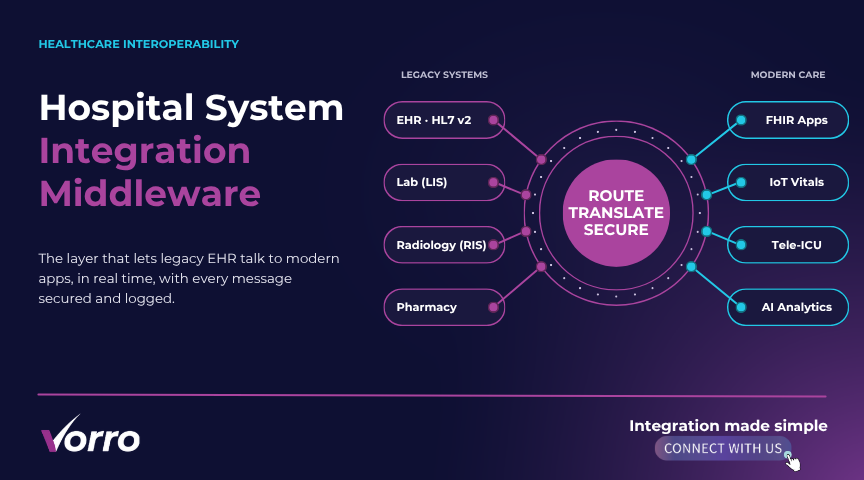
Such integrations frequently depend on HL7 v2, FHIR APIs, or proprietary interfaces. They address specific data gaps but a maze of point, to, point connections developed over time can become challenging for the teams.
2. Integration through a Healthcare Data Platform
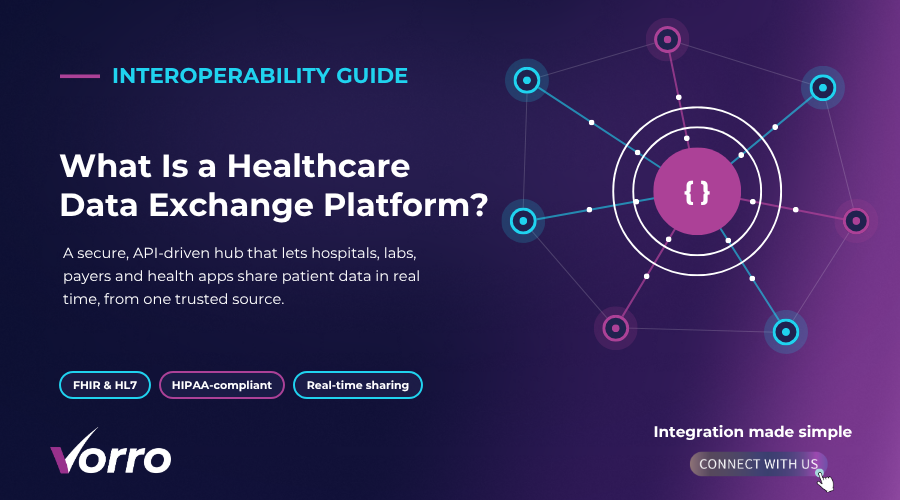
You can leverage healthcare data platforms as a unified or decentralized hub. The source systems feed the platform, which standardizes and sends the data further to analytics, care management, or third-party services.
Healthcare data platforms enable:
- Clinical data integration from EHRs, labs, and devices
- Operational and financial data from scheduling, RCM, and ERP
- External feeds from payers, HIEs, and public health entities
This method lowers the complexity of point-to-point connections and equips you with a single source of truth for downstream reporting and AI-powered workflows.
3. EHR Data Integration
EHR data integration mainly centers on linking the central clinical record with additional tools. Your EHR contains information on diagnoses, medications, allergies, procedures, notes, and orders. However, a lot of crucial workflows are kept outside it, for example:
- Telehealth platforms
- Care management and population health tools
- Patient engagement portals and CRM
- Remote patient monitoring systems
EHR data integration makes sure that those tools can exchange timely, structured data without your clinicians having to log in to three or four different systems to get a full picture.
4. Clinical Data Integration Across Care Settings
Clinical data integration connects data sets from various care settings and organizations. Some examples:
- Data of a patient shared between acute, ambulatory, and post-acute care settings
- Behavioral health and primary care integration
- Data sharing between independent physician practices and an affiliated health system
Integrated clinical data is instrumental in ensuring continuity of care, performing risk stratification, and implementing value-based care programs that are not limited to only one facility but usually span a network.
5. Enterprise Healthcare System Integration
A healthcare system integration is essentially a framework that harmonizes key systems in a multi-entity healthcare enterprise. Some of the actions involved are:
- Unifying the data streams coming from different EHR vendors
- Sharing services like scheduling or billing between linked entities
- Organizing/consolidating data for clinically integrated networks and ACOs
The main intent is to have the same data and work processes wherever the patients go, what treatments they get, and whichever part of the business they are dealing with, without dictating the use of one single platform everywhere.
Why Healthcare Data Integration Matters Today
The integration of healthcare data has been the topic of discussion that was previously limited to the back office but now has become a board, level priority. A few trends are driving this change.
Value-Based Care and Risk Contracts
If you are assuming financial risk, you would require reliable and current data from different types of payers and care settings. The National Association of ACOs suggests that ACOs saved over 4.3 billion dollars in 2023; however, their success is largely dependent on having tightly integrated data for quality, cost, and attribution tracking.
It is very difficult to deliver results if you do not have a healthcare data integration strategy in place because you spend your time identifying discrepancies in claims feeds, EHR data, and care management platforms. Not only that, your intervention will be delayed, and the whole cycle will be broken because people will not trust your performance reports.
Clinician Burnout and Workflow Friction
Clinicians have to enter the same data twice, go through different screens, and make sense of incomplete information due to fragmented hospital data systems. According to the American Medical Association, approximately 63 percent of doctors experienced one or more symptoms of burnout in 2021, with inefficient workflows being the main reason.
Integrated data not only minimizes clicks, duplicate documentation, and rework but also enhances clinicians’ productivity. When data is automatically transferred to EHR and care tools, the staff will be more focused on patient care rather than on the use of the computer.
Digital Health Growth and New Data Sources
Virtual care, remote patient monitoring, retail health, and home services expand the data streams.
A McKinsey report estimates that as much as $250 billion of US healthcare spending could be converted into virtual care, which greatly increases the volume and variety of digital data you manage.
The healthcare data integration makes these digital sources compatible with your central hospital data systems. This integration keeps virtual care programs from being isolated side operations with little understanding of the overall patient outcomes.
Data for Strategy, Not Only Reporting
Leadership teams require data that empowers them to make strategic decisions, beyond mere compliance reporting. However, Gartner estimated that due to poor data quality, organizations waste an average of 12.9 million dollars a year.
Robust healthcare data integration enhances the quality, context, and timeliness of information. It thus provides a trustworthy foundation for service line planning, care model redesign, and M&A integration decisions.
Key Benefits for Healthcare Organizations
When healthcare data integration is aligned with both clinical and business goals, the entire organization can enjoy tangible, quantifiable benefits.
1. Better Clinical Decisions and Outcomes
Doctors and other healthcare providers are able to see a fuller, more comprehensive picture of the patient through various encounters, locations, and digital interactions. Some of the ways integrated clinical data facilitates:
- Medication reconciliation with fewer gaps and contraindications
- Chronic disease management facilitated by having a complete lab and visit history
- Early identification of high-risk patients
- Care coordination among primary, specialty, and post-acute providers
Several empirical studies published in Health Affairs and other reputable journals have demonstrated that enhanced data sharing and comprehensive interoperability contribute to a reduction in readmissions and an increase in patient safety. One example is research conducted in 2023, which revealed that hospitals with a high level of interoperability engagement had 10 percent lower odds of avoidable readmissions.
2. Reduced Administrative Burden and Cost
Integrated hospital data systems significantly cut down the need for manual reconciliation, re-entry of duplicate data, and taking ad hoc extracts. That extends to:
- Registration and eligibility workflows
- Referral management and prior authorization
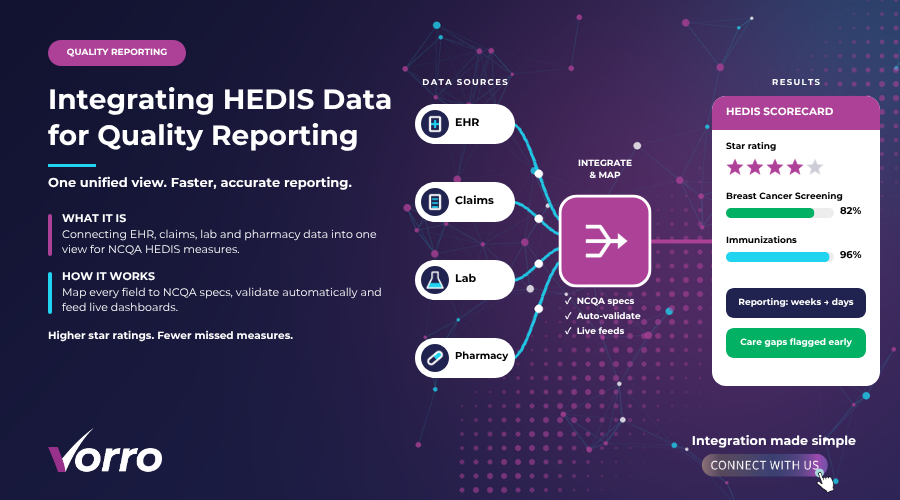
- Quality reporting and regulatory submissions
- Contract and performance analytics
According to research published in the Annals of Internal Medicine, half of the time physicians are at work, i.e., they are spending 2 hours on EHR and desk work for every hour of direct patient care. Although not the entire burden is ascribable to integration, poor integration definitely causes inefficiencies in these processes.
3. Stronger Data Governance and Compliance
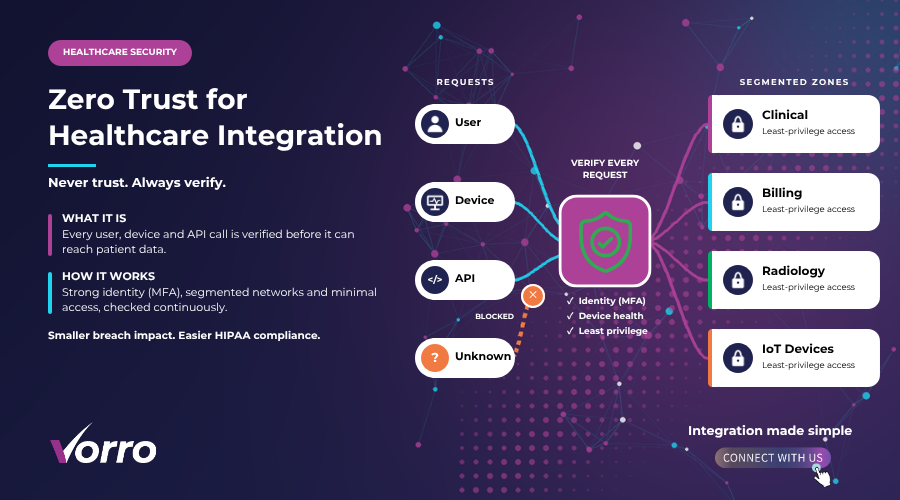
Healthcare data integration done with good governance essentially results in stronger control over where the data is kept, how it moves, and who has access to it. Rather than having uncontrolled extracts and shadow IT, you combine integration patterns, logging, and security.
Such a framework aids HIPAA compliance, audit response, and risk management. Also, it helps privacy and security teams to have better visibility over data sharing with third parties and digital health partners.
4. Faster Innovation and Partner Integration
A proper integration layer will enable you to incorporate new partners and tools faster,
Nowadays, digital front door vendors, care management platforms, AI solutions, and specialty programs are integrated via standard patterns rather than a one-off project each time.
This flexibility is very important, especially when you consider that retail health entrants, home-based models, and new payer products domain will be evolving. You can continue to run your IT roadmap and keep your data intact without causing disturbances or splitting it again if your organization gets involved in these activities.
5. Alignment Across Clinical, IT, and Business Leaders
Healthcare data integration sets a common baseline for working together. Doctors benefit from simplified processes, IT departments have easier, to, manage integrations, and executives get reliable key performance indicators.
Once these teams come together on a single data strategy, you lessen disagreements about priorities and speed up the realization of solutions.
Common Challenges in Healthcare Data Integration
The allure of healthcare data integration is unmistakable. The journey is not often straightforward. If you disregard them, you will encounter technical, organizational, and financial challenges that will cause delays.
1. Fragmented Vendor Ecosystems and Legacy Systems
Many health systems operate on multiple EHRs, practice management systems, and specialized clinical tools. Legacy interfaces depend on HL7 v2 feeds or flat files and usually come with limited documentation. Some vendors may restrict API access or charge exorbitant fees.
Without a state, of, the, art integration layer, your staff will be occupied with constructing and repairing point, to, point connections. This method is not extensible when you introduce more digital health tools and external partners.
2. Data Quality and Standardization Issues
Information obtained from different systems often makes use of different codes, formatting, and definitions. In one system, diagnoses, problems, allergies, and procedures may be represented by a code, while in another system they may be just described in free text. A patient’s address, for example, might even be standardized in different ways.
If you do not create solid data models and mappings, your integrated data will continue to produce incorrect analytics and alerts. The bad decision may, in fact, be the quality issue that was not detected, rather than the judgment of the clinician.
3. Governance, Ownership, and Change Management
Integration of healthcare data affects all facets of the organization. Without well-structured leadership, determining the data definitions, prioritizing, and setting access rights either gets overly bureaucratic or is changed each time a new project is started.
It is necessary to delegate data domain owners, get consensus on the standards, and set up a method of assessing new requests for integration. Moreover, a change management plan is necessary not only for physicians but also for other staff to rely on new work processes and dashboards resulting from integrated data.
4. Resource Constraints and Competing Priorities
The integration team is often the one continuing to meet regulatory deadlines, implement vendor upgrades, and fix urgent interfaces. At the same time, the strategic integration work is competing with the short-term requests from service lines and departments for attention.
Leadership should consider healthcare data integration as a strategic infrastructure that comes with aligned funding and sponsorship. Without such support, you are left with partial solutions that can never deliver the full value of integrated data.
5. Security, Privacy, and Third-Party Risk
Every new integration endpoint is a potential security and privacy risk. When you establish connections with digital health tools, analytics vendors, and external partners, you must have uniform controls for data sharing, encryption, and monitoring.
An article published by the U.S. Department of Health and Human Services has revealed that healthcare data breaches affected more than 134 million people in 2023. Integration itself doesn’t account for all that risk, but if you don’t follow integration best practices, your attack surface will be significantly larger.
Conclusion
Healthcare data integration is at the heart of digital health, value-based care, and clinician experience. When you stop treating integration as an extra and instead as the core infrastructure, you provide your teams with the right, connected, and most current information.
You step away from isolated hospital data systems and create a healthcare system integration model that benefits clinicians, patients, and leadership. Healthcare data platforms, deliberate clinical data integration, and the disciplined governance turn disparate data into a strategic asset that supports not only daily decisions but also long-term strategy.
Vorro is a partner to health systems, provider groups, and digital health organizations in building practical, scalable healthcare data integration.
Vorros integration platform makes medical data integration easier across EHR data integration, hospital data systems, and partner solutions, which means you cut down friction, shorten the project timelines, and provide cleaner data to every stakeholder.
If you are willing to bring your integration strategy in line with your clinical and business goals, get in touch with Vorro to revise your healthcare data integration approach.
FAQs
- What is healthcare data integration in simple terms
Healthcare data integration enables the sharing and standardization of healthcare data coming from different sources so that it can serve as one reliable source of truth. This process integrates healthcare, related information such as EHR, labs, imaging, claims, and so on, to provide a single view that can be used in clinical, operational, and financial decision-making.
- How is healthcare data integration different from interoperability
Whereas interoperability is primarily about systems gaining the ability to exchange and use data, healthcare data integration is at the opposite end of the spectrum, and it refers to the way you gather, change, and manage data usage between different systems over a period of time. Integration is a broader concept than interoperability, as it covers data normalization, data models, data governance, and the delivery of data to analytics and workflows, besides the latter.
- What role do healthcare data platforms play
Healthcare data platforms are the facilitators of medical data integration in the role of central or distributed hubs. They are capable of obtaining data from various sources, converting it into a shared code, applying the business logic, and making it accessible to the downstream tools. This limits the need for point, to, point interfaces and facilitates consistent, controlled access to integrated data.
- How does healthcare data integration support value, based care?
Value, based care demands accurate and up, to, date data from various sources such as care settings, payers, and over different periods of time. Healthcare data integration combines EHR data, claims, care management, and social determinants of health information so that you can efficiently attribute patients, track quality measures, manage risk, and monitor total cost of care almost in real time.
- Where should an organization start with healthcare data integration?
Start with a tangible issue like decreasing the readmission rate of a particular patient group or enhancing financial reporting for a risk contract. Determine the minimum indispensable systems, agree on data models and ownership, and choose an integration platform that aligns with your roadmap. Then, go for more use cases instead of attempting to integrate everything.

Akshita is a Senior Content Writer and Marketer with over a decade of experience crafting narratives that convert, rank, and build lasting brand authority. She has worked across SaaS, FinTech, HealthTech, and Education spaces, delivering everything from HIPAA-compliant medical content to multilingual campaigns for the International Labour Organization, United Nations. Her content has reached audiences across the globe, and she has worked for Fortune 500 brands, global agencies, and startups alike. Fluent in English, Spanish, and German, Akshita brings a rare cross-cultural edge to brand communication. A literature graduate from Delhi University, she balances strategic thinking with a storyteller's instinct, but when she isn’t architecting content roadmaps, she channels her creativity into poetry and painting or dedicates her time to caring for stray animals - pursuits she credits for making her a more empathetic and perceptive communicator.