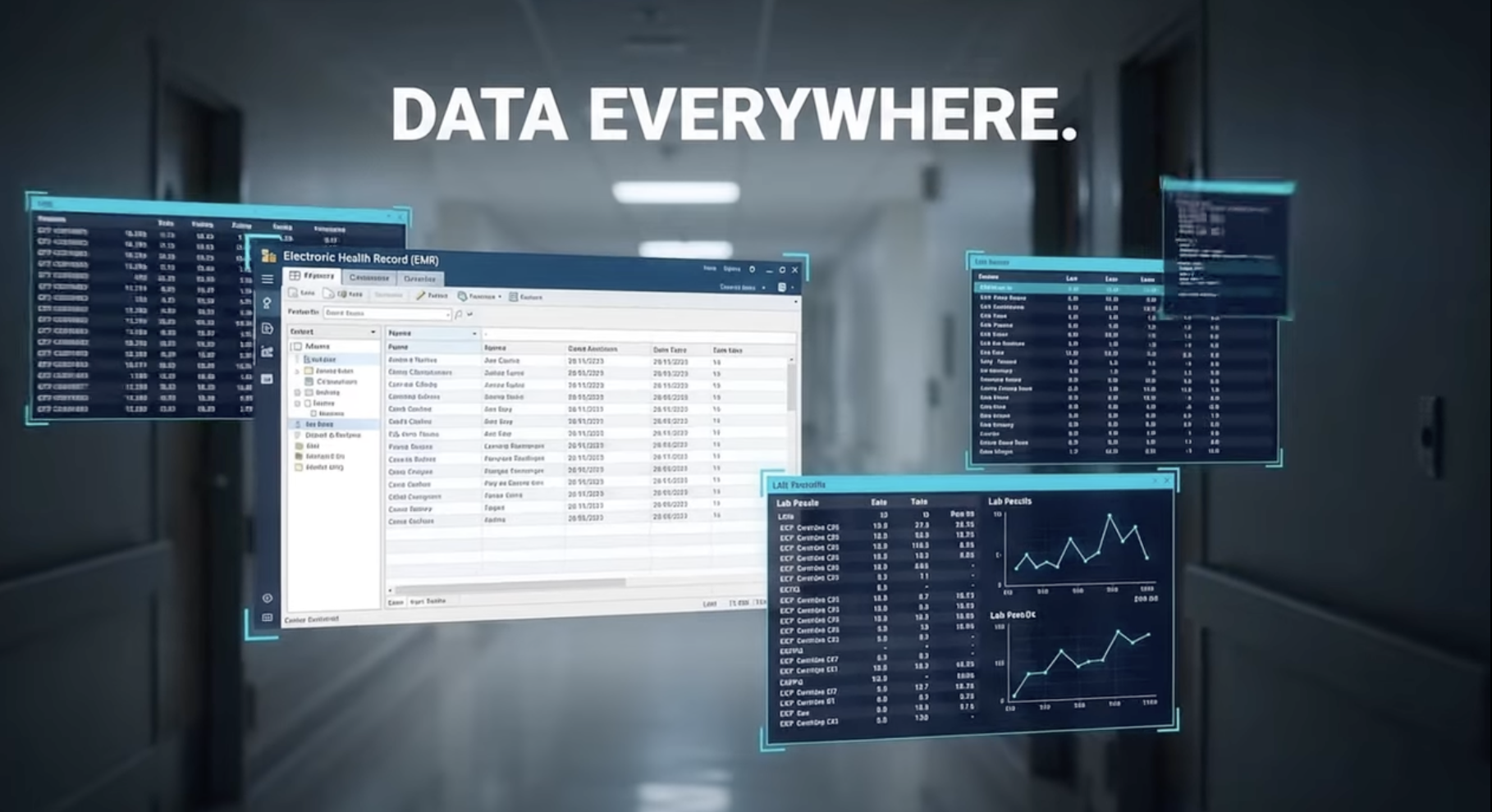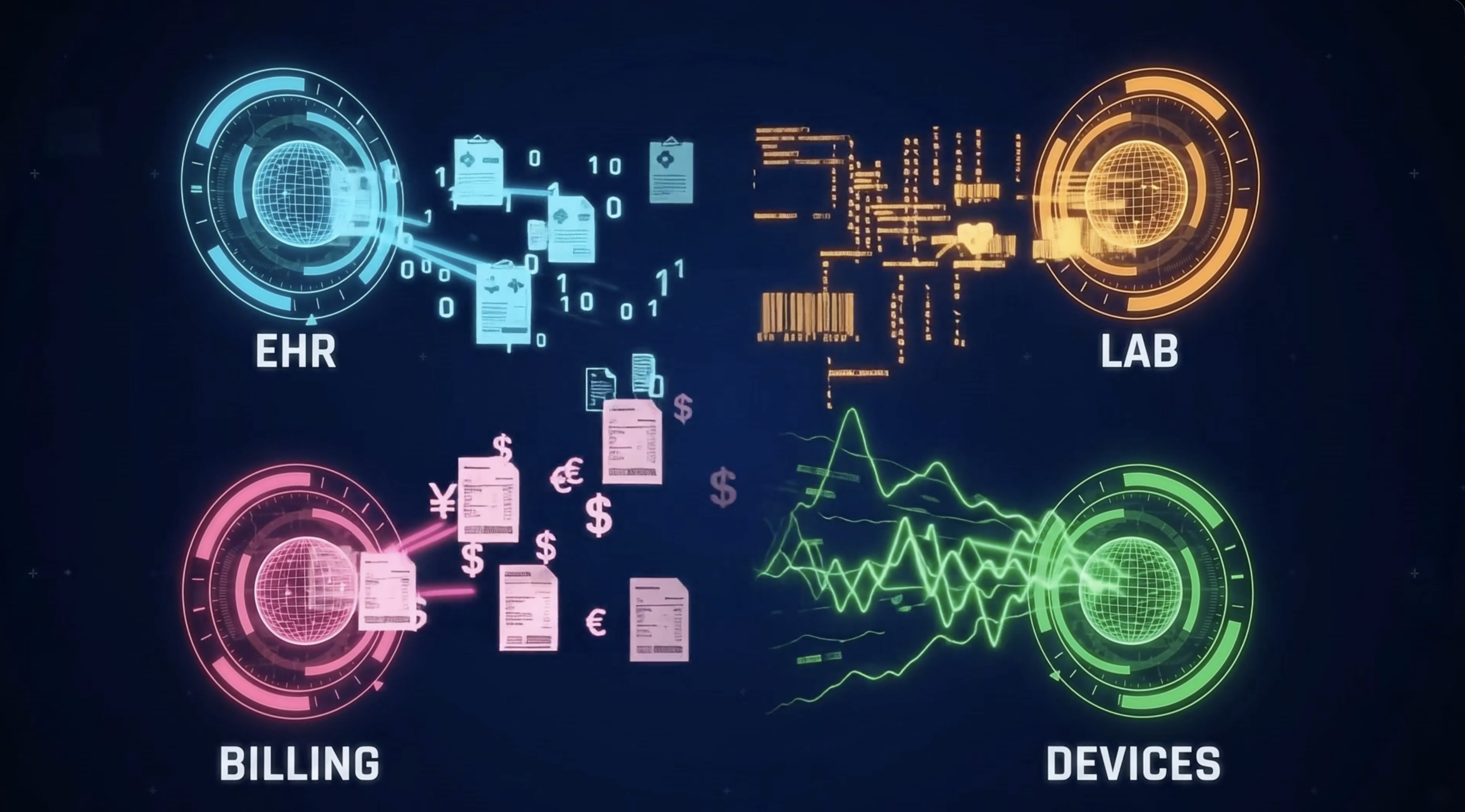
The “integration gap” in healthcare is no longer only a technical hurdle but rather a clinical risk as well. Although almost 92% of hospitals are capable of sending data electronically, only 43% of them regularly integrate this data into their actionable workflows. What should be the main focus of a Healthcare CIO in 2026 is not just to connect but to speed the truth up. When a 10, minute delay in data transfer can be the difference between a timely intervention and a critical situation, HL7 data integration is no longer a back, office requirement but the very core of the enterprise.
Earlier, we used to be content with a batch upload at midnight. But clinical environments nowadays are so advanced that they require real, time clinical data exchange. Whether a sepsis alert is being triggered by a newly received lab result or a medication reconciliation is being performed during an emergency admission, the data has to move at the same rate as the patient. There is no other way to ensure that your digital investments result in better bedside care than by having a strong healthcare interoperability HL7 plan.
This article will review a modern HL7 data exchange platform‘s architecture and the clinical as well as the operational efficiency benefits of HL7 clinical data exchange.
What is Real-Time Clinical Data Exchange via HL7?
At a fundamental level, real, time exchange is about event, driven architecture. In outdated systems, data is generally left in a queue, awaiting a scheduled “push.” In a real-time healthcare system integration HL7 scenario, the message is created and sent the very moment a clinical event happens, for example, when a patient is admitted (ADT), an order is placed (ORM), or a lab result is verified (ORU).
Reducing the “Patient Journey Time”
Without help, an HL7 v2 message appears like a random bunch of characters. A CIO sees it as a well-organized data packet that guarantees semantic consistency across different systems.
- Segments: Divided groups of data (e.g., PID for Patient Identification).
- Triggers: The exact clinical event that causes the data release.
- Standardization: The “language” that makes your Meditech system communicate with your Epic EHR without each connection needing a custom, coded translator.
Moving Beyond “Just Messaging”
Real-time exchange is far more than just the message delivery; it also refers to the integration of the received data into the receiver’s database. It calls for a sophisticated HL7 data exchange platform that can authenticate, convert, and correlate the incoming data with the patient’s clinical record automatically.
Why is Real-Time HL7 Integration Essential for Modern Interoperability?
The “optionality” of HL7 v2 is what makes it the most powerful tool in a healthcare provider’s arsenal, and at the same time, it becomes a major stumbling block for them. The standard is so flexible that it’s like two people talking the same language but not understanding each other at all. That is the main reason a strategic approach to healthcare interoperability through HL7 should be of prime importance.
Reducing the “Patient Journey Time”
According to 2025, 2026 data, healthcare providers who have fine-tuned their HL7 workflows are able to shorten the “patient journey time” by more than 14 minutes per visit. Not only that, by doing away with manual data entry and “portal hopping, ” doctors and nurses will be able to give the patients more attention and less time on paperwork.
- Breaking Down Data Silos: Patient data fragmentation is a thing of the past when data flow is real-time. This way, the laboratory, pharmacy, and the intensive care unit will all be in perfect sync with each other.
- Zero Latency Decision Support: Clinical decision support (CDS) systems are heavily dependent on the most recent data. A real-time data feed enables these systems to detect drug, drug interactions, or worsening vitals even before the doctor leaves the patient’s room.
- Revenue Cycle Acceleration: Real-time billing data (DFT messages) results in fewer denials and quicker reimbursements.
How to Build a Scalable Healthcare System Integration HL7 Framework?
To build a healthcare system integration HL7 framework, which is scalable, the first step is to move away from point, to, point connections and embrace a hub, and, spoke or “bus” architecture.
Steps to Real-Time Readiness
Step 1: Audit Your Latency.
In this step, you determine the exact point where the message is delayed or stuck. For example, it could be a problem with the interface engine or the receiving database.
Step 2: Implement an Interface Engine.
On this step, a centralized engine plays the role of a traffic cop, converts messages, and at the same time, sends the converted messages to multiple destinations (EHR, analytics, and population health tools).
Step 3: Standardize the Semantic Layer.
You have to ensure that the term “Hgb A1c” in System A is mapped to the identical code in System B. Unless the semantic healthcare interoperability HL7 is established, your real-time data is just a bunch of high-speed noise.
Step 4: Future-Proof with Hybrid Bridges.
It is necessary that your system is capable of converting HL7 v2 into FHIR resources automatically so that you can provide modern AI tools with your legacy data streams.
What are the Clinical and Business Benefits of HL7 Clinical Data Exchange?
The advantages of HL7 clinical data sharing go much further than the IT department. In the case of the CIO, it means providing a platform that allows the entire C-suite to be productive.
Clinical Impact: Safety First
Real-time medical information exchange significantly lowers the rate of patient mismanagement. Updating a patient’s allergy profile in the outpatient clinic and sending that information immediately to the hospital pharmacy system will prevent a very dangerous medication error. Some recent research shows that automated HL7 integration can halve adverse drug events in acute care by 30%.
Operational Impact: Efficiency and ROI
- Among reduced testing costs is the ability for a doctor to view a lab test done four hours ago at a connected clinic and thus not have to order a duplicate.
- Rapid onboarding is a standardized HL7 data exchange platform breaking the network integration of new practices or specialty vendors from months to weeks.
- Staff Retention: Data transcription through manual efforts is deeply ingrained in the lifestyle of clinicians who suffer from meta, burnout. To counter the contributing factor of “click fatigue” in 2026, automate the least engaging parts of data transcription.
Real-World Case Snippet: The Sepsis Success Story
Consider a medium health system that was failing in sepsis mortality rates. Their data was traveling, but it wasn’t quite fast enough. By upgrading their HL7 data integration to be a real-time one, they were able to constantly provide their predictive AI model with the patient’s vitals and lab results even before the lab results were known. What was the outcome? Sepsis was detected 2 hours earlier on average, and the healthcare system was able to save around 18 lives during the first year of implementation. This is the human ROI of real-time exchange.
How to Overcome Common Challenges in HL7 Integration?
Even with the most advanced tools, difficulties such as “Z, segments” and patient identity matching still exist.
- The Identity Crisis: It is risky to match patient identities without a universal patient identifier. Your system should have or work with a Master Patient Index (MPI) to guarantee that the information is linked to the correct individual.
- Data Quality Governance:” Garbage in, garbage out ” remains true. Embed auto validation checks in your integration engine to identify and isolate incorrect messages before they contaminate your EHR.
Conclusion: Leading the Interoperable Enterprise
As a CIO, your legacy will be remembered by how successfully you close the gap between technology and care. HL7 data integration used to be a fixed background process; now it is a fast, real-time feature that defines how flexible your organization is. Having a real-time clinical data exchange can give you more than just the improvement of IT efficiency; you can also establish a safer, more responsive healthcare system.
Key Takeaways:
- Speed is a Clinical Metric: The immediate availability of data can be a matter of life and death, and it also helps in lowering the burnout of clinicians.
- Hub, and, Spoke Architecture: Stop using fragile point, to, point connections and start employing a central HL7 data exchange platform.
- Semantic Integrity: Standardization is the secret to turning “liquid data” into a real asset for AI and analytics.
- Hybrid Maturity: Choose platform solutions that can link the old HL7 v2 with the FHIR, a focused future.
Vorro is a company that knows very well “the heavy work” of healthcare connectivity. Our BridgeGate platform is a solution that turns the labyrinth of HL7 data integration into a competitive edge.
We don’t only shift data, but we give it real, time, a real, time, every time meaning.
Do you want to make your data exchange faster? Get in touch with our professionals today and discover how we can help you smooth out your interoperability plan.
Frequently Asked Questions
Q1. Why is HL7 still used if FHIR is available?
FHIR is considered the future of healthcare, but HL7 v2 is still the “mainstay” of healthcare as it accounts for 95% of internal hospital workflows. In fact, it is very well suited for handling the high, volume, event, driven, real, time messages that are a necessity in everyday operations such as patient admissions and lab results.
Q2. How does real, time HL7 integration help with CMS compliance?
Compliance with regulatory mandates such as the 21st Century Cures Act requires provision of data seamlessly. An efficient HL7 data exchange platform helps keep clinical information fluid and available, thus simplifying the task of meeting interoperability “floor” requirements.
Q3. What is a “Z, segment” in HL7 and why does it matter?
A Z, segment is a user, defined field in a situation where standard HL7 segments are insufficient. However, if not carefully documented and mapped in your integration engine, they can become a barrier to healthcare interoperability HL7.

Akshita is a Senior Content Writer and Marketer with over a decade of experience crafting narratives that convert, rank, and build lasting brand authority. She has worked across SaaS, FinTech, HealthTech, and Education spaces, delivering everything from HIPAA-compliant medical content to multilingual campaigns for the International Labour Organization, United Nations. Her content has reached audiences across the globe, and she has worked for Fortune 500 brands, global agencies, and startups alike. Fluent in English, Spanish, and German, Akshita brings a rare cross-cultural edge to brand communication. A literature graduate from Delhi University, she balances strategic thinking with a storyteller's instinct, but when she isn’t architecting content roadmaps, she channels her creativity into poetry and painting or dedicates her time to caring for stray animals - pursuits she credits for making her a more empathetic and perceptive communicator.