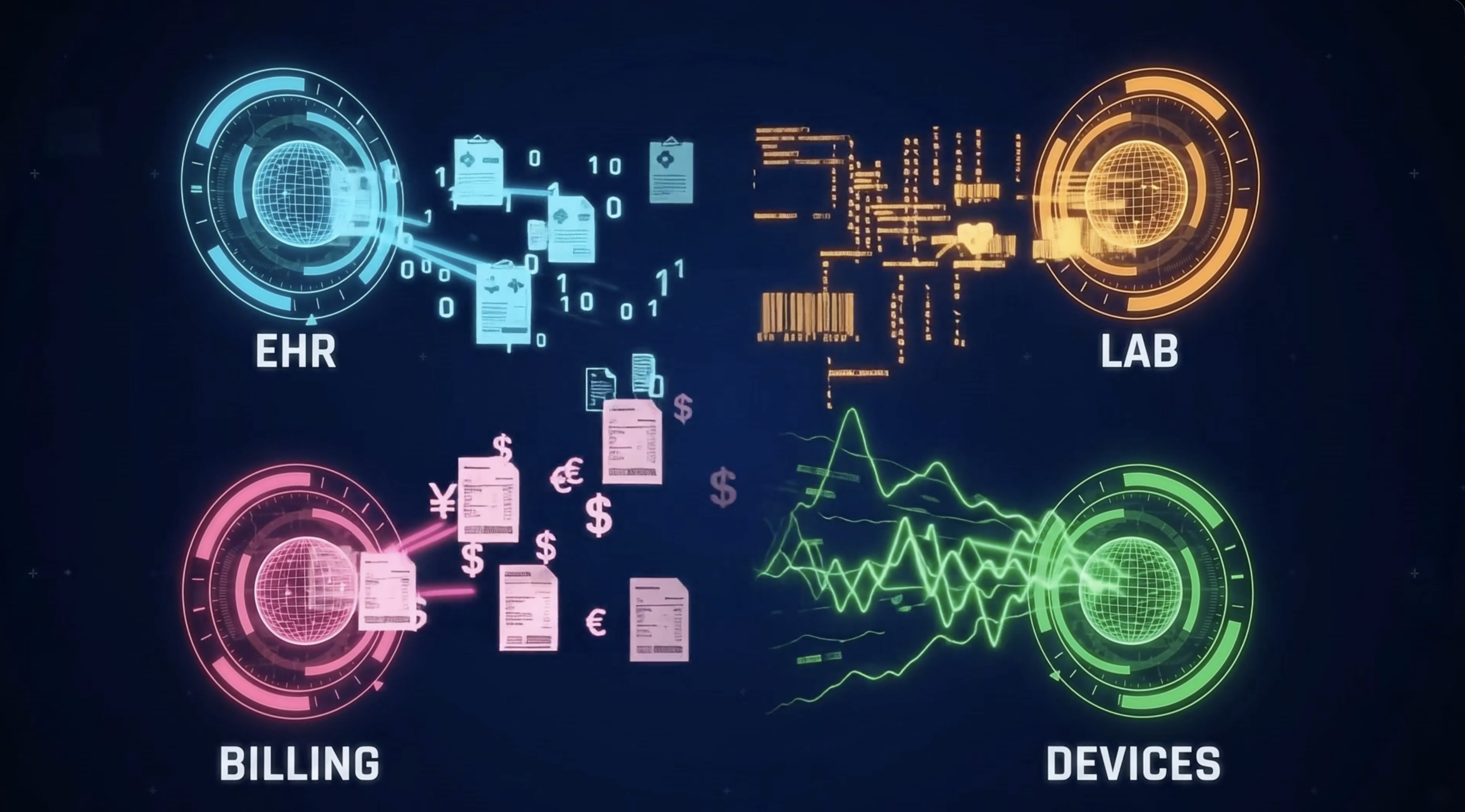
The healthcare industry hugely leverages the power of Electronic Health Records (EHRs) to optimize its operations. EHRs enable healthcare organizations to process large amounts of data, thereby enabling better patient care, maintaining compliance, and unlocking medical research possibilities through data analytics. However, deploying an EHR is just one part of the puzzle.
The Need to Integrate with Epic and Cerner
To truly leverage the potential of insights from vast amounts of helpful patient data housed in EHRs, healthcare organizations need to ensure seamless integration with two of the most significant public EHRs in the world Epic and Cerner. As per the latest industry figures, Epic healthcare systems integration houses over 325 million records, while Cerner has around 300 million patient records. They dominate the market between the two of them (each with over 30% market share in the EHR business), fuelling the need for healthcare organizations to ensure watertight integration with their systems. After Oracle acquired Cerner, it used Oracle databases to store data while Epic used SQL and AWS.
Alleviating EHR Integration Challenges
Although healthcare organizations must integrate with Epic and Cerner to fully realize the benefits of EHR, the integration process presents numerous difficulties. A survey conducted in 2023 by Klas Research found that healthcare organizations continue to encounter obstacles when attempting to share information between various systems. The survey reveals that as many as 37% of healthcare executives face challenges with inadequate EHR-to-EHR integration, leading to delays in patient care and inefficiencies in clinical processes. Hospitals frequently encounter challenges when linking external systems or incorporating new applications into Epic’s exclusive framework despite Epic’s market leadership. Likewise, integrating Cerner with other EHR platformspose technical challenges because of varying system architecture, data standards, and compliance needs.
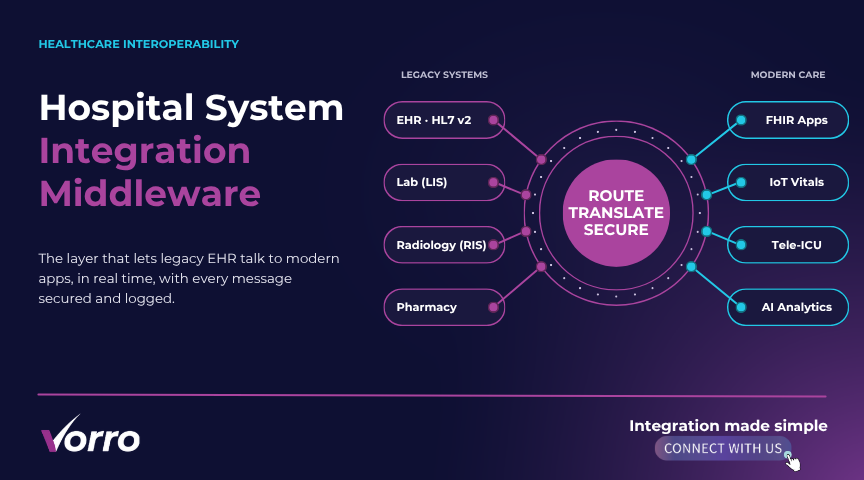
Each EHR comes with its own connectivity protocols and interfaces. Some of them operate using proprietary APIs, while others choose standards like FHIR or HL7. It is essential to learn about this complex web of protocols, standards, and interfaces to truly leverage the power of EHRs. Ideally, a healthcare organization must focus solely on patient care while leaving these challenges to specialist technology partners that come with industry experience and panache.
Firms that use middleware to achieve seamless sync-up with multiple EHRs also take care of support and documentation challenges. While larger EHRs usually come with detailed, easy-to-use documentation, many others do not, posing the challenge of a longer learning curve, more resources, and inaccurate entries into EHRs. Again, technology partners alleviate this challenge. Middleware solutions assist in optimizing the time taken for approval, consequently increasing efficiency and enabling faster insights.
The Role of Integration Technology Partners
With the right approach and by collaborating with technology partners, healthcare organizations can ensure more effective data exchanges. These strategies entail:
1. Leveraging Enterprise Integration Platforms (EiPaaS):
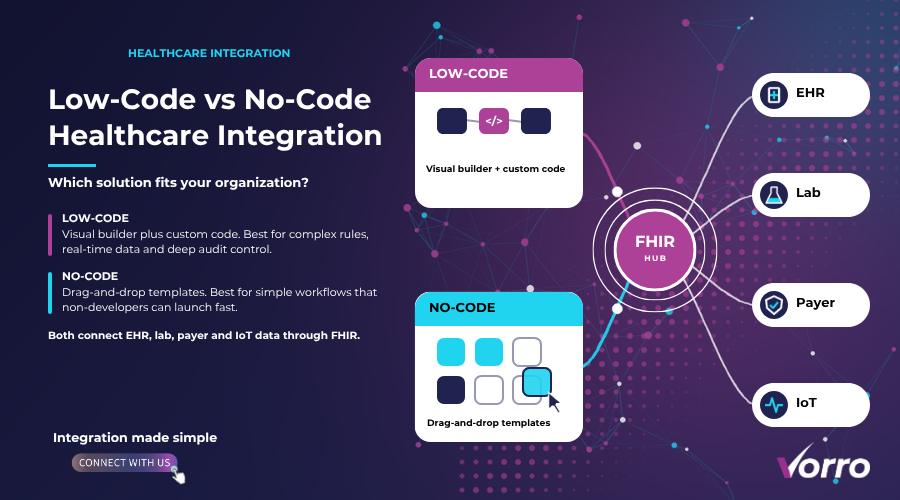
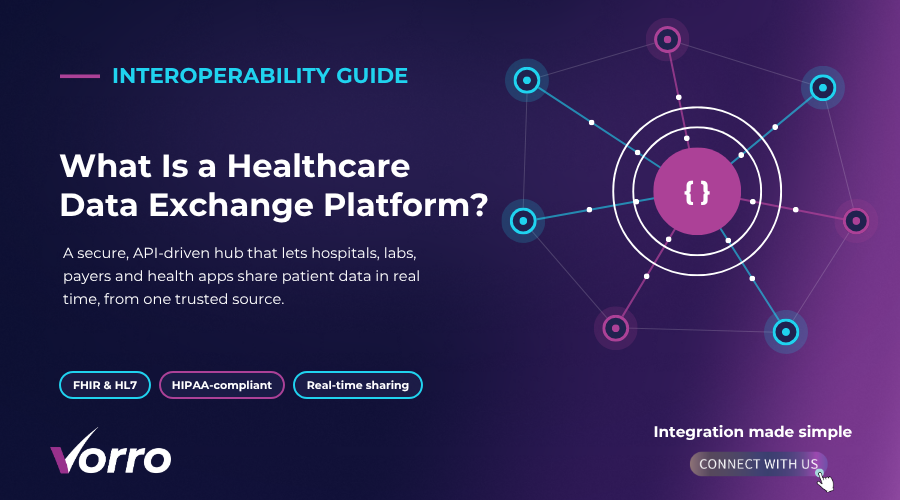
One of the most effective ways to streamline integration is using Enterprise Integration Platforms as a Service (EiPaaS). Vorro’s EiPaaS solution helps healthcare organizations overcome the technical barriers of EHR integration by providing an intuitive middleware. By enabling a scalable, cloud-based platform, Vorro ensures real-time data sharing, enhanced security, and consistent compliance across different systems, including Epic and Cerner. Vorro’s secure any-to-any integration technology: BridgeGate uses a unique no-code, visual mapping, and workflow editor, enabling businesses to achieve rapid, customized, seamless, and cost-effective integrations, fuelled by 25+ years of industry experience.
2. Real-Time Data Processing:
Healthcare providers need real-time patient data access to make informed decisions quickly. Vorro’s EiPaaS platform enables real-time data integration, allowing hospitals to share critical patient information instantly between Epic, Cerner, and other healthcare systems, leading to better patient outcomes.
3. API Management and Customization
Building and consuming APIs effectively is crucial for EHR system integration. APIs facilitate data sharing between EHR systems (like Cerner and Epic) and other healthcare solutions, but they must be configured correctly to address each organization’s specific needs. Custom APIs can be developed to manage specialized workflows, ensuring seamless data flow between systems. Vorro’s platform supports API-driven strategies, enabling healthcare organizations to develop and manage custom APIs for more efficient EHR integration.
Industry Case Study: Real-World Integration Success
A large healthcare provider sought help from Vorro to simplify its Epic healthcare systems integration process following challenges with sharing data between its Epic EHR system and a patient portal they developed in-house. By utilizing Vorro’s EiPaaS, the healthcare provider succeeded in setting up live data exchange, removing the data silos that used to impede patient care coordination. This incorporation boosted operational productivity and increased patient contentment by cutting down on care delays.
For a related blog that discusses data security and interoperability challenges in healthcare, check out Vorro’s detailed post on Mitigating Healthcare Data Security and Interoperability. This article dives deeper into the challenges of healthcare data management and how Vorro’s solutions effectively address these issues.
Conclusion
The difficulties of integrating EHR systems are widely reported, yet they are not impossible to overcome. Healthcare organizations can conquer data-sharing challenges by standardizing data formats, utilizing EiPaaS platforms, and incorporating real-time data processing. Vorro’s proficiency in seamless integration positions us as the perfect collaborator for healthcare organizations seeking to enhance their integration processes and data management.
Explore Vorro’s scalable, secure healthcare integration solutions to solve your integration challenges and prepare your organization for the future of healthcare.