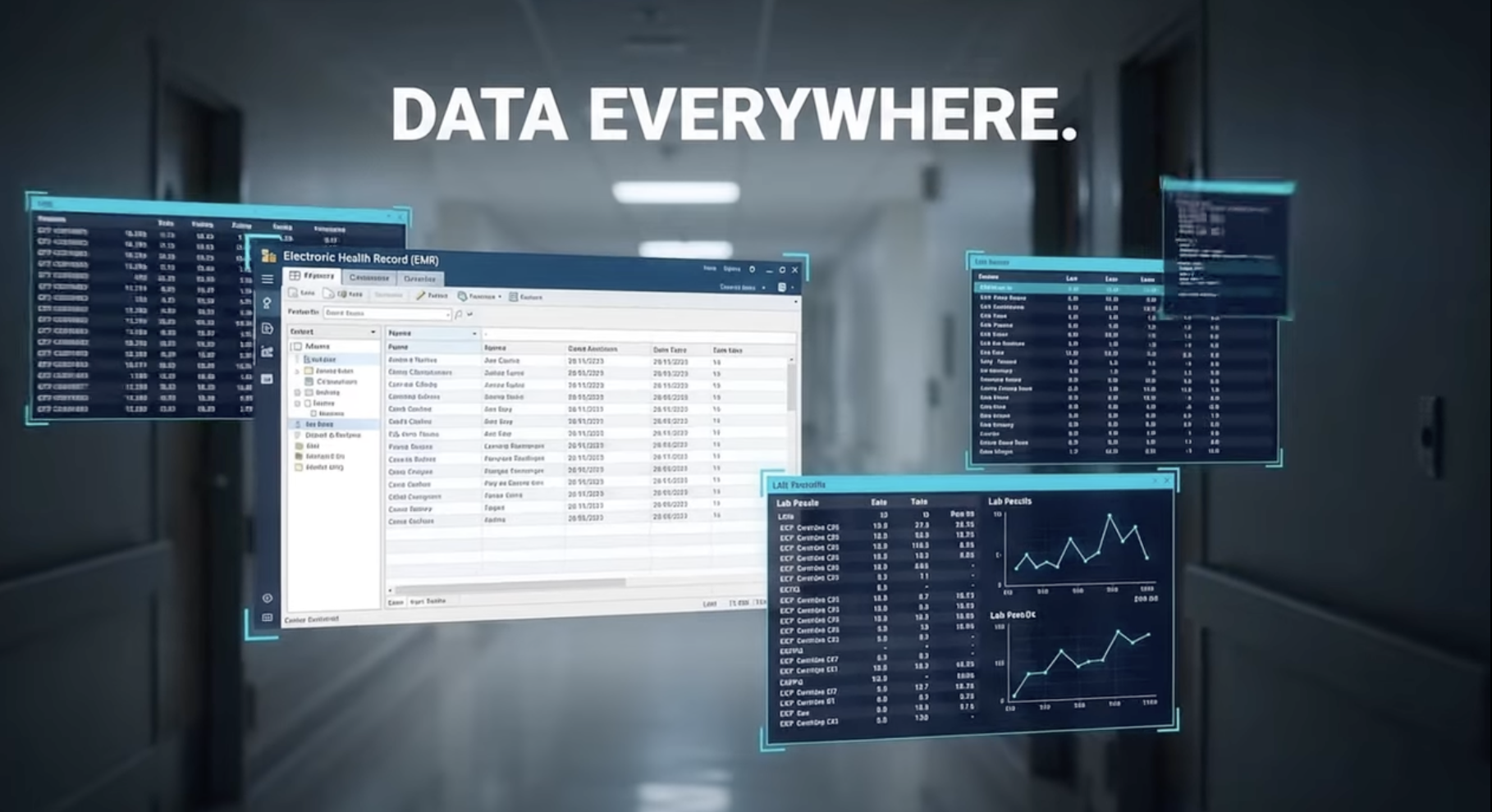
You are definitely aware of the pressure coming your way every day. People who are ill or have issues with their health want answers faster, to have a visit overall smoother, and in addition, they want all of these with a minimum of surprises. They also want clear communication at every point of contact. However, your employees are struggling with systems that are not connected to each other, records that are fragmented, and only partial views of the patients’ stories. Each time, the distance between what patients expect and the deliverables from your data increases.
Using integrated data to improve patient experience is the way forward for you.
When clinical, operational, and patient-generated data are connected and combined into a single unified view, it means that every clinician, care manager, and service representative is given all the information necessary to serve patients safely, efficiently, and with confidence. Besides that, you eliminate barriers, enhance the level of coordination, and facilitate better decision-making in real time.
You will find this booklet very useful for understanding the meaning of integrated data in health care, why the patient experience should be the centerpiece of your data strategy, and how to translate integration into doable actions that enhance the level of care.
What Is Integrated Data in Healthcare
In healthcare, integrated data refers to the consolidation of data from diverse systems in a single, coherent, and accessible overview. Rather than being a set of individual, isolated charts and disconnected data streams, it is a consolidated flow that represents the entire patient story.
Your health system stores data from various sources. EHR systems, lab systems, imaging, pharmacy platforms, revenue cycle tools, care management systems, patient portals, CRM, and more. Each one keeps only part of the record and formats it differently. Healthcare integrated data merges these various sources so it is possible to organize them by the patient rather than by the separate systems.
Properly integrated data to improve the patient experience is about including:
- Clinical data integration to improve patient care through the interactions between EHR, lab, pharmacy, and imaging data.
- Operational data that covers scheduling, waiting times, staffing, and call center activities.
- Patient-generated data from portals, surveys, remote monitoring devices, and messaging tools.
- Financial and administrative data that relate to eligibility, coverage, and billing events.
When these sources are linked through healthcare data integration for patient experience, different members of your healthcare teams can access the relevant, role-specific insights in one place without having to log into multiple systems or search for information.
Why Patient Experience Matters
Everything that happens in the interaction with the patient has an impact on trust, adherence, and outcomes. Patients who have to wait for updates, tell their story over and over again, or receive contradictory instructions, their trust in the system is diminished. Patients who experience being listened to, informed, and supported are more likely to become engaged in care and follow treatment plans.
Patient experience is not just a nice, to, have metric but a determining factor of access, continuity, and safety. A positive experience:
- Makes patients more willing to seek care early rather than postpone their visit.
- Helps patients to adhere to medication and follow-up plans.
- Lowers unnecessary calls, complaints, and confusion.
- Facilitates coordination between primary care, specialists, and ancillary services.
You have a hand in the patient experience level at each moment of the patient journey. All the points: appointment scheduling, digital check-in, rooming, bedside communication, discharge, and follow-up hold their significance. All the steps rely on accurate, timely, and connected data.
When patient-centered data integration is available to these touchpoints, your teams are quicker to respond, more capable of anticipating needs, and generally better at communicating. The experience is perceived as safer and more personal, because it is the result of a careful consideration of the patient rather than of fragmented snapshots.
How Integrated Data Enhances Patient Experience
One of the main benefits of integrated data in healthcare is a better patient experience. It influences the experience through a series of minor but steady improvements made at every stage of the care journey. Firstly, you get rid of the unnecessary formalities. Then you reduce the number of blind spots. Lastly, you provide help to the teams to get them working more efficiently.
Major advantages of integrated data in healthcare for an improved patient experience are:
Reducing Repetition and Frustration
When different systems remain totally independent from each other, patients end up telling their history and drugs to every new doctor. Integrated data brings to light the patient’s current medications, allergies, illnesses, problem lists, and recent visits so that staff can just confirm the information instead of collecting it all over again.
Improving Care Coordination
Through clinical data integration to provide high-quality patient care, coordination between primary care, specialists, and post-acute providers is facilitated. Referrals are the carriers of complete context. Results are automatically sent back without any manual chasing. Care managers get a unified patient view, including visits, orders, and outcomes, which is a huge support for handoffs and reduces missed steps.
Supporting Proactive Communication
Healthcare analytics for patient experience, when combined with integrated data, pave the way for identifying risk and outreach needs. Thus, you can arrange follow-ups after high acuity visits, missed appointments, or abnormal results. You can bring communication in line across channels so that patients get clear, consistent messages.
Personalizing Digital Experiences
Patient portals, mobile apps, and SMS programs usually get into trouble when data is siloed. When integrated data is used to enhance patient experience, you can channel reminders, content, and self-service options based on conditions, visit history, language preference, and communication patterns. Patients are given relevant prompts rather than generic messages.
Enhancing Safety and Reliability
Integrating data enables safety improvement through providing complete medication lists, allergy histories, and recent test results at the point of care. Decision support and clinical rules are more effective when they rely on accurate, combined data. Patients get fewer mistakes, fewer surprises, and an enhanced feeling of being understood when your team is aware of their full medical history.
Key Strategies for Leveraging Integrated Data
Enhancing experience through data is not only a matter of technology. It is a matter of having a clear goal and looking through the patient-centered lens. You first focus on the experiences that you want to influence, and then healthcare data integration for patient experience is aligned with those outcomes.
1. Define the Patient Journeys That Matter Most
Begin by identifying some top priority journeys.
- The initial experience of a new patient and their first visit.
- Continuous care and treatment of chronic diseases involving several specialties.
- Follow up care after hospital or emergency room visits and discharges.
- Major elective surgeries require intricate preparation and postoperative care.
Then for each of the journeys, write down the main touchpoints from the patient’s point of view and the main steps taken by your staff. Discuss where the communication or sharing of information fails or where there are delays. That is where your integration priorities should be based.
2. Align Integration with Patient-Centered Data Needs
For each friction point, ask yourself what information a patient would expect your team to have. Then find out where these systems are storing that information today. Patient, centered data integration aims to:
- Cut back on intake and form duplication.
- Keep medication and problem lists accurate.
- Bring together lab and imaging results with visits and outreach flows.
- Tie social determinants and preferences to care plans.
After finding out what is most important to patients, you can come up with integration patterns that help those needs, instead of simply making technical connections without a clear experience impact.
3. Build a Unified Patient Record Across Systems
Refined, consolidated data that leads to a better patient experience hinges on a trustworthy, single patient identity. Essentially, you want to be able to link a record across several systems to the right patient. Typically, this includes:
- Master patient index or identity resolution tools.
- Standardized demographic fields and matching rules.
- Governance for the management of duplicates and merges.
When patient identity is secured, a layer of healthcare analytics for patient experience can be added without having to do the constant rework. In such a scenario, control panels, notifications, and processes will direct you towards a stable and unchanging patient record.
4. Integrate Clinical Data for Real-Time Workflows
Clinical data integration to improve patient care should be more than just connecting data to reports.
- Bring lab and imaging results to the right inboxes with clear routing.
- Highlight critical values and care gaps during patient visits.
- Automatically updating registries and care management pools.
What you achieve with this concept is integrated data in healthcare to reduce time from insight to action. This is felt by patients as faster follow, up, less losing of results, and better face, to, face communication with doctors.
5. Leverage Healthcare Analytics for Patient Experience
Analytics is a wonderful tool for assessing experiences and pinpointing areas for improvement. When you combine data to enhance patient experience, you are in a position to:
- Keep an eye on waiting times, time taken to answer calls, and time taken to respond via the portal.
- Monitor whether follow-up has been done after discharges or abnormal results.
- Divide patients into categories based on risk, conditions, or engagement patterns.
- Find out the exact points of failure in the different stages of the journey.
The real benefit is when you return those operational insights.
For instance, you might decide to change the number of staff during the hours of peak demand or revamp the digital interfaces that cause repeated calls.
6. Embed Data into Clinician and Staff Tools
If employees have to sign into different systems or check complicated dashboards, the usage will decline. The data integration aimed at enhancing patients’ experience should be visible through the very gadgets that the staff use daily. That means:
- In, EHR views that integrate clinical and social information of every patient.
- Care management worklists that give priority to outreach on the basis of combined signals.
- Call center screens that display recent visits, open orders, and communication history.
Seeing the data in the right context, the staff take accurate, timely decisions and patients get assistance without the need to give their information repeatedly.
Benefits for Patients and Healthcare Organizations
Patient-centered data integration is a win-win. Patients experience less mistakes and more cohesive care. Your organization benefits from gaining efficiency, alignment, and clearer strategic direction.
Benefits for Patients:
- Fewer bumps on the road during visit. Healthcare data integration means fewer papers, less repeated questioning, less confusion about history.
- Well, coordinated care. To align plans and keep messages consistent, specialists, primary care, and ancillary services use the same information.
- Response times shorten. How fast test results, refills and questions reach the right person is supported by healthcare data integration for patient experience.
- Greater trust. Being treated as whole persons, with their histories, preferences and social contexts acknowledged in their record, patients are more confident.
Benefits for Healthcare Organizations:
- Better use of time. Teams are less distracted by looking for information or double, keying data.
- Less mistakes and disruptions in care. The patient experience is improved through the use of integrated data which leads to fewer lost results, less repeated tests, and non, conflicting treatment plans.
- Healthcare analytics for patient experience pinpoint exactly where changes in staffing, staff training or setting of processes have the most impact.
- Senior managers get a more comprehensive picture of the demand, performance, and engagement trends within populations and across different service lines.
If you combine clinical data integration to improve patient care with operational and engagement data, you no longer operate on a reactive basis through fixes, but foster a continuous cycle of proactive improvements. Your patients confidence will increase as your facility becomes more agile and accurate in its response.
Challenges and Best Practices:
Combining data to enhance patient experience offers great value, but it requires intentional decisions. Simply having technology does not fix issues around identity, governance, or getting people to adopt the changes. Clear practices are needed that ensure the work is always in line with the patient’s needs.
Common Challenges
- Fragmented legacy systems. Most organizations operate a combination of older and newer systems that dont communicate well.
- Inconsistent data standards. Differences in codes, fields, and ways of documentation make integration more difficult.
- Identity matching issues. If duplicates and mismatches are not checked, they can become dangerous.
- Privacy and security requirements. Laws require that access, consent, and data sharing be tightly controlled.
- Change management and adoption. Employees need to be provided with clear workflows and training in order to build trust and use the integrated views.
Best Practices for Using Integrated Data in Healthcare
Patient experience, focused practices can help you overcome the above obstacles.
- Have well, defined use cases. Each integration effort should be connected to specific patient experience goals. For instance, work towards a smoother discharge or quicker communication of results.
- Standardize data in the areas that impact patient safety and communication the most. Focus first on allergies, medications, problem lists, and clinical indicators that are key, this is going to affect safety and communication.
- Identity management: Support the creation of a single, trusted patient record by system, wide identity management toolkit and process.
- Govern privacy through clear rules. Identify roles, permissions, and auditing practices. Explain to patients how their data is used for their care.
- Frontline Workflows: Get opinions of clinicians, nurses, care managers, and call center staff on the development and testing of new views.
- Healthcare Analytics for Patient Experience: Measure how different aspects of response times, coordination, and patient satisfaction signals have been impacted by new integrations.
- Value Delivery: Provide value to one journey, get feedback from real use, and then broaden.
- By bringing patient-centered data integration into accord with these practices, you mitigate risk and shorten your path to value.
The integrated data in your healthcare organization is no longer a one-time project but a living, evolving asset that will continuously benefit your organization.

Conclusion
Integrated data to improve patient experience is an excellent way of aligning technology, teams, and patients around better care. By linking clinical, operational and engagement data, you generate a consistent view that promotes safety, coordination, and clear communication.
When you concentrate on main journeys, establish a single patient record, and utilize healthcare data integration for patient experience with robust governance, you break away from isolated solutions. In fact, you give employees the right insight at the right time and make it easier for patients to navigate care with trust and less stress.
Vorro assists healthcare organizations in integrating data across complex environments and conversely turning that data into interconnected patient experiences. Should you wish to discuss how integrated data in healthcare might be leveraged to support your strategy, you can book a working session with Vorro to collaborate your integration roadmap with patient experience goals.
FAQs
How does integrated data improve patient experience in daily workflows?
Identify data integration in healthcare to enhance patient experience by illustrating a complete patient profile at the doorstep of the provider. For example, the front desk can easily get a patient’s history, medications, and preferences; the doctors can check the latest lab results and other providers’ notes; and the call center can see the open orders and messages. It results in less repetition, shorter visits, and higher confidence for patients and staff.
What types of data should I prioritize for patient-centered data integration?
Initially, prioritize the data that has a direct impact on safety, communication, and coordination. Such data include allergies, medications, problem lists, most recent lab/imaging results, visit history, and care plans. Next, go into social factors, preferences, language, and communication history. This way, you can make not only correct decisions but also give considerate, personalized treatments.
How do healthcare analytics for patient experience help in improvement efforts? Healthcare analytics for patient experience identify patient friction points by turning integrated data into insights. You can study how quickly the patients are given a response, whether the follow-up is done, the communication channels, and the engagement rates of different segments. These insights enable you to make process changes, staffing, and new outreach programs that directly address the pain points.
What are the main technical necessities for clinical data integration to improve patient care?
Clinical data integration to improve patient care demands stable interfaces between EHR, lab, imaging, pharmacy, and ancillary systems. Moreover, it necessitates common standards for codes and clinical concepts, robust identity matching, and a governance framework for access and data quality. These bases allow accurate, timely data to be available across different settings.
How can I start using integrated data in healthcare without a full system replacement?
There is absolutely no need to replace all your systems simultaneously. A good way to start is by charting a clear journey, for example, post, discharge follow, up or chronic disease management. Understand which systems are involved, and what data is required at each step. Then, employ healthcare data integration for patient experience tools to link these sources and show a unified view. Provide value, get feedback and expand to other journeys over time.
Vorro is a company that focuses on healthcare data integration for patient experience, and through its solutions, organizations can go from having siloed systems to connected care. If you want to discuss how integrated data to improve patient experience can be part of your roadmap and see practical pathways for your environment, come to Vorro for more information about our integration and interoperability solutions.

Akshita is a Senior Content Writer and Marketer with over a decade of experience crafting narratives that convert, rank, and build lasting brand authority. She has worked across SaaS, FinTech, HealthTech, and Education spaces, delivering everything from HIPAA-compliant medical content to multilingual campaigns for the International Labour Organization, United Nations. Her content has reached audiences across the globe, and she has worked for Fortune 500 brands, global agencies, and startups alike. Fluent in English, Spanish, and German, Akshita brings a rare cross-cultural edge to brand communication. A literature graduate from Delhi University, she balances strategic thinking with a storyteller's instinct, but when she isn’t architecting content roadmaps, she channels her creativity into poetry and painting or dedicates her time to caring for stray animals - pursuits she credits for making her a more empathetic and perceptive communicator.