
The Integration Platform Quote Is Not the Integration Bill.
Most integration platforms provide the software. Vorro provides the people, processes, and expertise to get it done.
Healthcare Integration Has a Labor Problem.
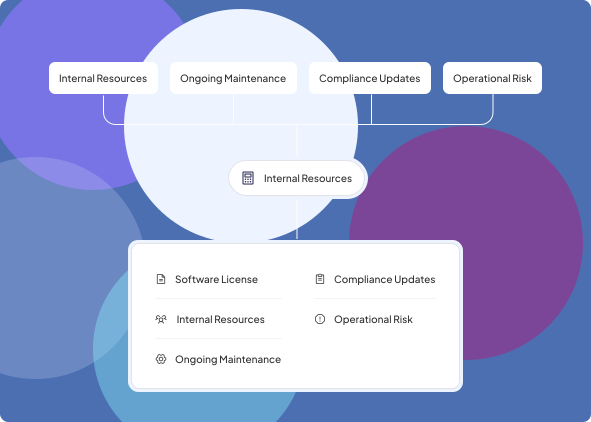
The biggest integration cost isn't software. It's the people required to implement, manage, and maintain it.
Internal Resources
Engineers, analysts, testers, and support teams.
Ongoing Maintenance
Monitoring, updates, troubleshooting, and optimization.
Compliance Updates
Standards evolve. Someone has to manage the changes.
Operational Risk
When integrations fail, someone has to fix them.
Most Integration Projects Don't Fail.
They Get Stuck.
The challenge isn't only technology. It's finding the time, expertise, and resources to keep projects moving.
Typical DIY Environment
- Limited engineering resources
- Competing IT priorities
- Vendor coordination
- Complex testing cycles
- Manual monitoring
- Ongoing maintenance
What Successful Integration Requires
- Dedicated expertise
- Continuous monitoring
- Partner coordination
- Regulatory awareness
- Standards management
- Operational ownership
Software Connects Systems.
Experts Deliver Results.
Vorro combines enterprise integration technology with a fully managed delivery model.
Your team focuses on outcomes. We handle the integration operations.
AI teams should focus on models and outcomes -
not infrastructure maintenance.
What Vorro Manages So Your Team Doesn't Have To
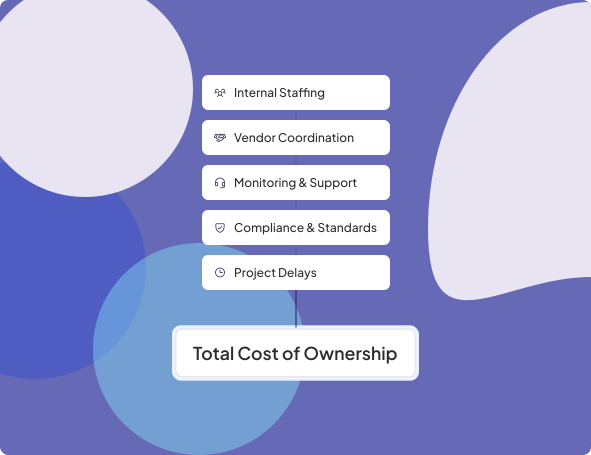
From internal staffing to vendor coordination, Vorro takes ownership of the operational complexity that slows healthcare organizations down.
Internal Staffing
Access to an experienced integration team without expanding headcount.
Vendor Coordination
We coordinate directly with trading partners and vendors.
Monitoring & Support
24/7 monitoring and proactive support.
Compliance & Standards
Ongoing standards updates and compliance management.
Project Delays
Dedicated delivery teams accelerate time-to-value.
Reduce Complexity.
Accelerate Outcomes.
Managed Integration vs. DIY.
See the Difference.
Traditional DIY Platforms
- Software tools
- Developer flexibility
- Platform configuration
- Self-service management
- Internal ownership
Managed Integration
The question isn't whether the work exists.
It's who owns it.
Stop Building Integration Teams.
Start Delivering Outcomes.
Without a managed model, every new integration creates:
- Another project
- Another resource request
- Another monitoring burden
- Another support responsibility
With Vorro:
- The platform already exists
- The expertise already exists
- The support already exists
- The operational model already scales
The first integration delivers value.
The next ten leverage the same foundation.
Get a Managed Integration
Assessment
How much work will your team actually own after implementation?
Let's find out.
45-Minute Working Session
With a Vorro integration architect.
Current-State Review
Systems, interfaces, workflows, and challenges.
Resource Assessment
Identify hidden staffing and operational requirements.
Cost Comparison
DIY ownership vs. managed delivery.
Recommended Approach
Guidance tailored to your environment.
Frequently asked questions
A practical guide to how Vorro fits into existing healthcare infrastructure and AI initiatives.
Is managed integration more expensive?
Not always. When staffing, maintenance, monitoring, and compliance are included, managed services are often more cost-effective than expected.
Do we lose visibility or control?
No. Customers retain full visibility while Vorro handles operational execution.
Can Vorro work with our existing systems?
Yes. BridgeGate supports HL7, FHIR, X12, APIs, databases, and legacy healthcare environments.
What happens after go-live?
Vorro continues to monitor, support, optimize, and maintain integrations as part of the managed service model.
