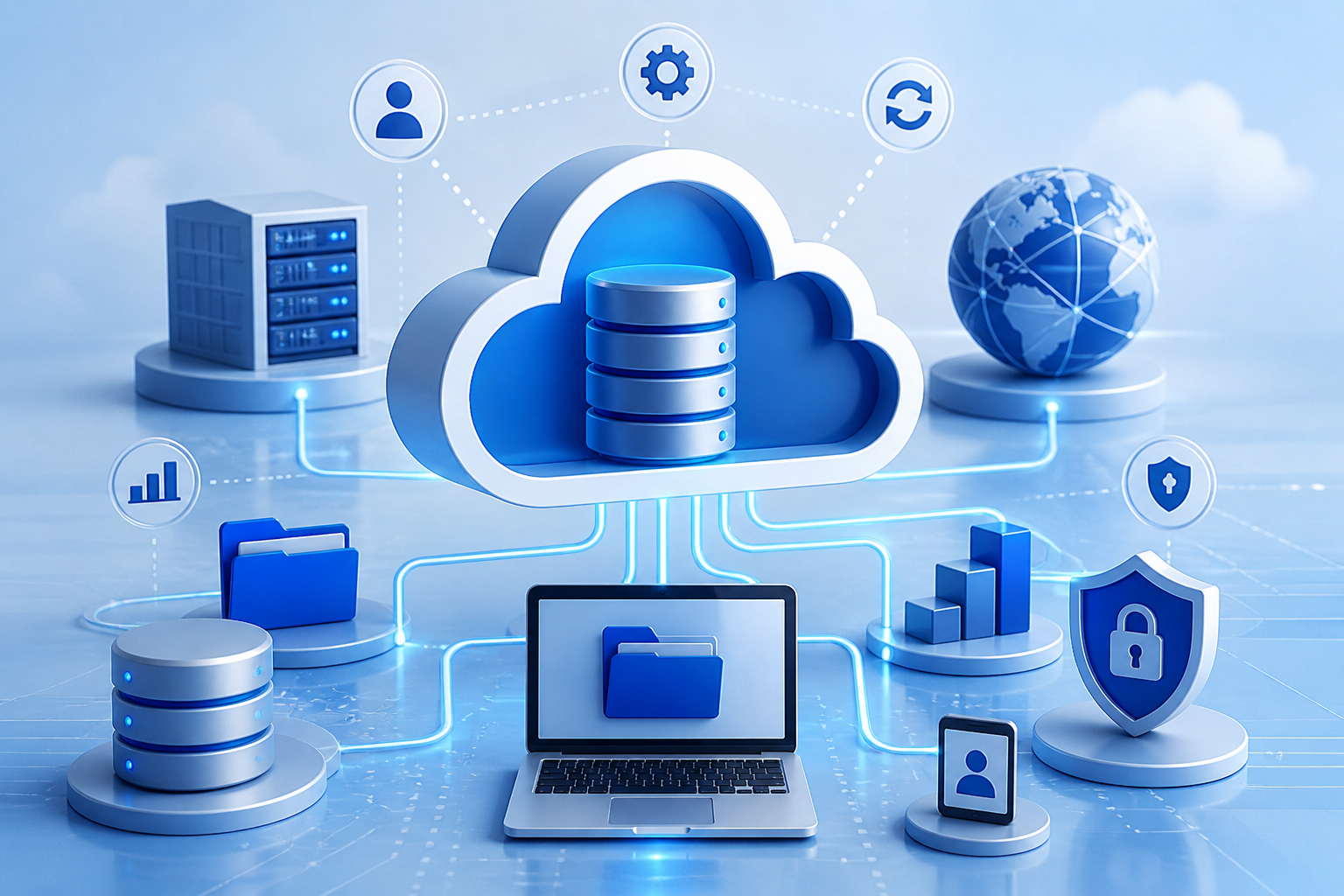
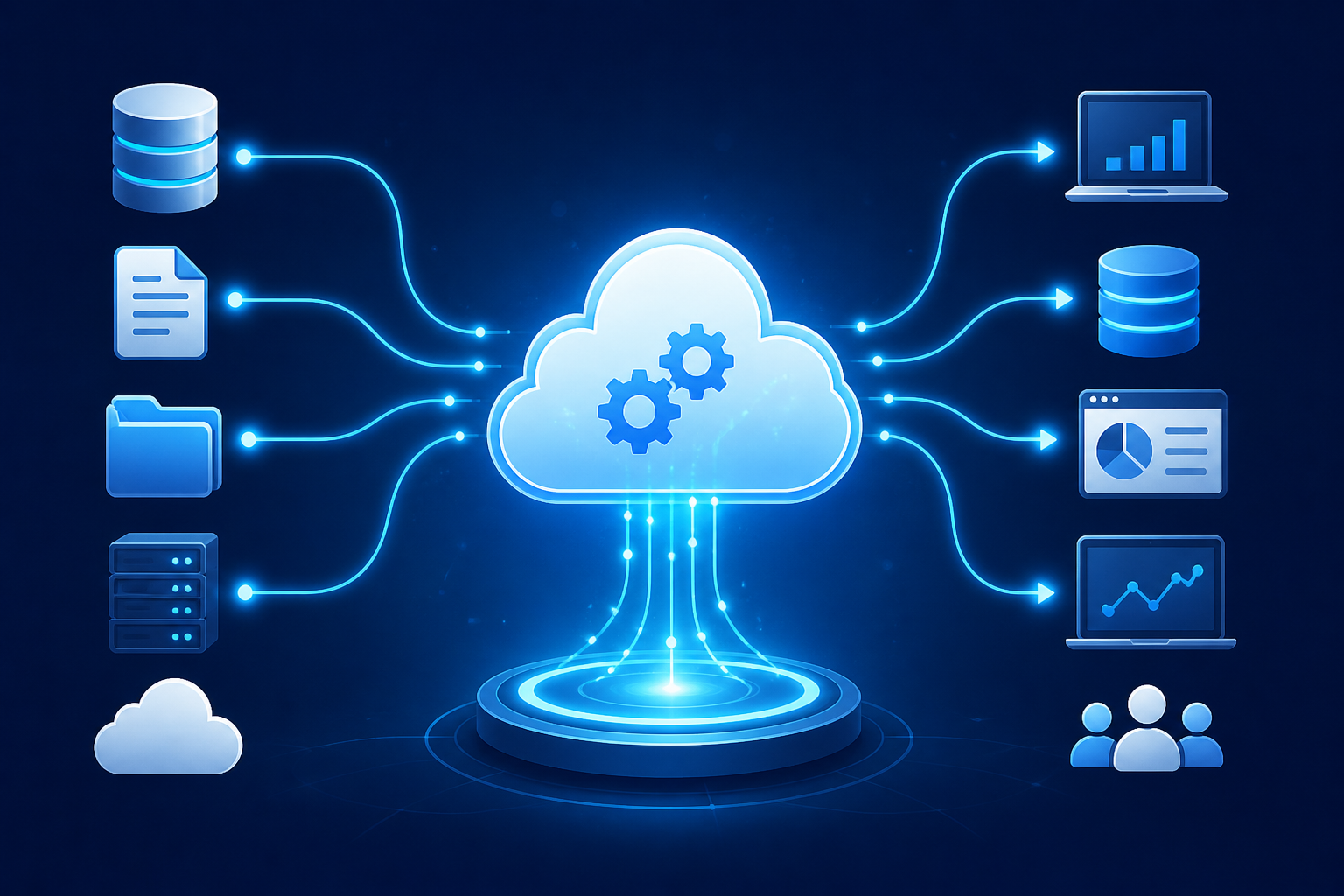
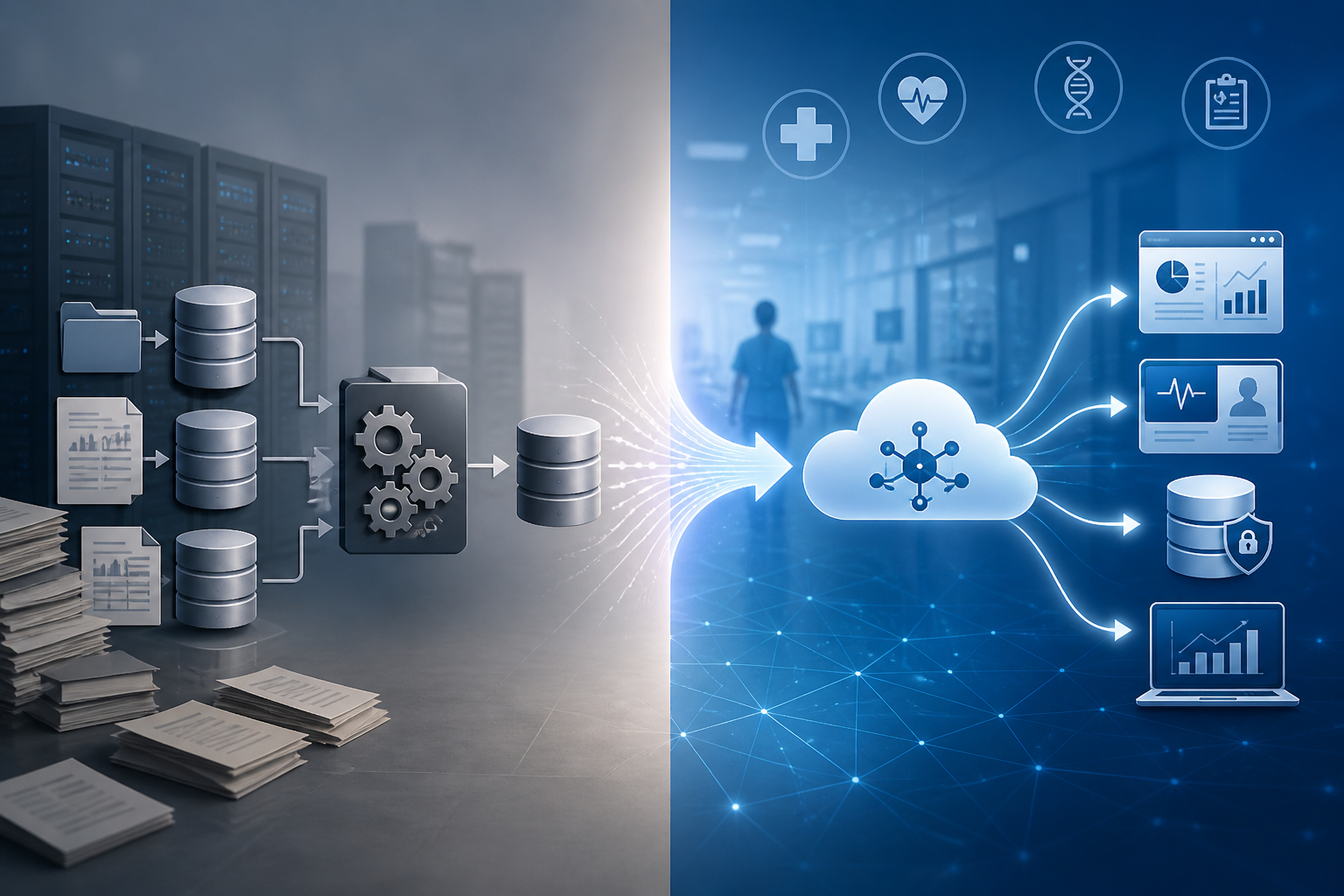
You have never sat on more clinical and operational data than you are currently sitting on, but it is in silos. Each has a bit EHRs, revenue systems, lab systems, pharmacies, CRMs, care management tools, and external partners. You require all of it to collaborate so that you can achieve better results and performance. Healthcare data integration software forms the bedrock of your online strategy in that context.
What is Healthcare Data Integration Software?
Healthcare data integration software links your data to allow a consistent and trusted outlook of information across your clinical, financial and operational systems. It retrieves and pulls data and formats, handles identities, and publishes the data to down stream systems and users in a uniform manner.
A good solution has knowledge of healthcare-specific requirements. It has support with HL7, FHIR, CCD, DICOM, flat files, and APIs. It supports almost real time message and batch loads. It is in charge of patient identity and provider identity. It has security and privacy policies on all integrations.
With the help of healthcare data integration software, you use it to:
- Link EHRs and billing and revenue.
- feed to feeds and reporting systems.
- Share data between the affiliates, partners as well as payers.
- Favour digital front door applications.
- Value based care programs and power population health.
In reality, your group is relying on a healthcare data integration platform to develop, implement, and oversee these links. It forms the foundation of your data exchange strategy and your healthcare data platform comparison conversations usually begin at this layer.
Building Custom Healthcare Data Integration Software
A lot of healthcare companies consider creating its own integration layer. Engineers are familiar with the local systems. Leadership desires strict discipline. It may seem to you that your processes are not similar and only a tailor-made method could work.
A typical healthcare data integration software stack typically consists of:
- EHR, lab, pharmacy, CRM, and other system adapters are customized.
- Routing and queuing data message brokers.
- Logic of transformation to map and normalize data models.
- Patient, provider, location, and payer master data logic.
- Auditing, security controls and logging.
- Surveillance and alerts of data flows.
In construction, you choose architecture, message templates and regulation standards. You integrate on your own internal practices. To other organizations, this control seems appealing.
Nevertheless, the choices on custom healthcare software versus SaaS have to consider technology arrogance. Full responsibility to have cost, provide and long term care of that platform on healthcare data integration transfers to you. Any new system, interface or standard is your work as an engineer.
Benefits of a Custom Approach
A custom build is able to suit very specific requirements. You can:
- Adapt data flows to specialized clinical processes and niche systems.
- Retain delicate logic and data transfer within your sphere.
- Make integration synonymous with your internal development practices.
- Backlogs can be controlled and prioritized integrations can be chosen.
A custom platform can be used to support complex programs when your team possesses a sound delivery discipline and great integration expertise. You maintain complete transparency on what is running on production, data flow and change release.
Risks and Constraints of Building
Weight is associated with the same control. The risk of self-constructed healthcare data integration tools is in the area in which you have recently become the owner:
- First design and implementation over the course of months or years.
- Continuous revision of vendors, standards and regulations.
- Retention of rare integration engineers.
- Support of increasing volumes, partners and use cases.
The cost of integration of healthcare data is commonly distributed among numerous budgets. It is fed by infrastructure, engineering, security, testing and support. In the long term, an internally developed solution will make it more difficult to react to emerging opportunities as each change would be a bespoke project.
Comparing custom healthcare software to SaaS, the question to your staff is to choose between building an integration infrastructure and providing new clinical and patient facing solutions. Both are important, but they do not require similar types of skills and timeframes.
Buying Healthcare Data Integration Platforms
Healthcare data integration platform provides a ready-built base. It provides you with proven connectors, workflow designers, monitor tools and security controls that are healthcare data ready. Team members set up and scale the platform rather than writing all the components themselves.
Under a healthcare data platform comparison, you would consider the support of each vendor:
- Regular medical guidelines and templates.
- Cloud or on-premise or hybrid deployments.
- Message, file and API call scalability.
- Workflows of governance, Auditing, and compliance.
- Your analytics and operational systems Integration with your analytics and operational systems.
Majority of the vendors provide healthcare data integration tools which your integration engineers and analysts can interact using the graphical interface, templates, and repeatable patterns. This is aimed at minimizing integration cycles and excessively heavy custom code.
Benefits of Buying a Platform
By purchasing a healthcare data integration platform, you get:
- An engine prototype that is based on healthcare data use cases.
- The new interfaces and data feeds are produced faster.
- Upgrade, patching, and new standard support by the vendor.
- Availability of a roadmap that is informed by client needs in healthcare.
- Reported trends and standardized integration methods.
Your group is moving the workforce out of plumbing and into business issues. They are able to prioritize on what data is important, the individuals that require it and how it supports results as opposed to creating another HL7 interface engine or API gateway.
Risks and Constraints of Buying
Purchasing does not eliminate all the difficulties. You still need:
- Definite data governance and ownership.
- Configuration and operation platform internal skills.
- Matching vendor roadmap to your strategic targets.
- Close management of healthcare data integration expense under a subscription model.
Vendor lock in is of concern in some organizations. Other people are concerned that a standard platform will not accommodate custom workflows. These issues are legitimate, and it is the reason why careful comparison of healthcare data platform is essential. You have to ensure that you have a platform that is flexible where you need it and is stable where you need it.
Build vs Buy Comparison: Cost, Scalability, and Maintenance
There are three areas which the custom healthcare software vs SaaS decision tends to converge on. Scalability, cost and maintenance. Both impact your cumulative efforts and risk over the long term.
Cost Considerations
A build approach cost of healthcare data integration consists of:
- Employing and keeping integration architects and developers.
- Development, testing and production infrastructure.
- Licenses to support components like databases and message brokers.
- Continuous operation, improvements and bug fixing.
The purchase of a healthcare data integration platform normally moves that blend:
- Platform subscription or licensing.
- Configuration and deployment implementation services.
- Owners and Administrators of internal platforms.
- Optional operations managed services.
A custom build can be made out to be cheaper by just comparing licenses. When you add to that time to market, engineering effort and long term care, total cost frequently leans towards a platform particularly with businesses with extensive integration requirements.
Scalability and Flexibility
Scalability is important in terms of message volumes, partners and data type. A homegrown system can grow, provided the experienced architects consider the system to grow, need redundancy, and pattern of surge. It takes dedication and diligence.
A health data integration platform normally comes with patterns of scaling. The product includes load balancing, clustering and performance tuning. These features are enhanced by vendors over time based on the numerous client environments. Your team is yet to plan on growth, but it is based on a mature foundation.
When assessing healthcare data integration technology, enquire how it aids:
- Horizontal high throughput scaling.
- Multi tenant (also multi facility setups).
- Monolithic cloud and on premises.
- New types of data like patient generated data are supported.
Maintenance and Lifecycle Management
Healthcare data integration cost can be silently overcome by maintenance. In the case of custom builds, your staff owns all updates, patches, security patches and improvements. Your programmers have to react when a standard is altered or when a supplier of an API publishes a new one.
Using bought platform the vendor does core updates. Your team is working on testing such updates in your environment and modifying your settings. The platform vendor still has to do the heavy work of core code changes, but you still need release management.
This disparity is even more obvious when your footprint increases. With every new facility, partner or care model, there are new demands. An integrated solution of enterprise healthcare that is mature offers management tools that will make you remain on top of this expansion without breaking the internal team.
Key Features to Look for in Healthcare Data Integration Tools
Regardless of creating or purchasing, your healthcare data integration software should enable a well-defined list of capabilities. These characteristics make your integration work secure, maintainable, and working in accordance with healthcare standards.
Support for Healthcare Standards and Protocols
A strong solution handles:
- HL7, FHIR, CCD, and other clinical standards.
- DICOM for imaging workflows
- Claims, eligibility and remit exchange in batch files.
- REST and SOAP modern applications.
Your data integration tools in healthcare must have malleable transformation logic to chart among vendor particular structures and your internal configurations. That flexibility is not supposed to use complicated code per interface.
Data Quality, Normalization, and Identity Management
Data quality is missing where integration is involved. Look for:
- Code, unit and reference data normalization tools.
- Patient, provider, and location master data management.
- Completeness and correctness validation rules.
- Exception, routing and correction workflows.
When comparing healthcare data platforms, look at how an individual solution manages identity. Matches should be correct and visible throughout your ecosystem between patients and providers.
Security, Privacy, and Compliance
Any healthcare integration solution enterprise should be in line with regulatory, privacy and organizational controls. Core capabilities include:
- Strengthy authentication and authorization measures.
- Moving and rest data encryption.
- Extensive logging and audit trails.
- Consent and data access policy support.
The data integration software used in healthcare must be compatible with your network controls, identity providers, and security monitoring stack. Integration must not initiate blind spots and access levels without control.
Operational Management and Observability
The process of integration does not end at go live. Operations teams need:
- Message flow, latency, and error rates dashboards.
- Failure warning, slowdowns and anomaly warning.
- Retry, reprocessing and routing change self service tools.
- Audit views that are clear towards compliance and investigation.
Tools that have high observability in data integration to healthcare are capable of reducing downtime and speeding up the root cause analysis. They provide the engineers and business owners with the visibility of data flow and problem location.
When Enterprises Should Build vs Buy
There is no universal solution to all healthcare organizations. Your choice between custom healthcare software and SaaS will be based on your size, strategy, talent, and risk aversion. You must consider where you can build distinct values, and where common strategies are more helpful to you.
When Building Makes Sense
The need to develop your own healthcare data integration software is appropriate when:
- You possess a good internal engineering team of integration knowledge.
- Your integration patterns are very specialised or innovative.
- You desire intensive, coarse grained control over all of the stack.
- You possess long term ownership plan and resources on platform ownership.
There are also technically mature, large organizations that do not find the increased cost of a custom build, of healthcare data integration, objectionable, since they perceive integration as a strategic IP. In such instances, a build strategy can be in line with wider digital engineering objectives.
When Buying is the Better Path
Purchasing a healthcare data integration platform is common when:
- It requires shorter time to appreciate new integrations.
- Your departments already have big project burdens.
- You do not have profound in house integration experience.
- You desire consistent expenditures and controlled changes.
Technical risk is reduced due to an experienced vendor providing an enterprise healthcare integration solution. It standardizes your integration program along with proven patterns and learning patterns that are common in a number of environments. Your departments are concerned with clinical and operational outcomes and not low level infrastructure.
Hybrid Approaches
A hybrid model is popular among numerous businesses. They purchase a healthcare data integration platform which they base and expand it with their own extensions and configurations as the requirement arises. This pattern lets you:
- Use vendor strengths as standards and core engine aspects.
- Adapter/workflow customization Per unique systems.
- Have a standard governance and monitoring level.
- Secure your investments as you acquire new applications and partners.
When you adopt a hybrid perspective, the build vs buy question is whether and where you invest your own custom energy as opposed to which way you go.
Best Practices for Choosing Healthcare Integration Solutions
The next thing after identifying the significance of healthcare data integration software is a well-organized process of selection. Whichever way you are inclined, be it to building, buying or a combination of both, there are certain practices that keep you out of expensive mistakes.
Align with Clear Business and Clinical Outcomes
Begin with the results that you desire to sponsor. Examples include:
- Decreasing the number of manual data entry to clinicians and staff.
- Enhancing the timeliness of data to care management programs.
- Helping patients with digital technology.
- Online financial performance cleaning.
Your medical data integration solutions ought to make these possible directly. When comparing alternatives in a healthcare data platform competition, ask vendors and in-house groups to demonstrate the way the solution will support each of the outcomes with explicit routes and case studies.
Engage Stakeholders Across IT, Clinical, and Operations
Integration has lots of aspects in your organization. Involve:
- Builders and operators of the solution will be IT and data teams.
- Clinical leaders, who require timely and correct data.
- Workflow and process, Operational leaders
- Risk and policy governance: Compliance and security.
This team assists in the definition of needs and measures of success. They also establish collective ownership in the solution of enterprise healthcare integration selected.
Assess Total Cost and Capacity, Not Only Licenses
Consider the healthcare data integration cost in a number of dimensions:
- Licensing or subscription expense for platforms and tools
- In-house design, construction, testing and operations.
- Employee training and training management.
- Vendor/Partner Implementation and support services.
The cost analysis can guide you to make a reasonable comparison between custom healthcare software and SaaS. It also unveils abilities gaps through which a partner or managed service may make sense.
Prioritize Flexibility and Future Readiness
The needs of healthcare data will change. New care models and partners, new data sources will emerge. Your medical data integration software can and should be scaled without complete restructuring.
Focus on:
- Incremental architecture that promotes changes.
- Configure not heavy custom code.
- Wide protocol support of new and old systems.
- Well defined vendor roadmaps that are in line with your direction.
Such future preparedness mitigates the risk of making your integration layer a bottleneck to innovation.
Select Partners with Deep Healthcare Experience
The work of healthcare data possesses specific trends, hazards, and limitations. A mature partner knows the work processes, compliance requirements and actual world integration challenges in numerous settings.
When you consider an enterprise healthcare integration solution, demand:
- Can provide some examples of such clients and scenarios.
- Conventional implementation strategies and playbooks.
- Support and escalation incident models.
- Signs of inter-clinical and inter-IT teamwork.
You need a partner who will act as a member of your team not just as a software seller or consultant.
How Vorro Supports Your Build vs Buy Decision
Vorro specializes in productive, result oriented integration of healthcare. Our team has worked through build vs buy questions across health systems, payers, and partners that are the same that you are asking today. We make you analyze the healthcare data integration software solutions based on your strategy, not on some generic best practices.
In case you need to purchase, Vorro offers an enterprise healthcare integration platform, which is compatible with both modern and old systems, has high security, and operation can be easily controlled. In case you prefer a hybrid strategy, we assist your departments to expand a healthcare information integration platform with settings and custom elements where they actually contribute value.
You receive one that is commitment based on concrete outcomes, reduced friction in the teams of your companies, and a sure flow of the information that is the most important. Contact our team at Vorro to find out how your healthcare data integration strategy can be supported and to determine what you feel like building and what you feel like buying.