By Akshita Kohli · October 28, 2025
Introduction
Healthcare data is considered the most valuable and at the same time the most risky asset. Data that is the core of clinical decision-making, payer reimbursement, and patient engagement is, at the same time, a huge regulatory risk. According to HIPAA (The Health Insurance Portability and Accountability Act) standards, strict rules are set concerning the way Protected Health Information (PHI) should be stored, shared, and accessed. Even though compliance is a must, performing it in a fragmented IT ecosystem is one of the biggest challenges that chief technology officers (CTOs) in healthcare face.
Healthcare professionals who violate HIPAA rules may have to pay millions in penalties and not only that, suffer reputational damage. In the meantime, compliance processes that are old and manual raise costs of operations, slow down the audit process, and are a source of dissatisfaction among the staff. The tension between innovation and compliance is such that CTOs are in a dilemma: how can systems be modernized, transformation accelerated, and regulatory obligations fulfilled at the same time?
The answer is HIPAA compliant integration. Integration platform deployment that is customized for healthcare helped a single mid-sized organization to consolidate data from siloed systems, automate to compliance workflows, and achieve an outstanding business result: a 300% return on investment within 24 months.
This article talks about the difficulties the client had, the integration tactics they used, the results they achieved, and the lessons that the CTOs from the healthcare sector can learn. While the details about the organization are not disclosed; however, the achievement is authentic — and it proves that a HIPAA compliant integration is not only a mandatory directive, but it is also a prominent driver of business value that can be measured.
The Customer’s Challenge
The healthcare network was the customer. A middle-sized healthcare network consisting of three hospitals, ten outpatient clinics, and a staff of around 4,000 people. In a typical manner for a company of its kind, they expanded through acquisitions and therefore were left with a multitude of different EMRs, lab systems, billing platforms, and payer connections. The systems were running separately, and the integration was only a few point-to-point links that made up a patchwork.
The Symptoms of Healthcare IT Fragmentation
As a result of healthcare systems expanding by means of acquisitions, departmental silos, or the fast implementation of new applications, their negligence to integrate is revealed in a very painful and costly manner. In the case of the customer from this case study, the signs of disintegration were not single issues; they were a web of challenges that fed on each other. Every symptom chipped away at the organization’s operational efficiency, compliance confidence, financial stability, and patient trust.
1. Duplicate Patient Records
Duplicate records rank as one of the most obvious results of healthcare IT fragmentation. This client had a scenario where the three hospitals and ten outpatient clinics each ran their own EMR. A patient who visited more than one facility often ended up with multiple identifiers.
Practical consequences included:
- It is quite possible that a patient with diabetes would have one record at a hospital, another at a primary care clinic, and a third at a specialty lab. Each record contained only partial information, and none of them provided a full history.
- Healthcare professionals had to spend extra time verifying the data or repeating tests since the information they had could not be trusted.
- During emergency situations, the delays caused by data reconciliation contributed to clinical risk; the correct medication history might not be available at the right moment.
From an IT and compliance standpoint, duplicate records posed significant risks. As access reviews, for instance, they had to look at each record separately, thus it was hard to determine whether permissions were correct. What’s more, duplicates increase the likelihood of PHI being mishandled or disclosed without authorization.
It led to a perfect storm of higher costs from redundant procedures, greater compliance risk from inconsistent records, and lower quality of care for patients.
2. Compliance Struggles
Even under the best conditions, maintaining HIPAA compliance is very demanding in terms of resources. In the customer’s environment, which was fragmented, it became too much, literally.
Once every three months, compliance officers had to check access logs for various systems. Each EMR created its own reports, in different ways, and sometimes it was necessary to manually export the data into spreadsheets. It was almost impossible to combine these reports into one single, clear audit trail.
In addition to that, CMS quality reporting was the main source of stress. Federal programs such as the Merit-based Incentive Payment System (MIPS) and Hospital Quality Reporting required accurate and complete submissions. Staff without access to integrated data had to take information out of lab systems, billing software, and EMRs manually and then put it all together.
Such manual labor was responsible for the consumption of tens of thousands of staff hours annually. Compliance officers labeled the working method a “never-ending scramble.” Making mistakes was unavoidable, and each error brought with it the possibility of penalties.
According to the CTO, the absence of integration was the reason why compliance was using a lot of IT resources that were not proportionate. Instead of thinking about modernization or innovation, the groups had to go on with their work, which was to satisfy the regulators. Compliance was not the result of well-functioning systems, but it was rather a continuous struggle.
3. Audit Pain
The annual HIPAA audits were like the grim reaper of the whole company. For a long time, the organization was engaged in the struggle to get ready for the audits. Each preparation required months of effort across different departments. Staff from the IT department pulled logs, the Human Resources department verified training compliance, and compliance officers reconciled policies against system outputs.
The process was so fragmented that it was impossible to create a single, authoritative audit trail. There were instances in which auditors would request logs for a particular individual only to find that different systems had different records of that person. IT staff would be burning the midnight oil and working on weekends trying to complete the missing pieces of the puzzle manually.
The human cost was real:
- The physical and mental exhaustion of the employees was at its peak during audit season.
- Other IT projects were put on hold as almost all the resources were used in audit preparations.
- The compliance officers painted the culture picture as “reactive and fearful” because they could not predict the outcome of the audit.
On top of the human toll, audits caused the organization to be financially exposed. The company was able to avert a penalty of a million-dollar order when an auditor pointed out inconsistencies in the reconciliation of access logs. The warning was clear: if the system was not fixed, the only thing left to do was wait for the fine to arrive.
For the CTO, these repeating audit cycles were a sign of a deeper problem that went beyond the question of infrastructure viability. If the integration was not HIPAA compliant, compliance would always be the company’s Achilles’ heel.
4. Financial Leakage
One of the most serious consequences of the fragmented systems was the direct impact on the company’s profit – the denied claims became a problem that was growing, thus the organization’s revenues were gradually diminishing.
Most of the time, claims were rejected because the data submitted were not in accordance with the requirements of the payers. For instance:
- The identification of patients was different between EMRs, so the records did not correspond.
- The absence of the laboratory results delayed the approval of the claims.
- The differences in the coding of the billing platforms led to the occurrence of denials.
Every single denial was followed by a manual process. The billing staff was losing time and energy in information retrieval, claim resubmission, and rejection appeal, and these tasks were done for several hours. The total effect of these activities was very high: millions of dollars of revenue that were either lost or delayed annually.
Financial leakage was not limited to claims only. Quite a few overtime costs were accumulated in the compliance preparation activities; similarly, legal expenses caused by regulatory reviews had been increasing for some time. Directors found it hard to explain these costs to the board, especially when IT spending was already on the rise.
The irony of the situation was that a large amount of money was poured into technology by the organization — but without integration, those investments were producing diminishing returns. The systems were not interconnected; they operated independently, thus the organization was facing the increase of both complexity and costs.
5. Patient Dissatisfaction
Patient dissatisfaction may well have been the most harmful consequence of fragmentation. In a patient-oriented healthcare market, patients demand seamless access to their records, easy scheduling, and efficient digital tools. However, this customer’s fragmented systems were delivering the exact opposite.
Patients were not allowed to have access to all their information in one place. They had to, however, log into different portals for different facilities — each having its own username, password, and interface. Some portals did not have telehealth functionalities at all.
Delays in getting records were the main cause of frustration. Patients were, in most cases, kept waiting for weeks for full histories, especially when care was taken at different facilities. Dissatisfaction was becoming apparent through surveys, online reviews, and even media coverage.
Dissatisfaction was real and not only that it had a considerable financial impact:
- Low satisfaction scores had an unfavorable effect on CMS reimbursement rates.
- Patients who were provided with unified portals and better digital engagement started to switch to these competitors.
- The damage to reputation through word-of-mouth made it increasingly difficult to attract new patients.
For the CTO, this was probably the most pressing issue. Fragmentation was definitely not only an internal IT problem — it was a threat to the market. This organization with the patient-unfriendly, fragmented system was going to lose both revenue and trust while competitors with integrated, patient-friendly systems were getting ahead of them.
The Compounding Effect
Each of the challenges, duplicate records, compliance struggles, audit pain, financial leakage, and patient dissatisfaction, was hurting the organization individually. However, these problems were intertwined in such a way that they formed a vicious cycle.
Duplicate records drove the compliance burden, which made audits more difficult. Audit struggles took up resources, thus financial leakage increased. Financial leakage led to fewer investments in patient-facing technology, thus dissatisfaction increased. Dissatisfied patients meant lower revenue, which further limited the budget for IT improvements.
This cycle was not sustainable. The organization could not afford to keep things as they were. It required a strategy that would disrupt the cycle, tackle the root causes, and change fragmentation into integration.
The board became more concerned. Despite a hefty IT budget, the directors were not able to see real returns. Compliance officers were constantly alerting to the risk of violations. Clinicians were raising their voices against inefficiencies, and patients were threatening to move to more digitally mature competitors.
The CTO was given the task of resolving a paradox: on the one hand, the need to modernize systems so as to improve efficiency and patient care; on the other hand, to do it in a manner that complies with HIPAA standards and even exceeds them.
The Turning Point
The moment that really made a difference is represented by a HIPAA audit during which the organization was very close to receiving a penalty of over a million dollars. For quite some time the compliance officers had a hard time reconciling access logs from different systems. The auditors found discrepancies and although in the end no violations were alleged, the organization got a very strong warning.
The event served as a catalyst for change. The board instructed the CTO to:
- Find a solution that would maintain ongoing HIPAA compliance.
- Lower the expenses and the compliance-related process burden.
- Enhance patient and clinician experience.
- Provide a measurable ROI.
The CTO understood that the solution to these problems could not be achieved by merely putting patches. It necessitated a fundamental change in strategy towards HIPAA compliant integration at the enterprise level.
The Strategy: HIPAA Compliant Integration
The CTO and the compliance department through a careful evaluation, decided on a cloud healthcare-native integration platform which aligns perfectly with HIPAA and HITECH requirements. The plan revolved around the following four main points:
1. Unified Data Integration
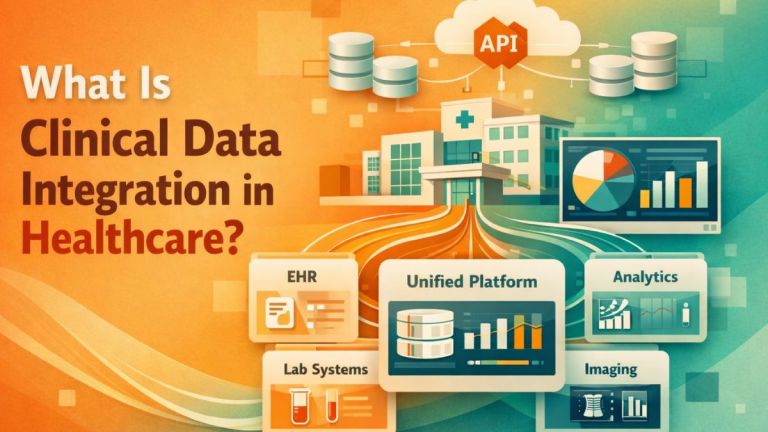
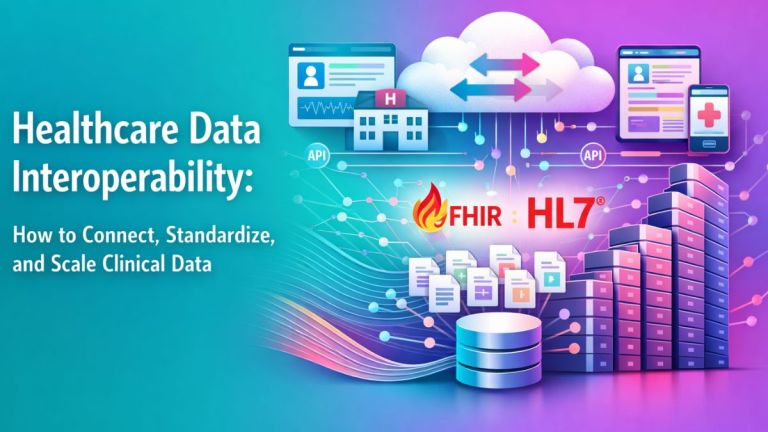
The integration hub had connections established with all EMRs, revenue cycle systems, lab platforms, and payer portals. Data standards HL7, FHIR, and X12 were adopted to normalize data, thus enabling the creation of a single source of truth for patient and financial records.
2. Automated Compliance Workflows
Measures for HIPAA on the security side were coded right into the integration flows. Among these were audit logging that was automated, encryption both at rest and in transit, and access monitoring in real-time. Compliance reports could be generated on the fly, instead of being put together manually.
3. Patient-Centric Digital Engagement
Through the integration platform, a single patient portal was launched. Patients had access to their records, they could book appointments, and also attend telehealth sessions — all ensured by safe and compliant data sharing.
4. Real-Time Analytics
After the integration of systems, the data was made available through dashboards that reflected the key metrics tracked by the organization: denied claims, staff training completion, audit readiness, and patient satisfaction. The use of predictive analytics also allowed for resource planning to be done in a proactive manner.
The integration platform was like a safety net ensuring HIPAA compliance was baked into every transaction. The data was always encrypted while being transferred, every access was recorded, and audit readiness turned into a continuous mode rather than a sudden state of the crisis.
The Results
Within 24 months, the customer accomplished dramatic, quantifiable outcomes:
Compliance Transformation
- The time to prepare for an audit was shortened from six months to six weeks.
- The automation of access logs removed the need for manual reconciliation.
- The number of HIPAA audit exceptions has gone down by 70%.
Financial Gains
- Compliance overhead was reduced by $10M annually (fewer overtime hours, less manual labor).
- Compliance gaps were completely eliminated and as a result, $4M in penalties were avoided.
- Reimbursements amounting to $6M were accelerated due to the cleaner data and faster CMS reporting.
Operational Efficiency
- Compliance workload reduced by 50%, freeing staff for strategic tasks.
- The backlog of IT reporting was reduced by 40% through self-service dashboards.
- Overtime costs were reduced by 75% as audits became regular practice.
Clinical and Patient Outcomes
- The number of duplicate records was cut down by 68%, thus patient safety was improved.
- Telehealth usage was increased by 35%, thereby more patients could be reached.
- During the first year, patient satisfaction scores went up by 12%.
Overall ROI
After spending $7M on integration technology and training, the customer gained $20M in annual benefits. The return on investment after two years was 300%.
Why It Worked
Several reasons contributed to this transformation successful:
-
Compliance as the Anchor
The company did not treat compliance as a limitation, rather it used compliance as the basis of its integration plan. This helped the company see the project as risk reduction and thus get the support of the board.
-
Incremental Wins
The CTO limited himself to the most valuable workflows first — audit logs, CMS reporting, patient access — in order to demonstrate early ROI and gain momentum.
-
Collaboration Between IT and Compliance
IT and compliance officers collaborated closely to make sure the technical solutions met the regulations.
-
Culture Shift
The employees were made to understand that automation would save them from the drudgery of their work, not that it would take away their jobs. As a result, resistance was minimized and adoption improved.
Lessons for CTOs
This case makes it clear that a HIPAA-compliant integration is more than just about avoiding penalties. By executing this carefully, it can in fact, produce tangible returns in different areas such as compliance, finance, operations, and patient care.
The key takeaways for CTOs are:
- The integration has to be healthcare-native, thus it should support HL7, FHIR, and HIPAA safeguards.
- The return on investment (ROI) should be gauged not only in terms of compliance savings, avoided penalties, and revenue facilitation.
- It is most convenient to obtain the board’s support when the projects are presented as being focused on compliance and risk mitigation.
- Quick wins help to build up the trust and provide a rationale for scaling.
The Bigger Picture: HIPAA Compliant Integration as a Business Enabler
Healthcare is usually considered as the last sector to go digital while the need to comply with the rules may be the factor that gives the pace to the whole modernization process. Companies, by making HIPAA compliance part of their integration architecture, attain safety and agility at the same time.
Some of the opportunities in the sector are:
- AI-driven compliance monitoring that detects risks immediately.
- Population health analytics that use integrated and secure data.
- Cross-industry data sharing with payers, pharmacies, and research institutions — all being compliant from the very beginning.
The future is for those organizations that regard compliance not as an obstacle but as a source of trust, efficiency, and growth.
Conclusion
The journey of this anonymous customer illustrates that HIPAA compliant integration is not merely an IT project — it is a business strategy. The company, by consolidating data, automating compliance, and upgrading patient engagement, therefore, realized a 300% ROI within only two years.
For CTOs, the signal cannot be more distinct: the route to digital transformation as well as regulatory compliance is identical. Utilizing an appropriate integration platform, you are able to decrease risk, lower expenses, enhance patient outcomes, and provide results at the board level.
Ready to explore how HIPAA compliant integration can transform your organization? Request a Demo Today.