By Akshita Kohli · November 7, 2025
The healthcare landscape is changing fast, and data is no longer a side-product of the care process; it is the main source of innovation, efficiency, and better patient outcomes. However, for a large number of healthcare organizations, this valuable resource is still fragmented and stored in different systems, thus it cannot be used to its full extent. The problem opens up a unique opportunity for visionary product managers to lead a groundbreaking solution: medical data integration.
As a product manager, your job is to find new ways of product improvement, user experience enhancement, and strategic value creation. In healthcare, this is more and more about the efficient use of data. But it is necessary to have more than just a good idea when pushing for a technological investment of such magnitude, especially for something as intricate as medical data integration; it requires a thorough, data-based business case.
Such a guide will be your toolkit, equipping you with the knowledge, of which you can be certain, the insight of the issue, and the actionable items needed to devise a bulletproof business case for investing in medical data integration. This will be a win for your organization, in that it will not only be able to adapt to a data-driven future in healthcare but also to prosper there.
The Imperative: Why Medical Data Integration is Necessary
We should perhaps first understand the “why” before moving on to the “how”. The reasons for funding medical data integration are at the core of healthcare operational and strategic management of the future.
- Fragmented Data is the Biggest Problem Everywhere: Healthcare systems have been reported as giants with walls. Electronic Health Records (EHRs), Laboratory Information Systems (LIS), Picture Archiving and Communication Systems (PACS), billing software, patient portals, claims databases, wearable device data, genomic data – just to name a few. Each system is designed to serve a vital function, but the fact that they cannot communicate with each other has resulted in a data ecosystem that is disjointed. This fragmentation causes:
- Incomplete Patient Pictures: Clinicians may not have a complete picture, which can have a significant impact on diagnosis and treatment.
- Operational Inefficiencies: The manual data entry, repeat tests, and lengthy administrative works are all caused by the process.
- Delayed Insights: To a large extent, the need to consolidate data slows down the analytics efforts.
- Compliance Risks: Challenges in ensuring data integrity and audit trails during the different stages of the process.
2. The Drive for Value-Based Care and Population Health: Long gone are the days when fee-for-service was king. The upcoming shift to value-based care models is changing the game. It is asking for detailed knowledge of outcomes, costs, and the whole patient population. Such comprehension can only be achieved with integrated data that shows the link between interventions and financial results, gives a full account of the patient journey, and reveals those to whom the disease may befall first.
- Enhancing Patient Experience and Engagement: What is more, futuristically-minded patients will not rest until they get flawless digital services. Connected data is the key that unlocks personalized engagements, enables Proactive communication, rids patients of inconveniences, and thus, to a great extent, elevates patient satisfaction and implementation.
- Fueling Innovation in AI and Machine Learning: Among the many uses of AI in the field of healthcare, one example is the application of AI to identify patterns to be able to forecast epidemics, another is the development of AI-powered algorithms that help in creating personalized treatment plans- basically, all of this depends on the availability of a massive, spotless, and integrated dataset. Simply put, without integration, the AI fiasco cannot be more than a lifeless ship.
- Regulatory Compliance and Data Governance: Among others, regulations such as HIPAA in the USA or GDPR in Europe, impose in detailed ways that data privacy, security, and pact must be safeguarded. Excellent integration planning facilitates the establishment of a data governance structure that is centralized in approach, thus, making it easier to comply and lessening the danger of non-compliance.
Understanding Medical Data Integration: More Than Just an API
Essentially, medical data integration is about making healthcare IT systems that are different from each other able to talk to each other in a way that is easy, safe, and follows agreed-upon rules. It’s not about simply linking two systems; it’s about building a smart network that lets information be shared not only easily but also with a full understanding between the members of the whole ecosphere.
Fundamental elements frequently comprise:
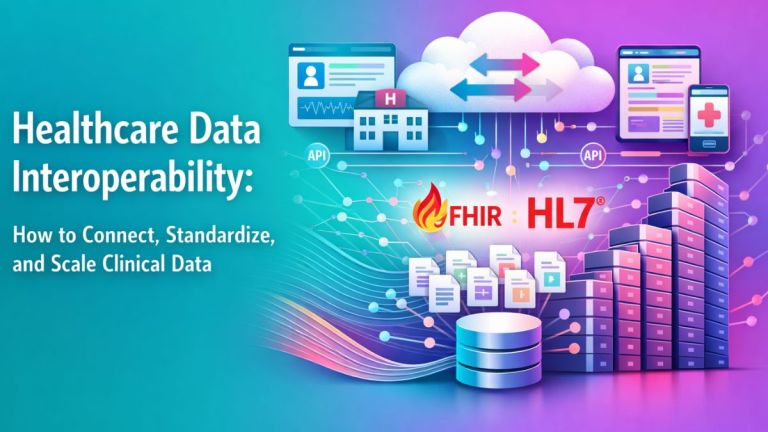
- Interoperability Standards: Using the standards that are set by the industry such as HL7 (Health Level Seven), FHIR (Fast Healthcare Interoperability Resources), DICOM (Digital Imaging and Communications in Medicine), and CCDA (Consolidated Clinical Document Architecture) in order to allow the data to be recognized by different systems.
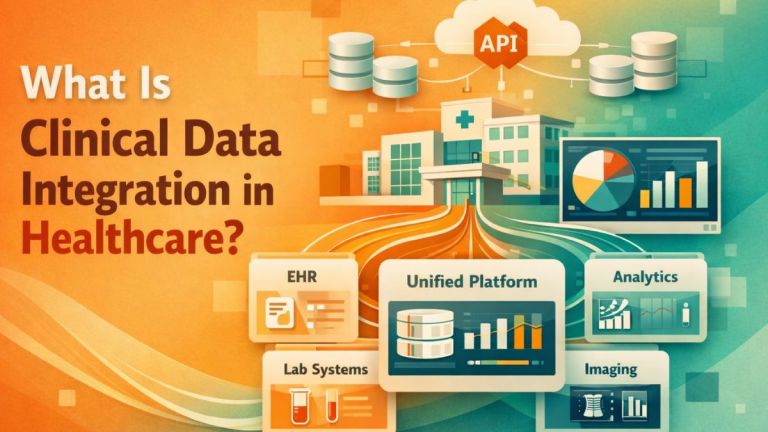
- Integration Engines/Platforms: The software that acts as the conductor for data stream, changes the data format, and keeps the connection going between different applications.
- APIs (Application Programming Interfaces): Specification of communication between different software components.
- Data Warehouses/Lakes: The central places where data from different sources after integration is stored and most times are made ready for analytics.
- ETL (Extract, Transform, Load) Processes: The ways of taking data from the systems that have it as a source, doing some cleaning and standardization, and then putting it into the target system.
As a product manager, you are not supposed to be the integration architect, but you have to comprehend the strategic value and consequences of these elements for the capabilities of your product and the general goals of your organization.
Crafting Your Business Case: A Product Manager’s Framework
To make a business case that is persuasive, one needs to have a well-planned approach that considers the chief concerns of the stakeholders, particularly the staff from the finance, operations, and executive leadership departments. Construction is as follows:
Phase 1: Define the Problem & Scope
- Identify the Pain Points: How, specifically, does the lack of integration of data lead to operational inefficiencies, gaps in patient experience, or strategic limitations? Be exact. (for instance, “Doctors are taking 15% of their time to check data manually,” or “By not linking claims data with clinical outcomes, we cannot show the return on investment for our new diabetes management program.”)
- Quantify the Impact: Take the pain points and, if you can, assign figures to them. How much time is lost? How much do duplicate tests cost? How much revenue is predicted to be lost due to poor patient retention?
- Define Your Integration Vision: How would integration be successful? Which systems will be connected? What data will be transferred? What features will be available? Consider being realistic as well as aspirational.
Phase 2: Define the Solution (Medical Data Integration)
- Clarify the “What”: Explain briefly whether the medical data integration is a new engine for your area, a FHIR-based API layer, or data lake strategy?
- Clarify the “How”: Explain briefly, the high-level approach your organization anticipates following (e.g., “We will deploy an enterprise integration platform through FHIR to connect our EHR, LIS, and patient portal”).
- Highlight Key Features & Benefits: It’s important to clarify those key features of the integration that specifically help to eliminate the typical user frustrations and provide the desired value.
Phase 3: Quantify the Benefits & ROI
The business case you present at this point could be likened to that of a top-tier business case. Go beyond mere narratives and back up your claims with real financial and operational wins.
- Financial Benefits (Direct & Indirect Cost Savings/Revenue Generation):
- Reduced Operational Costs:
-
- Decreased Manual Data Entry & Reconciliation: Come up with a ballpark figure of the FTE hours that have been saved.
- Elimination of Duplicate Tests/Procedures: Determine what would be the average cost per test and how it would decrease.
- Streamlined Administrative Processes: For example billing, claims processing, and scheduling can be done faster and more efficiently.
- Optimized Resource Utilization: For instance, through the improvement of bed management and equipment scheduling.
- Improved Revenue Cycle Management:
-
-
- Reduced Denials & Rejections: More accurate and complete data for claims.
- Faster Reimbursement: Less time for billing cycles due to more efficient data flow.
- Enhanced Charge Capture: Ensuring that all services are billed correctly.
-
- Enhanced Patient Acquisition & Retention:
-
-
- Improved Patient Satisfaction: Resulting in a higher retention rate and positive word-of-mouth referrals.
- Personalized Engagement: By using a data-driven approach, patients can be very effectively encouraged to portal use and appointment adherence.
-
- New Revenue Streams (Future State):
-
- Data Monetization (with strict privacy controls): The exchange of de-identified aggregate data for research or commercial use.
- Expanded Service Offerings: Which is facilitated by new data technology (e.g., remote patient monitoring).
B. Operational Benefits (Efficiency & Quality Improvements):
- Improved Clinical Decision Support: The clinicians are facilitated in their decision-making process as they have access to real-time, comprehensive patient data.
- Faster Access to Information: The time for the patient record retrieval was deep shortened.
- Streamlined Workflows: Hard stop situation was removed by means of automatic data transfer thereby workflow was streamlined.
- Enhanced Care Coordination: Communication improvements between providers and care settings.
- Proactive Population Health Management: The most efficient methods of identifying and engaging with at-risk patient groups are now used.
- Faster Time-to-Insight: Less time data manipulation takes therefore the analysts have more time for insight generation.
- Strategic Benefits (Long-term Value & Competitive Advantage):
- Enhanced Regulatory Compliance & Risk Mitigation: Implementation of centralized data governance lessens the chances of getting fined and facing legal issues.
- Improved Data Quality & Integrity: Uniform data from all systems.
- AI/ML and predictive analytics platform: This leads to advanced capabilities.
- Better strategic planning: Benefit from foresight provided by data-driven insights supported by organizational change.
- Competitive differentiation: If data is used as a tool, it can help you position the organization at the leading edge of the innovation in healthcare.
- Talent Attraction & Retention: Clinicians and researchers enjoy and are motivated when working with best-in-class, integrated systems.
- Increased Agility: New technologies and services can be adapted quickly.
Phase 4: Consider the Investment & Resources Required
Be open about what it’ll take.
- Estimated Costs:
-
- Software Licenses: Integration platform, data warehouse, etc.
- Implementation Services: System integrators with consultants.
- Internal Resources: A committed IT staff including project managers and domain experts.
- Training: IT teams and end-users.
- Maintenance & Support: Regular operational costs.
- Contingency: Always remember to reserve a portion for the unexpected.
- Timeline: Provide a credible project timeline with the key milestones.
- Required Resources: Point out the personnel, hardware, and other dependencies.
Phase 5: Identify Risks & Mitigation Strategies
There are no risk-free projects. Recognize them and show that you have considered them in depth.
- Technical Risks: Data mapping challenges, incompatibilities of the system, performance issues.
- Mitigation: Pilot projects, phased rollout, thorough testing, vendor knowledge.
- Security & Privacy Risks: Data access by unauthorized persons, non-compliance.
- Mitigation: Utilization of data encryption, access controls, periodic audits, and established practices.
- User acceptance risk: Pushback against new work methods.
- Mitigation: The process of working with and involving all stakeholders, upfront with expectations, communication, training and advertising.
- Vendor dependency risk: Unconscionable dependence on a vendor.
- Mitigation: Thoughtful and consistent vendor nurturing, have an SLA, build to be modular, and interoperable.
- Budget Overruns/Scope Creep:
- Mitigation: A detailed project plan, a change management process, and continuous monitoring.
Phase 6: Present Your Recommendation & Call to Action
- Summarize the Value Proposition: Mention again the main benefits that made the offer compelling.
- State Your Recommendation Clearly: Our recommendation is an investment on [X] over [Y] for a platform that brings together medical data to help realize [benefit].
- Invitation to Agree/Proceed: Indicate clearly what you expect from the people you are addressing (for instance, permission to use the budget, creating a steering committee, going deeper into the issue).
Key Metrics and KPIs for Your Business Case
While quantifying the benefits you should also include these key performance indicators (KPIs). These are the ones that executives will most likely understand and appreciate:
-
- Return on Investment (ROI): Determine (Net Benefits / Total Costs) x 100%.
- Payback Period: The time interval within which the investment is repaid.
- Net Present Value (NPV): It is the value of the future cash flows in today’s terms less the initial investment.
- Internal Rate of Return (IRR): The rate at which the value of the cash inflows equals that of the cash outflows.
- Operational Efficiency Metrics:
-
-
- How much time is being wasted on data reconciliation by a single clinician/admin FTE?
- The number of duplicate tests that have been ordered.
- Average length of stay (ALOS) in the case that data integration can influence care pathways.
- The time taken to produce analytical reports.
-
- Quality & Safety Metrics:
-
-
- A reduction in the adverse drug events (ADEs) that are due to integrated medication reconciliation.
- Enhancement of HEDIS/quality scores.
-
- Patient Experience Metrics:
-
-
- Patient satisfaction scores (e.g., NPS).
- Patient portal engagement levels.
- The rate of appointment no-shows (if better communication leads to their reduction).
-
- Compliance Metrics:
-
- Audit readiness scores.
- Number of data governance violations.
Product Manager’s Toolkit: Tips for Success
- Understand Your Audience: Adjust your communication to the different stakeholders (for example, finance is interested in ROI, clinicians in patient care, IT in technical feasibility).
- Creating Partnerships: Find the support of clinical champions, IT leaders, and operations managers. Their endorsement is priceless.
- Think Big, Start Small: A pilot project or a phased approach to showing the first wins and getting the trust can be a way to think big while still starting small.
- Communicate the Value: Convert the technical aspects into business benefits that are easy to understand.
- Make Use of Visuals: Being supported by charts, graphs, or the infographic (see below!) can allow complex data to be more easily understood.
- Objections Anticipation: Be ready with answers to the questions about costs, complexity, and disruption that are raised most frequently.
- Point Out What Sets You Apart: Show how this investment will be a source of strength for your organization in the competition with others.
- Use Storytelling: Present real-world examples (of course, anonymized) where fragmented data has resulted in poor care or operations.
Conclusion: Your Role as a Data Integration Champion
Product managers are the ones who combine technology, business strategy, and user needs to create a new whole. It is you who can most vividly explain how integrating medical data can change the whole game. One by one, you can solve all problems by making a detailed business case that defines them, suggests a solution, measures the benefits, talks about the investment, and lessens the risks. Thus, you can get the necessary resources and make the people involved feel comfortable and confident in proceeding with this important project.
It’s a significant step that connects your medical data to the rest of the healthcare ecosystem, not just a mere technological upgrade. If you position this idea as a key feature of your product, then you will certainly be able to take your product to another level and put your company in a leading position in the market of wellness and success.
Where healthcare is heading next is the unification of different systems in a smooth way, and it will be your leadership as a product manager to industry this change that will be the most determining factor in making it happen.