The healing CIO no longer just oversees the servers; they plan clinical intelligence from the ground up. However, for a lot of people, the “intelligence” part of that equation is hindered by a disappointing truth: we have plenty of data, but most of it is still locked up in silos. Although we have spent a whole decade digitizing patient records, the real next-level care remains elusive as our different systems still can’t communicate with each other.
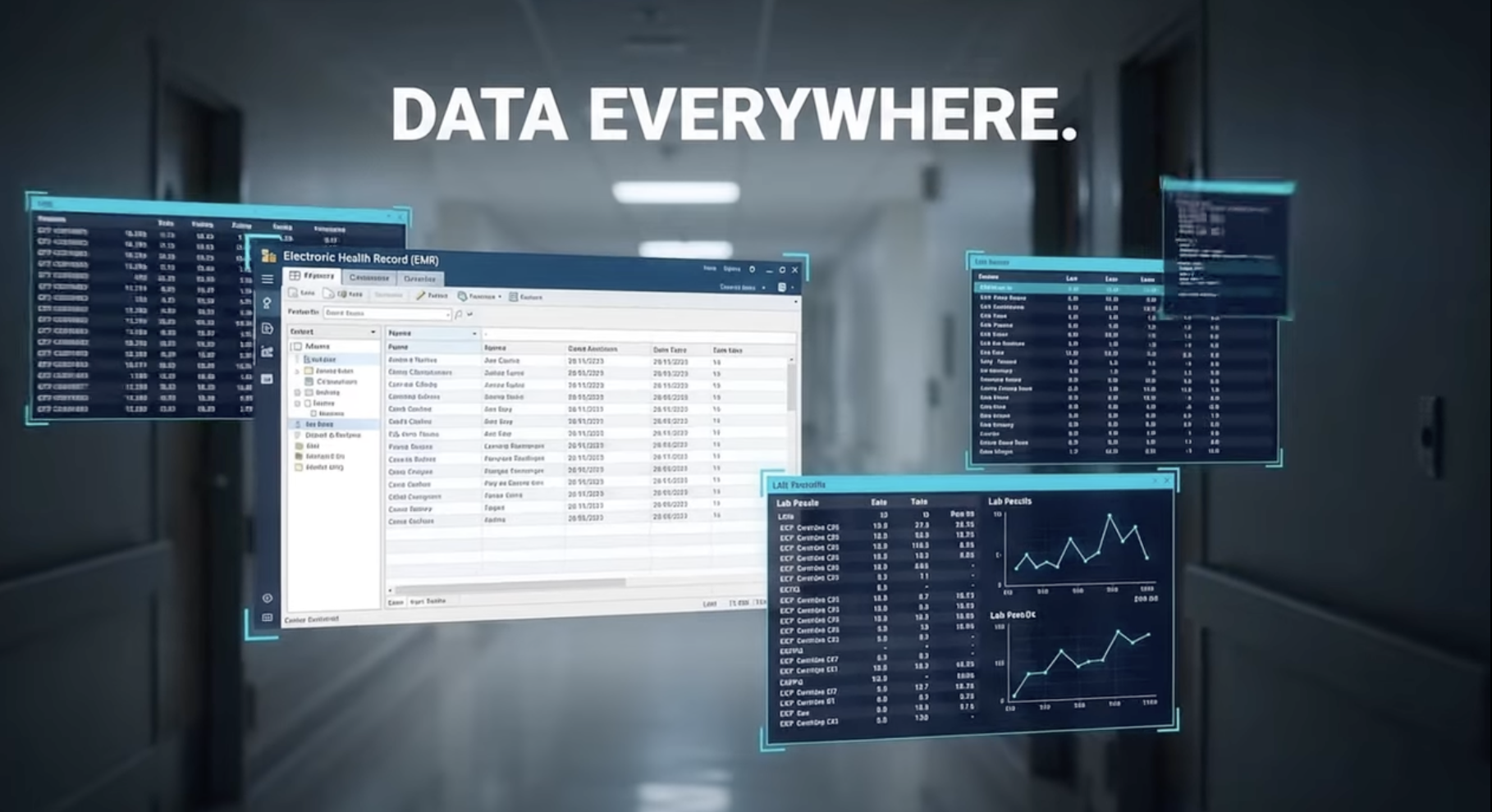
In order to truly impact community health outcomes, the EHR data integration should be less of a technical measure and more of a strategic foundation. At present, almost 97% of the data generated in the healthcare sector worldwide is either entirely unused or unanalysed. It is not only a squandered opportunity for one who holds the position of Chief Information Officer; it is a summons to rise and make a difference. We have been given data storage for free; now what? The next step is to put it into use. The article is an in-depth look at how to successfully connect the gap between disjointed systems and a comprehensive population health management software strategy that lives up to its claim.
What is EHR Data Integration in Today’s Ecosystem?
Essentially, healthcare provider EHR data integration refers to the practice of consolidating patient records stored in various Electronic Health Records into one, comprehensive patient history view. Nevertheless, in 2026, this will be much more than just fixing the “pipes and plumbing.” It is the purposeful alignment of clinical, financial, and social determinants of health (SDOH) data.
To be successful, a population health project cannot be based solely on data that is “available, ” but rather on data that is “actionable.” A powerful healthcare data integration platform is necessary to achieve this, one that can handle data unsurprisingly instead of relying on outdated batches. By merging these records, we are metaphorically outlining a patient’s path through the entire healthcare system.
Why is Healthcare Data Interoperability Still a Challenge?
If the answer was straightforward, we wouldn’t be discussing it still. The main obstacle is the sheer absence of healthcare data interoperability among various vendor ecosystems. Each EHR, whether it is Epic, Cerner, or a niche ambulatory system, has its own proprietary method of tagging and storing information.
For the CIO, this situation results in a “Tower of Babel” effect. You may have the data, but if your population health management software is unable to decode a lab result from an outside facility because the units of measure are different, the insight is lost. Real interoperability is not only about transferring data from Point A to Point B; it is also about Point B comprehending the context of Point A.
How to Achieve Meaningful Healthcare Data Standardization?
It is common for data to be messy, unstructured, and inconsistent. Your analytics, if not supported by healthcare data standardization, will be like a house built on a weak foundation.
In essence, standardization consists of unifying the fragmented data points by assigning them to the same terminologies, for example, LOINC for labs, RxNorm for medications, and SNOMED-CT for clinical findings.
The Standardization Workflow:
- Data Ingestion: Collecting unprocessed data from different EHRs and HIEs.
- Normalization: Changing various formats (HL7, FHIR, C, CDA) into one language.
- Validation: Checking if the data is correct and meets the set clinical criteria.
- Deduplication: Combining files to identify “John Doe” in the ER as the same “John Q. Doe” in the primary care clinic.
The use of a high-performance healthcare data analytics platform allows organizations to carry out this cleaning task automatically, so that clinicians can be assured of working on a “single version of the truth.”
How Does Patient Data Integration Improve Outcomes?
Every CIO’s greatest ambition is to facilitate improved healthcare. Patient data integration makes it possible to detect “escalating risks”. An integrated system doesn’t simply wait for a diabetic patient to end up in the ICU with ketoacidosis; it identifies laboratory deterioration trends from several providers weeks ahead.
Practical Example: Suppose a multi-hospital system decides to adopt a centralized clinical data integration strategy. By unifying data from five different EHR vendors to just one screen, they lowered the 30, day readmission rates for patients with heart failure by 12% in the initial year. They did not bring new doctors on board; they just equipped their current staff with more accurate information.
What are the Steps to Build a Clinical Data Integration Strategy?
Formulating an integration roadmap is a dual challenge requiring the combination of
technical agility and clinical buy-in. It is not solely an IT project; in fact, it is a clinical transformation project.
1. Inventory Your Data Sources
You cannot integrate if you do not know where your data resides. Besides the main EHR, this should include pharmacy feeds, claims data, and even wearable device data.
2. Select a Healthcare Data Integration Platform
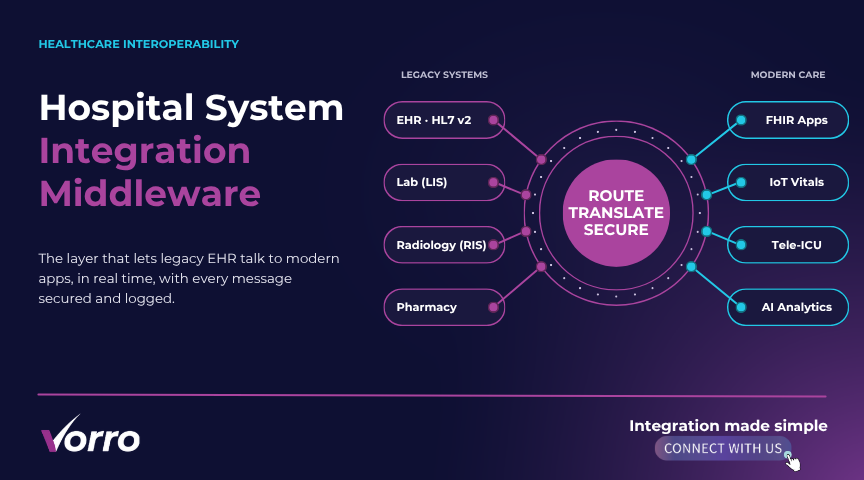
Find a solution that is vendor, agnostic For you, a platform should be a neutral ground
where all data, regardless of its origin, is treated equally. It has to support modern API, led connectivity (FHIR), while still handling legacy HL7 messages.
3. Prioritize Use Cases
It is not necessary to try to solve everything at once. Pick a specific high-risk cohort, such as chronic kidney disease or maternal health. Let your healthcare data analytics platform help you demonstrate value in these segments before rolling out enterprise, wide.
How to Future-Proof Your Healthcare Data Analytics Platform?
The healthcare environment is progressively moving towards value, based care. So, your infrastructure has to be flexible. An integration that is fixed today will become outdated next year. A move away from point, to, point connections, which are fragile and costly to maintain, is what future-proofing entails.
Lean towards a framework that considers data as a product. Concentrating on EHR data integration, which is modular, you can easily add new data sources such as genomic data or community-based social services without having to redo the whole system. It’s this flexibility that differentiates the leaders from the followers in the current market.
Strategic Conclusion: The Path Forward
Clean, integrated data is the first step on the road to getting population health management easy. In fact, a chief information officer’s (CIO’s) goal is to get rid of the “noise” so that clinicians get the “signal”. If you focus on interoperability and standardization now, you are essentially setting the stage for the use of AI and predictive modeling later on.
Key Takeaways:
- Data Mobilization: EHR data is only valuable if it is standardized and moving.
- Interoperability is Strategic: It is the main weapon to fight clinical burnout and fragmented care.
- Standardize Early: Automated normalization rescues hundreds of hours in manual data cleanup later.
- Start Small, Scale Fast: Use targeted use cases to prove ROI to stakeholders.
At Vorro, integration is not supposed to be the reason why your innovation is slow, in our opinion. The tools we offer are to make the complicated simple, so your data works as hard as your clinical teams do. We can help you bridge patient care through your data silos.
Learn more about how Vorro makes EHR integration easy. Book a consultation
FAQs
What is the biggest barrier to EHR data integration?
Different vendor products are still not in standardized formats, and it is the biggest hurdle to achieving real semantic interoperability. Without a layer of third-party integration, it’s almost impossible to make EHR data talk to each other.
How does standardization affect population health?
When data is standardized, it means data coming from different sources can be easily compared. If there is no standardization, it is impossible for analytics engines to accurately map and identify trends/risk factors in a diverse patient population.
Why choose a vendor, agnostic healthcare data integration platform?
Gone are the days of “vendor lock-in” if you choose a vendor, an agnostic platform. Healthcare organizations can integrate data from any EHR, lab, or pharmacy system, and in no time, irrespective of the underlying technology, by using a vendor-agnostic data integration platform.

Akshita is a Senior Content Writer and Marketer with over a decade of experience crafting narratives that convert, rank, and build lasting brand authority. She has worked across SaaS, FinTech, HealthTech, and Education spaces, delivering everything from HIPAA-compliant medical content to multilingual campaigns for the International Labour Organization, United Nations. Her content has reached audiences across the globe, and she has worked for Fortune 500 brands, global agencies, and startups alike. Fluent in English, Spanish, and German, Akshita brings a rare cross-cultural edge to brand communication. A literature graduate from Delhi University, she balances strategic thinking with a storyteller's instinct, but when she isn’t architecting content roadmaps, she channels her creativity into poetry and painting or dedicates her time to caring for stray animals - pursuits she credits for making her a more empathetic and perceptive communicator.