Introduction: The Rise of AI Governance
AI is no longer a futuristic buzzword; it’s a daily workhorse in banks, hospitals, and even city hall. AI governance framework has become the safety net that keeps those algorithms honest, transparent, and legally sound. Why does governance matter now? Because regulators are drafting hard line rules faster than we can prototype new models, and the public’s patience for biased or opaque AI is wearing thin.
Market adoption rates tell a clear story: a 2025 Gartner survey showed 62 % of enterprises have at least one AI system in production, up from 45 % in 2022. That jump translates into a massive exposure to risk if you don’t have a playbook. In the next sections I’ll walk you through the building blocks of an AI governance framework that satisfies 2026 regulations, embeds ethical AI governance, and actually works on the shop floor.
What Is an AI Governance Framework?
Definition and core purpose
At its heart, an AI governance framework is a structured set of policies, processes, and tools that guide the entire AI lifecycle-from data ingestion to model retirement. Think of it as a blueprint that tells you who can do what, when, and how. It aims to prevent surprises, keep you compliant, and earn trust.
Key components people process technology
People: board members, chief data officers, data scientists, and auditors all have a seat at the table.
Process: a formal policy lifecycle that includes drafting, approval, enforcement, and periodic review.
Technology: model registries, audit logs, and monitoring dashboards that provide real time visibility. Without any one of those pillars, the framework crumbles.
AI Compliance and Regulatory Landscape in 2026
EU AI Act updates
The EU AI Act’s Tier 2 and Tier 3 provisions finally went into effect in January 2026. They demand pre market conformity assessments for high risk systems and mandatory post deployment reporting. Companies that missed the deadline face fines up to ‚¬30 million or 6 % of global turnover-whichever is higher.
US Executive Order & NIST AI RMF
In March 2026 the White House rolled out an updated Executive Order on AI, calling for a unified AI risk management framework (AI RMF) from NIST. The RMF emphasizes traceability, impact assessment, and the right to human intervention. Most federal contractors now have to certify that their AI governance framework aligns with those standards.
Emerging standards
ISO 42001, released last year, gives the first international checklist for responsible AI. UNESCO’s Recommendation on the Ethics of AI is also gaining traction, especially among multinational firms that want a single set of responsible AI principles across borders.
Ethical AI Principles Every Organization Should Adopt
Transparency & explainability
If a loan approval model says no € to a customer, you need to explain why-in plain language, not just a wall of code. Transparency builds trust; explainability reduces challenge rates by up to 27 % in regulated sectors.
Fairness & bias mitigation
Bias isn’t just a PR nightmare; it can trigger legal action. Use fairness metrics like disparate impact and run quarterly bias audits. A 2024 case study from a major retailer showed that removing gender bias from its recommendation engine lifted conversion rates by 3.4 %.
Accountability & human in the loop
Never let a model make a final decision without a human sign off when the outcome affects safety, finance, or civil rights. That human in the loop € checkpoint is the single most effective control in an AI risk management framework.
AI Risk Management Framework: Building Your Approach
Risk identification & assessment
Start with a risk register that maps each AI use case to potential harms-privacy breach, discrimination, operational failure. Assign a likelihood (1 5) and impact (1 5) score, then calculate a risk heat map. Simple, but surprisingly powerful.
Controls, monitoring & mitigation
Controls can be technical (differential privacy, adversarial testing) or procedural (approval workflows, documentation standards). Monitoring dashboards should surface drift alerts within 24 hours; any deviation beyond a 5 % performance drop triggers an automatic review.
Incident response and remediation
When something goes sideways, you need an incident playbook. It should outline who leads the response, how to contain the issue, and the steps to communicate with regulators and affected users. Most companies aim to resolve high severity incidents within 72 hours.
AI Governance Use Cases Across Industries
Finance fraud detection & model audit
Major banks are now embedding model audit trails into their anti money laundering (AML) engines. By tagging every decision with a provenance ID, they can produce a compliance report in under 10 minutes-a huge time saver during regulator spot checks.
Healthcare diagnostic AI & patient data
In a 2025 pilot, a UK hospital used an AI driven radiology assistant that flagged potential fractures. The governing board required an explainability layer, so radiologists could see the heat map behind each suggestion. The result? A 15 % reduction in missed diagnoses and full alignment with NHS ethical AI standards.
Manufacturing predictive maintenance
Factory floors run 24/7, and an unplanned shutdown can cost $200 k per hour. Predictive maintenance models now sit behind a governance panel that checks for data drift every shift. When drift is detected, the system automatically re trains using the latest sensor data.
Public sector decision support
City planners use AI to allocate housing subsidies. A governance framework forces the team to publish the model’s fairness score and to hold a public hearing before rollout. Transparency turned skeptical residents into collaborators.
FAQs
How to start an AI governance program?
Kick off with a small, cross functional steering council. Map your existing AI inventory, then prioritize high risk systems for immediate governance. From there, draft a policy template and roll it out in sprints.
Who should be part of the governance board?
You need a blend of legal, risk, data science, and business leaders. A typical board includes the chief data officer, head of compliance, a senior engineer, and a non executive director who brings an independent perspective.
What tools support AI governance?
Model registries like MLflow, audit log platforms such as Evidently, and monitoring suites like WhyLabs are the de facto standards. They integrate with CI/CD pipelines to enforce policy checks automatically.
How to measure governance maturity?
Use a maturity model that grades you from ad hoc € to optimized. € Look at criteria like policy coverage, automation level, and audit frequency. Companies that reach level 4 typically see a 30 % drop in compliance incidents.
Measuring AI Governance Maturity
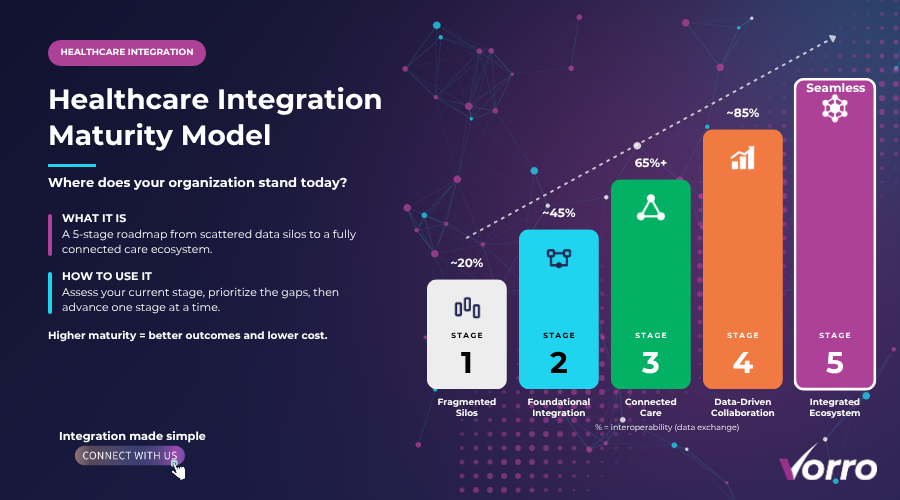
Maturity model levels
Level 1 Ad hoc: governance is informal, mostly spreadsheets.
Level 2 Defined: formal policies exist but aren’t enforced.
Level 3 Integrated: tools automate checks; training is mandatory.
Level 4 Optimized: continuous improvement loops, predictive compliance alerts.
KPI examples
Compliance incident rate, average time to remediate a drift alert, percentage of models with documented explainability, and audit coverage ratio. Track these quarterly and watch the trend line climb.
Implementing a Governance Operating Model
Roles & responsibilities matrix
Use a RACI chart: Responsible (data scientists building models), Accountable (CDAO), Consulted (legal, ethics board), Informed (business unit heads). Clear lines prevent the classic who owns the model? € confusion.
Integration with existing risk & compliance processes
Don’t build a silo. Tie AI governance checkpoints into your enterprise risk management (ERM) system. For example, when a new model is approved, the ERM tool automatically creates a risk entry that the compliance team will review.
Future Trends & Emerging Standards
Generative AI oversight
By late 2026, regulators will demand provenance tagging for any AI generated content. That means every text, image, or code snippet must carry a metadata stamp showing the model version and training data source.
AI enabled cybersecurity governance
AI is now both a defender and a target. Governance frameworks will need to incorporate AI security risk assessments, € evaluating how adversarial attacks could corrupt model outputs and what controls are in place to detect them.
Conclusion
Building an AI governance framework isn’t a one off checkbox it’s an evolving discipline that blends policy, people, and technology. Aligning with the latest AI compliance and regulations, embedding responsible AI principles, and measuring maturity will keep you ahead of the curve. Start small, scale fast, and let your governance operating model become the backbone of trustworthy, future ready AI.