Top Healthcare Data Silos Solutions: Break Down Barriers & Boost Patient Care
When you hear the phrase healthcare data silos solutions, picture a hospital where every department talks to itself. The result? Missed alerts, duplicate labs, and frustrated clinicians. I’ve spent years watching those walls crumble, and I’ll show you why tearing them down is the fastest route to better patient outcomes.
What Are Healthcare Data Silos?
Definition and common sources
Data silos happen when information lives in isolated systems—think legacy EMR, billing platforms, and imaging archives that never speak to each other. Those pockets of data often stem from mergers, outdated vendors, or departmental pet projects. In many networks, a simple lab result can be trapped in a radiology PACS while the attending physician never sees it.
Real?world impact on care and operations
Imagine a diabetic patient who visits three specialists in a week. If each clinic records the same blood?glucose readings in its own repository, the care team ends up piecing together a fragmented story. The patient may get a repeat HbA1c test—costing $150 and delaying treatment. That’s the everyday cost of silos.
Why Silos Harm Patient Outcomes & Provider Efficiency
Delayed decision?making
When data waits in a separate drawer, clinicians wait too. A study from JAMA found that delayed lab results add an average of 2.3?hours to emergency?room stays. Those minutes can be the difference between a sepsis diagnosis that’s caught early and one that spirals.
Duplicate testing & increased costs
Duplicated imaging is a $4?billion problem in the U.S. each year. One radiology department ordered a CT scan that another had already performed, simply because the images weren’t shared. Those wasted dollars would disappear if a unified data lake turned every image into a shared asset.
Core Challenges in Eliminating Silos
Legacy systems & proprietary formats
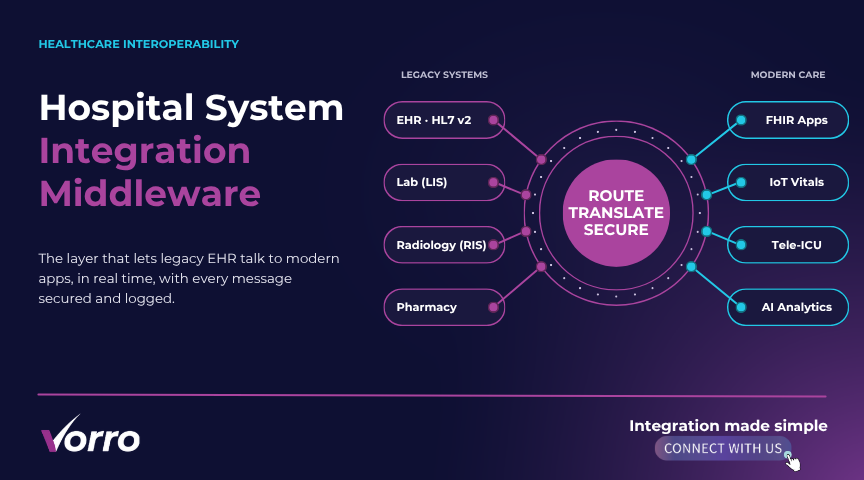
Many hospitals still run mainframes that speak only their own dialect of HL7. You can’t expect a modern API to understand a 1998 data model without a translator. That’s why integration middleware becomes the Rosetta Stone for health IT.
Data quality & governance issues
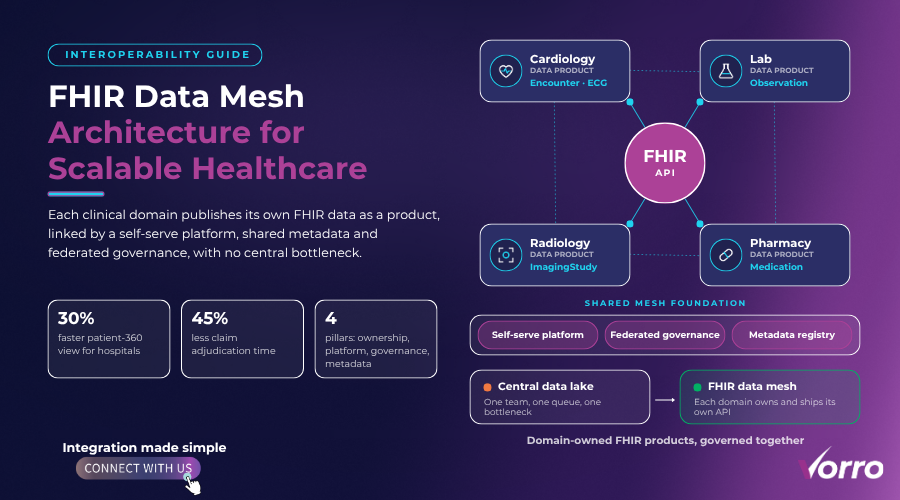
Duplicate patient records, misspelled names, and inconsistent units—these are the everyday headaches that data quality tools in healthcare aim to fix. Without a clear governance framework, you’re just moving junk from one silo to another, so consider implementing a solid Data Governance Framework: Implementation & Best Practices to ensure data integrity.
Regulatory and security constraints
HIPAA, GDPR, and state?level privacy laws all demand airtight protection. When you start shuffling data across clouds, you need encryption, audit trails, and consent management baked in—not an afterthought.
Proven Solutions to Break Down Data Silos
Integrated EHR interoperability platforms
Platforms that champion FHIR and HL7 standards act like a universal translator. I’ve seen Epic’s Care Everywhere connect with Cerner’s PowerChart in less than six months, letting clinicians view a patient’s whole history without leaving their dashboard.
Cloud?based data lakes & unified repositories
A data lake stores raw, unstructured data alongside structured records. When a health system migrated 30?TB of imaging, lab, and encounter data to Amazon S3, they cut retrieval times by 70?percent. The lake became the single source of truth for analytics and AI.
Healthcare ETL platforms & data quality tools
Tools like Talend and Informatica now offer healthcare ETL platform modules that cleanse, de?duplicate, and map patient identifiers in real time, and you can learn more about building robust pipelines in our Data Pipeline: Architecture, Types, Tools & Real-World Examples guide. We used one such platform to merge three separate pharmacy systems, slashing adverse?drug?interaction alerts by 40?percent.
API?first integration middleware
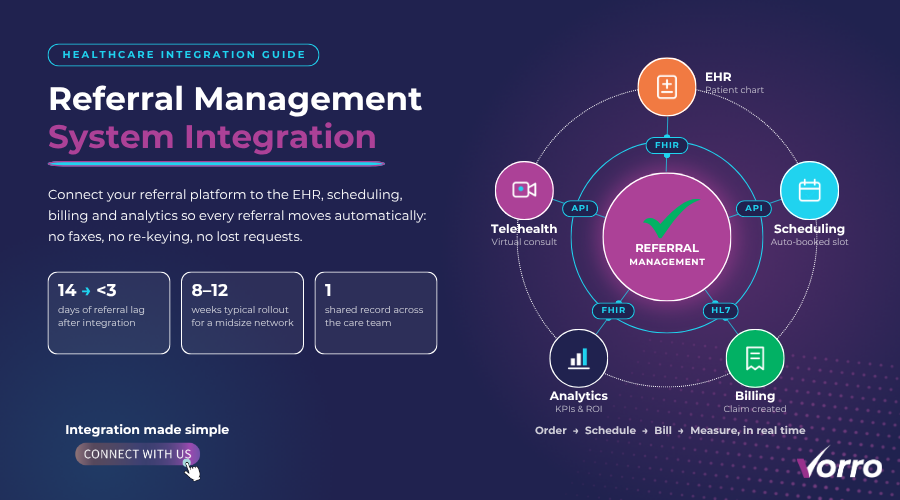
Rather than building point?to?point bridges, an API?first approach exposes a catalog of services—patient lookup, medication history, lab results. This reduces integration time from months to weeks and lets new apps plug in without rewriting code.
Master Data Management for patient identity
MDM creates a golden record for each patient. When a regional health information exchange adopted MDM, they reported a 25?percent drop in duplicate records across 12 hospitals. That single source of truth fuels everything from scheduling to billing.
Implementation Roadmap
Assessment & data inventory
Start by cataloguing every system that holds patient data. A simple spreadsheet can reveal 18 distinct repositories in a midsize hospital. Assign owners, data volumes, and compliance status to each entry.
Choose the right integration stack
Match your needs to the technology. If you need real?time exchange, prioritize API?first middleware. For batch analytics, a cloud data lake plus a robust ETL pipeline makes sense. And always verify that the stack supports FHIR, HL7, and your chosen security protocols.
Pilot, scale, and monitor
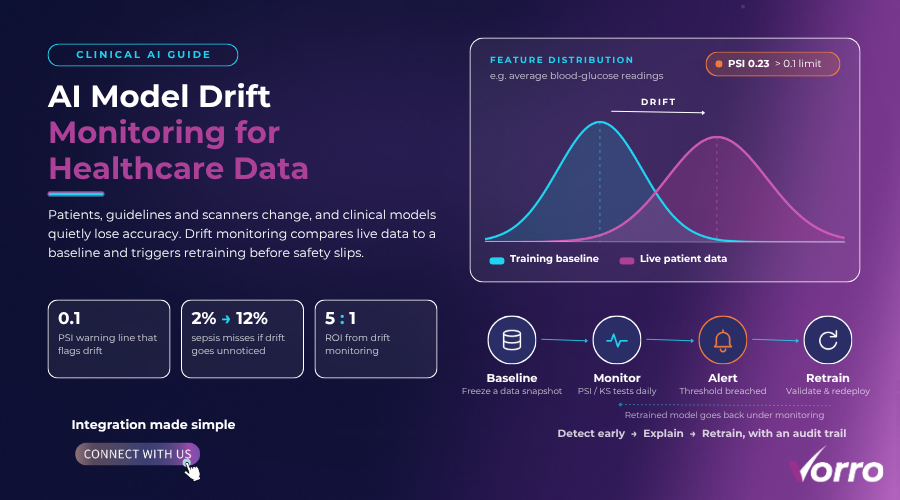
Pick a high?impact use case—say, sharing discharge summaries with primary care. Run a 30?day pilot, track metrics like readmission rates and clinician satisfaction, then expand. Continuous monitoring with dashboards ensures you catch any data drift early.
Benefits of Solving Silos
Faster clinical workflows
When a nurse can pull the latest medication list from a unified repository, charting time drops by roughly 12?minutes per shift. Over a year, that’s thousands of saved nurse hours.
Reduced costs & redundancy
Eliminating duplicate imaging can save $1.2?million annually for a 500?bed hospital. Add the ROI from improved billing accuracy, and the financial upside becomes undeniable.
Enable AI and advanced analytics
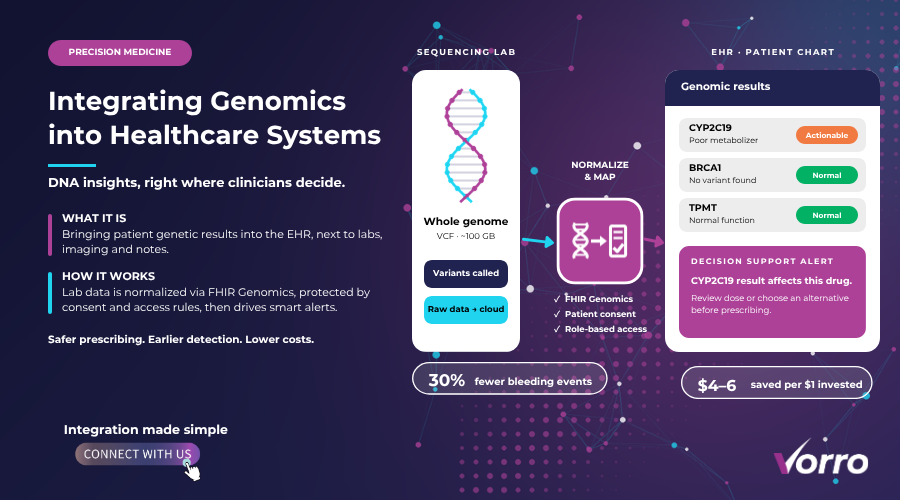
AI thrives on data breadth and depth, and following AI Governance: Principles, Frameworks & Best Practices helps ensure those models are trustworthy. After a health system broke down its silos, it launched a sepsis?prediction model that flagged high?risk patients 6?hours earlier, improving survival by 8?percent.
Case Studies Success Stories
- Midwest Academic Medical Center: Integrated EHR platform reduced order entry errors by 30?percent in the first six months.
- Southern Rural Health Network: Cloud data lake cut analytics query time from 45?minutes to under 5?minutes, unlocking real?time KPI dashboards.
- West Coast Integrated Care: MDM implementation lowered duplicate patient records from 4?% to 0.5?%, simplifying care coordination.
Future Trends AI?Driven Insights & Real?Time Data Exchange
Tomorrow’s hospitals will treat data as a vital sign. Real?time streaming, edge computing, and federated learning will let AI models learn from every bedside monitor without ever moving PHI off?site. The foundation for that future is a silos?free ecosystem today.
Additional Sections Not Commonly Covered
Quantifying ROI – financial impact analysis
Start with baseline costs: duplicate tests, manual data entry, compliance fines. Then estimate savings from each solution. For example, a 20?percent reduction in repeat labs translates to $2?million saved for a 300?bed hospital. Add productivity gains, and you often see a 3?to?1 ROI within 18?months.
Aligning solutions with HIPAA & regional compliance
Every data flow must be encrypted at rest and in transit. Use role?based access controls that tie back to the ePHI audit log. Map each integration point to the HIPAA Security Rule’s safeguards, and cross?check against state laws like California’s CCPA for extra diligence.
Step?by?step checklist for IT & clinical teams
Below is a quick cheat?sheet you can hand to your CIO and department heads:
- Gather a cross?functional team (IT, clinicians, compliance).
- Document all data sources and their owners.
- Score each system on interoperability, data quality, and compliance risk.
- Select a pilot use case with measurable outcomes.
- Deploy API gateway and configure FHIR resources.
- Run ETL jobs, validate data quality, resolve duplicates.
- Train staff on new workflows and monitor adoption.
- Review metrics monthly, adjust integration rules, and plan next phase.
Conclusion
Breaking down healthcare data silos isn’t a nice?to?have project; it’s a strategic imperative. With the right mix of interoperability platforms, cloud repositories, ETL pipelines, and master data management, you’ll see faster care, lower costs, and the data foundation needed for AI. Measure ROI early, keep compliance front?and?center, and follow a clear rollout checklist. Do it right, and you’ll turn fragmented information into a single, life?saving narrative for every patient.
Frequently Asked Questions
What technology platforms can integrate disparate healthcare data sources?
Integration platforms such as Health Information Exchanges (HIEs), enterprise data warehouses, and API?based middleware can unify EHR, lab, and imaging systems. They use connectors and mapping tools to translate proprietary formats into a common data model.
How do interoperability standards like FHIR help break down data silos?
FHIR (Fast Healthcare Interoperability Resources) provides a uniform, RESTful API framework that enables disparate systems to share data securely and in real time. By standardizing data formats, it reduces the need for custom interfaces and accelerates care coordination.
What are best practices for ensuring data governance while consolidating health records?
Establish a cross?functional data governance committee, define clear data ownership, and implement robust metadata catalogs. Combine automated data quality checks with regular audits to maintain accuracy, privacy, and regulatory compliance.
Which cloud?based solutions are most effective for eliminating healthcare data silos?
Platforms like Microsoft Azure Health Data Services, Google Cloud Healthcare API, and AWS HealthLake offer scalable storage, AI?ready analytics, and built?in compliance controls. They enable secure aggregation of structured and unstructured clinical data across multiple sites.
How long does it typically take to implement a data silo solution in a hospital?
Implementation timelines vary, but most midsize hospitals see a 6?12 month rollout for core integration, followed by a 3?6 month period for optimization and user training. Factors such as legacy system complexity and staff readiness impact the schedule.