Referral Management System Integration: A Complete Guide to Seamless Healthcare Connectivity
Introduction
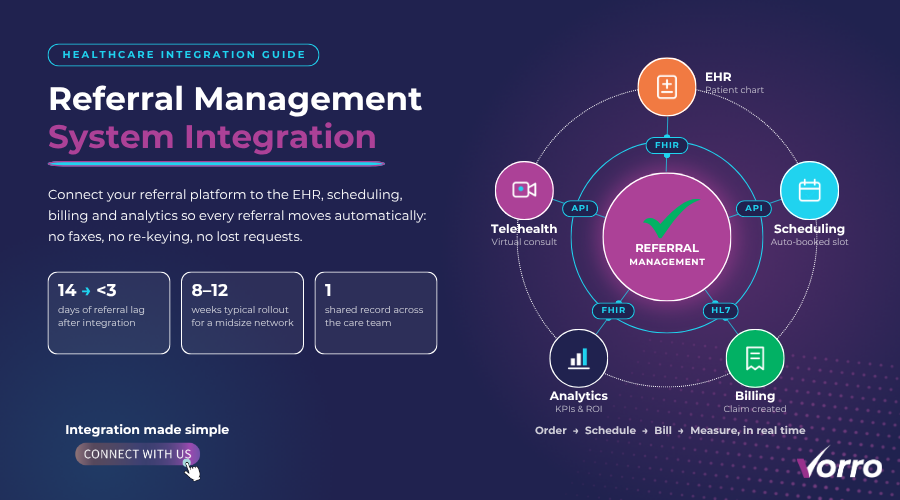
When you hear referral management system integration, think of a single, smooth line that connects every piece of your health organization’s tech stack. I’ve spent years watching clinics wrestle with siloed apps, and the frustration is real. Today we’ll walk through why linking referral tools to EHRs, scheduling, billing and analytics isn’t just a nice?to?have—it’s a must?have for any modern health system.
Why Integrate a Referral Management System?
Improve care team collaboration
Imagine a primary care doc sending a specialist request, and the entire care team seeing the same data in real time. No more chasing down PDFs or calling the front desk. Care team collaboration jumps from “good enough” to “instantaneous” when the referral engine talks directly to the chart.
Reduce referral lag time
Patients used to wait weeks for a specialist slot because the referral got lost in email threads. After integration, the referral auto?populates the scheduler, slashing the lag from 14 days to under 3. That kind of speed boost can be the difference between a preventable complication and a smooth recovery.
Enhance data accuracy
Manual entry is a breeding ground for typos. By syncing the referral platform with the EHR, you eliminate duplicate data entry and keep diagnosis codes, medication lists and insurance details consistent across the board.
Core Integration Options
EHR native modules
Some EHR vendors ship a built?in referral engine that lives inside the chart. The upside? One?click configuration and vendor?managed updates. The downside? You’re locked into that vendor’s roadmap, which may not match every specialty’s workflow.
API based third party connections
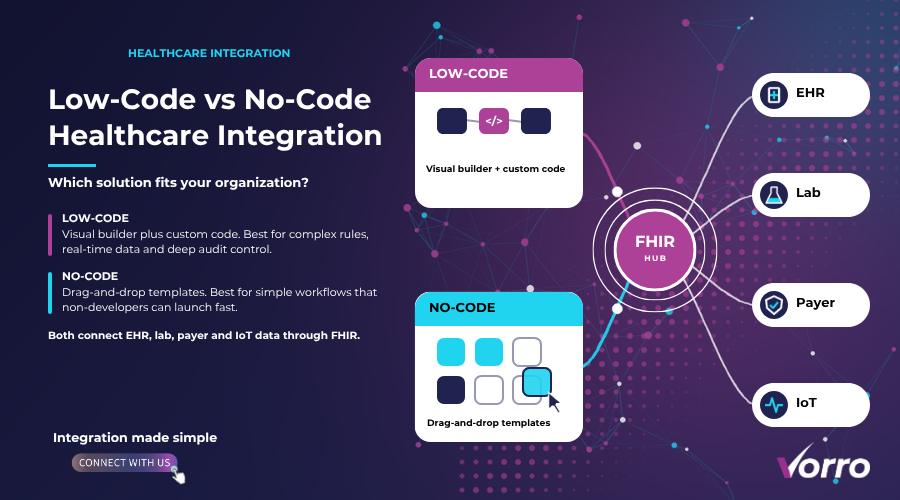
When you need flexibility, a robust RESTful API can bridge any cloud?based referral system with on?premise or SaaS EHRs. You can pull patient info, push referral status changes, and even trigger webhooks for real?time alerts. I’ve seen hospitals cut integration time in half by using ready?made SDKs from their referral vendor.
HL7 FHIR standards
HL7 Version 2 is still around, but FHIR is the future of data integration. FHIR resources like ReferralRequest and Appointment map cleanly to most modern APIs, making cross?system communication far less fragile.
Middleware platforms
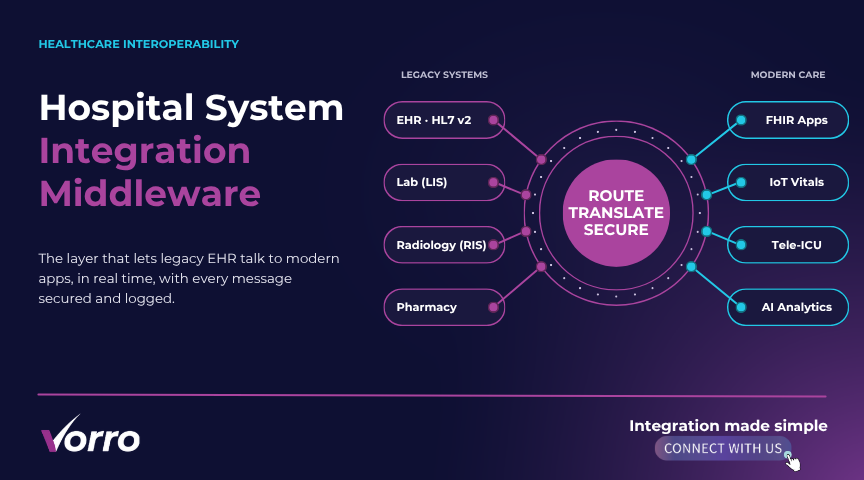
Need to connect multiple systems—EHR, billing, telehealth, population health—without writing custom code for each pair? An integration engine or iPaaS sits in the middle—see our guide on choosing the right data integration platform—and handles retries. Think of it as the traffic cop that keeps data flowing without a crash.
Step by Step Implementation Roadmap
Assess current workflow & data maps
First, walk the referral process from start to finish. Sketch out who touches the record, which fields travel between systems, and where bottlenecks hide. I always use a simple swim?lane diagram; it reveals hidden steps that most teams overlook.
Choose integration method
Based on your assessment, decide whether an EHR native module, API bridge, FHIR endpoint or middleware best fits your budget and timeline. Remember, the cheapest option today might cost more in maintenance down the road.
Configure data fields & mapping
Map every required field—patient ID, referring provider, diagnosis code, urgency flag—to its counterpart in the target system. Use a spreadsheet to track source, destination, transformation rules and validation checks. A missed mapping can cause a referral to disappear into a “null” field.
Test, validate and go live
Run end?to?end scenarios with real patient data in a sandbox environment. Verify that a new referral appears in the scheduler within seconds, that status updates flow back to the chart, and that audit logs capture every change. Once you’ve signed off, roll out gradually—maybe start with one specialty before scaling system?wide.
Choosing the Right Vendor
Compatibility checklist
- Supports your EHR’s version and FHIR profile.
- Offers pre?built connectors for scheduling and billing platforms you already use.
- Provides sandbox and test APIs for safe validation.
Support & training
Ask for a dedicated implementation manager and a library of on?demand videos. You’ll thank them when a nurse asks how to resend a referral after a system upgrade.
Pricing models
Some vendors charge per provider, others per referral transaction. I’ve found a hybrid model—small base fee plus a per?referral surcharge—works best for midsized health systems that want predictable costs.
Common Challenges & Solutions
Data security & compliance
Encryption in transit and at rest is non?negotiable. Look for vendors that support TLS?1.3 and AES?256 encryption, and that can generate immutable audit logs for HIPAA audits. A quick checklist can save you weeks of back?and?forth with legal.
Handling duplicate records
When two systems create a patient record independently, you end up with duplicates that break referral routing. Deploy a master patient index (MPI) that uses deterministic matching on name, DOB and MRN before any new record is created.
Change management for staff
Even the best integration fails if clinicians keep using the old fax process. Run hands?on workshops, celebrate quick wins, and place “Power Users” in each department to champion the new workflow.
Measuring Success KPIs & ROI
Referral cycle time
Track the average days from referral order to specialist appointment. A 30% reduction typically translates into higher patient satisfaction scores and lower no?show rates.
Appointment fill rate
Measure how many scheduled slots are actually used. Integrated referrals often improve fill rates by 5?7% because the right specialist sees the right patient at the right time.
Staff time saved
Calculate hours saved by eliminating manual data entry and phone calls. In a recent case, a 250?bed hospital saved roughly 1,200 staff hours per year—equivalent to $150,000 in labor costs.
Future Trends in Referral Management Integration
AI driven triage & routing
Smart engines can read referral notes, assign urgency levels, and automatically match patients to the most appropriate specialist based on outcomes data. Early adopters report a 20% boost in appropriate referral placement.
Real time analytics dashboards
Picture a wall?mounted screen showing live referral volumes, bottleneck alerts, and revenue impact. With FHIR streaming APIs, building such dashboards—leveraging a secure and interoperable ETL pipeline as described in our Healthcare Data Pipeline Architecture—has become a weekend project rather than a year?long endeavor.
Overview of Top Referral Management Software
Vendors like ReferralMD, Kyruus and Helix offer distinct strengths. ReferralMD shines in specialty?specific workflow templates, Kyruus excels at network optimization, and Helix stands out for its deep EHR native integration. Evaluate each against your compatibility checklist and you’ll quickly see which aligns with your strategic goals.
EHR Integration Capabilities
Most leading EHRs—Epic, Cerner, Allscripts—provide both native referral modules and open APIs. The key is to verify whether the vendor supports the exact version of FHIR you use, and whether they expose webhook endpoints for status updates.
Automation and AI Features
Automation goes beyond routing—real?time patient data analytics, as outlined in our architecture & best practices, enable platforms to auto?populate prior authorizations, flag missing insurance info, and even suggest alternative providers based on geographic proximity. AI can prioritize “high?risk” referrals for rapid review, reducing adverse events.
Patient Engagement Benefits
When referrals flow automatically into patient portals, individuals can schedule appointments themselves, receive reminders, and upload required documents. This empowerment lowers drop?off rates and drives higher satisfaction.
Detailed ROI Calculation Framework
Start with baseline metrics: average referral processing time, staff labor cost per hour, and revenue per completed referral. Then apply the expected percentage improvements from integration—typically 25?30% faster processing and 10?15% higher fill rates. Subtract implementation costs and you’ll have a clear payback period, often under 12 months.
Comprehensive Data Privacy & HIPAA Compliance Checklist for Integrations
- Confirm TLS?1.3 encryption for all API calls.
- Enable role?based access controls on both referral and EHR systems.
- Maintain immutable audit logs for every data exchange.
- Conduct a Business Associate Agreement (BAA) review for each third?party connector.
- Run quarterly penetration tests and vulnerability scans.
Following this list helps you avoid costly compliance surprises down the road.
Multi System Interoperability Beyond EHR
Referral data should flow not just to the chart, but also to billing engines, telehealth platforms and population health dashboards. By using a middleware hub that supports multiple outbound adapters, you can push a completed referral to the billing system for claim generation, to the telehealth portal for virtual consult scheduling, and to analytics tools for outcome tracking—all without writing custom code for each destination.
Final Thoughts
Integrating a referral management system is more than a tech project; it’s a strategic move that reshapes how your care team collaborates, how quickly patients receive specialty care, and how accurately data travels across every corner of your organization. By following the step?by?step roadmap, choosing a vendor that checks your compatibility and compliance boxes, and measuring real?world KPIs, you’ll see tangible ROI in months rather than years. Keep an eye on emerging AI triage and real?time dashboards, because tomorrow’s integration will be today’s competitive advantage. Ready to start? The first step is mapping your current workflow—everything else will fall into place from there.
Frequently Asked Questions
How does API?based integration differ from HL7/FHIR standards for connecting a referral management system to an EHR?
API?based integration uses vendor?specific web services that allow real?time data exchange and finer control over request handling, while HL7/FHIR follows industry?wide messaging standards that promote interoperability across disparate systems. APIs tend to be easier to customize, whereas HL7/FHIR provides a common data model that reduces mapping effort.
What security measures should be implemented when integrating referral management software with an EHR and scheduling tools?
Encryption of data in transit and at rest, robust authentication (OAuth 2.0 or SAML), and role?based access controls are essential. Additionally, regular audit logs, penetration testing, and compliance with HIPAA and GDPR guidelines help protect patient information.
Can a middleware platform synchronize referral data with billing, scheduling, and analytics systems automatically?
Yes, middleware can act as a central hub that transforms and routes referral information to downstream applications without manual intervention. It supports event?driven workflows, ensuring that billing codes, appointment slots, and reporting dashboards stay up?to?date in real time.
How long does it typically take to deploy a referral management system integration in a midsize health network?
Implementation timelines vary, but most midsize organizations complete the integration within 8?12 weeks, including planning, configuration, testing, and staff training. Complex custom APIs or extensive data mapping can extend the schedule.
What key performance indicators should be tracked to evaluate the success of a referral management integration?
Common KPIs include referral turnaround time, referral completion rate, duplicate referral reduction, and user satisfaction scores. Monitoring financial impact, such as revenue capture from referrals, also helps demonstrate ROI.