Integrating Genomics Data into Healthcare Systems: A Complete Guide
Introduction – importance of genomics integration
Genomics data integration healthcare systems is no longer a buzzword; it’s becoming the backbone of modern care. When a clinician can see a patient’s genetic risk alongside labs, imaging, and notes, decisions get sharper and outcomes get better. In this guide I’ll walk you through the why, the how, and the dollars?and?cents of making that happen.
Why Genomics Integration Matters
Personalized medicine and treatment optimization
Imagine prescribing a cancer therapy that works for 70% of patients, but for one individual it could cause severe toxicity. With genomics data feeding straight into the EHR, the system can flag that risk before the prescription is even written. That’s the power of personalized medicine—treatments that fit the DNA, not a one?size?fits?all approach.
Improved clinical outcomes and population health
On a population level, integrating genomic insights helps health systems spot trends—like a cluster of BRCA?mutated patients in a specific zip code. Public health teams can then launch targeted screening programs, shaving years off disease onset. The math is simple: earlier detection saves lives and cuts costs.
Current Landscape of Genomics in Healthcare Systems
State of EHR integration
Fast?forward to today and most major EHR vendors have rolled out “genomics modules” built on FHIR Genomics, and you can compare options in our guide to choosing the right FHIR data integration platform. These modules let labs push variant calls straight into a patient’s chart, where they appear next to other results. The data is searchable, taggable, and ready for decision support.
Existing data standards and pilots
Beyond FHIR, HL7 vs FHIR: key differences, benefits, and choosing the right standard in 2026 and the OMOP Common Data Model are gaining traction. Pilot programs at places like the Mayo Clinic and Kaiser Permanente have demonstrated that a standardized data model can cut integration time from months to weeks. The takeaway? Standards matter more than the vendor you pick.
Technical Architecture for Integration
Data storage pipelines and scalability
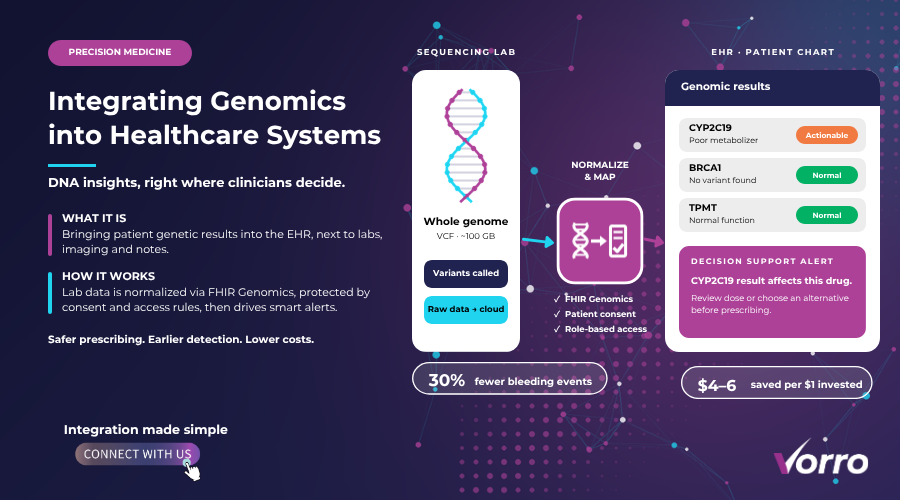
Genomic files can be massive—think whole?genome sequences at 100?GB per patient. Most health systems opt for a data lake on a cloud platform (AWS S3 or Azure Blob) to hold raw reads, then run ETL pipelines that transform variants into a normalized table for quick queries. A hybrid approach—raw data in the lake, processed data in a warehouse—keeps costs in check.
Interoperability standards
FHIR Genomics defines resources like Observation for variants and DiagnosticReport for sequencing runs. When you pair that with HL7 Clinical Genomics profiles, you get a language that both labs and EHRs understand. Adding OMOP lets you analyze genomic data alongside claims and outcomes for research.
Cloud vs on?premise solutions
Cloud offers elasticity: you spin up extra compute when a new batch of genomes lands, then shut it down. On?premise gives you tighter control over latency and may satisfy stricter data?sovereignty rules. Many systems adopt a “cloud?first” stance but keep a small on?prem cache for critical decision support.
Governance Privacy and Ethics
Consent management frameworks
Patients must know what’s happening with their DNA. Modern consent platforms let you capture granular preferences (research use, sharing with third parties, etc.) and store them as FHIR Consent resources. That way, downstream systems automatically respect each patient’s wishes.
Role based access control and audit trails
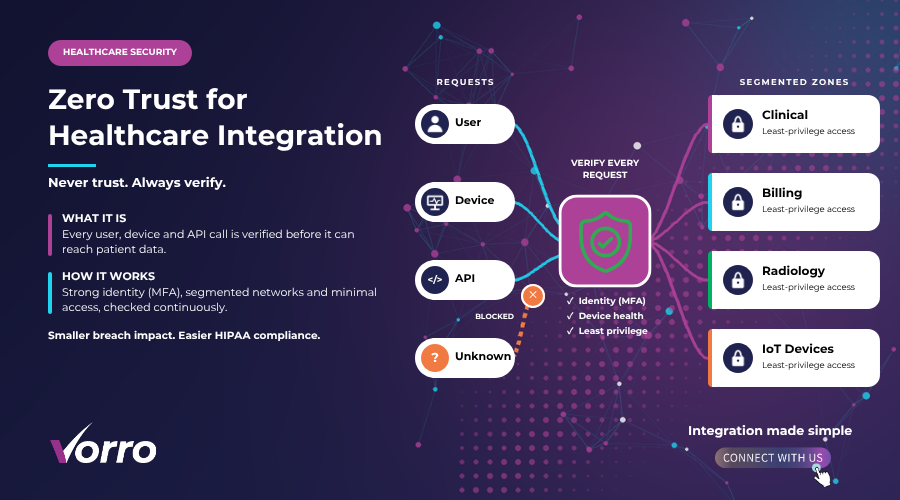
Not every clinician needs full variant detail. Role?based access control (RBAC) ensures that a primary care doctor sees only actionable flags, while a geneticist sees the full report. Every access is logged—an audit trail that satisfies HIPAA and GDPR auditors alike.
Regulatory considerations
In the U.S., HIPAA still governs protected health information, but the FDA now regulates certain genomic diagnostics as medical devices. Across the pond, GDPR treats genetic data as a special category requiring explicit consent. Keeping a compliance matrix updated is a non?negotiable part of any integration project.
Practical Challenges
Data volume complexity and format heterogeneity
Lab vendors ship data in VCF, JSON, or even proprietary XML. Normalizing these formats into a single schema is a nightmare without a robust pipeline. Tools like GATK, Hail, and custom Python scripts become the glue that binds everything together.
Embedding decision support into clinician workflow
Alert fatigue is real. You can’t just blast a “pathogenic variant” pop?up on every screen. The sweet spot is context?aware CDS that surfaces a recommendation only when the clinician is ordering a related drug or test. That’s why many teams build rule engines inside the EHR rather than as separate apps.
Provider education and change management
Most physicians weren’t trained to read a VCF file. You’ll need short, on?the?fly tutorials, regular grand rounds, and perhaps a genomics “champion” on each unit. Change management budgets often eat up 15?20% of the total project spend—but it pays off in adoption.
Success Stories & Case Studies
Atlantic Health System precision prescribing
Atlantic Health linked CYP2C19 genotype data to its anticoagulation protocol. Within a year, bleeding events dropped by 30%, and the system saved roughly $2?million in avoidable hospital stays. Their secret sauce? A tightly scoped pilot in the cardiology unit before rolling out system?wide.
National Genomic Medicine Service UK
The UK’s service sequenced 100,000 newborns and fed the results into local NHS EHRs via FHIR Genomics. Early detection of metabolic disorders rose from 5% to 85%, and families reported a 4?point increase in quality?of?life surveys. It’s a textbook example of scale meeting precision.
Emerging Trends
AI ML for genomic interpretation
Machine learning models now predict variant pathogenicity with >90% accuracy, far better than rule?based algorithms. When you plug those predictions into a CDS engine, you get real?time, evidence?based guidance at the point of care.
Real time sequencing and point of care
Portable sequencers can deliver a full genome in under six hours. Emergency departments are experimenting with rapid sepsis panels that integrate directly into the EHR, shaving crucial minutes off time?to?antibiotic.
Integration of patient reported outcomes wearable data
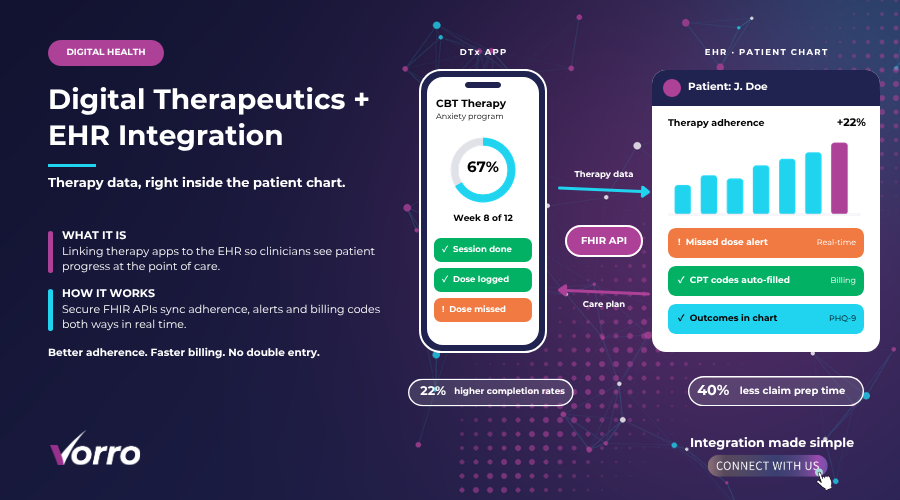
Beyond DNA, clinicians are tapping into patient reported outcomes data integration and consumer wearable data integration with EHR to paint a fuller health picture. A patient’s activity tracker, combined with their pharmacogenomic profile, can trigger alerts if a medication might mask hypoglycemia during intense workouts.
Economic Impact and ROI Analysis
Healthy skeptics ask, “What’s the bottom line?” The answer is surprisingly concrete. A 2023 study from the University of Pennsylvania showed that every dollar invested in genomics integration yields $4?$6 in downstream savings, primarily from avoided adverse drug reactions and reduced hospital readmissions. For a 500?bed hospital, a $10?million integration spend could recoup $40?$60?million over five years. ROI calculators typically factor in reduced lab duplication, shorter length of stay, and new revenue streams from paid genomic tests.
Don’t forget indirect benefits: better patient satisfaction scores, higher provider retention, and stronger bargaining power with insurers eager for precision?based contracts.
Policy Incentive Landscape
Federal and state programs are finally catching up. CMS Innovation Models now reward hospitals for using genomic data to reduce readmissions, offering up to a 5% bonus on bundled payments. In Europe, the Horizon Europe fund allocates €200?million for cross?border genomics pilots that include data?sharing standards. Keeping an eye on these incentives can shave years off your financing timeline.
Many insurers are also piloting value?based contracts that reimburse based on outcomes tied to genomic?guided therapy. If you align your integration roadmap with these policy levers, you’ll unlock both cash flow and credibility.
Implementation Roadmap
Assessment and stakeholder alignment
Start with a gap analysis: inventory existing lab interfaces, map data flows, and interview clinicians about pain points. Bring together IT, genetics, compliance, and finance teams early. A shared vision board keeps everyone on the same page.
Pilot design scaling and continuous improvement
Pick a high?impact use case—say, pharmacogenomics for psychiatry. Run a six?month pilot, measure key metrics (adverse events, order time, provider satisfaction), then iterate. Once the model proves its worth, expand to other specialties using the same data pipeline.
Measuring ROI and clinical impact
Track both hard and soft KPIs. Hard numbers include cost per adverse drug event avoided, reduction in length of stay, and readmission rates. Soft metrics cover clinician confidence scores and patient-reported experience. A balanced scorecard gives leadership the full story.
Conclusion – future outlook
Integrating genomics data into healthcare systems isn’t a nice?to?have; it’s becoming a competitive necessity. From robust technical stacks to thoughtful governance, each piece matters. When you pair DNA with patient?reported outcomes and wearable data, you unlock a truly 360?degree view of health. The economics say it’s worth the spend, the policy environment is handing out incentives, and early adopters are already seeing better outcomes. If you start today, your organization will be the one writing the next success story, not just reading it.
Frequently Asked Questions
How can hospitals integrate genomic data with existing electronic health record (EHR) systems?
Hospitals can use interoperable standards like FHIR Genomics and HL7 Clinical Genomics to map variant data to patient records, leveraging APIs that pull sequencing results directly into the EHR. Middleware platforms often normalize raw data, link it to clinical phenotypes, and trigger alerts within clinician workflows.
Which data standards and formats are most commonly used for sharing genomics information across healthcare platforms?
The leading standards are HL7 FHIR Genomics, GA4GH APIs, and the Variant Call Format (VCF) for raw variants. These enable consistent representation of alleles, annotations, and phenotypic links, facilitating seamless exchange between labs, registries, and EHRs.
What privacy and security concerns should organizations address when storing genomic data?
Genomic data is uniquely identifiable, so organizations must apply encryption at rest and in transit, enforce strict access controls, and comply with regulations such as HIPAA, GDPR, and emerging genomics?specific guidelines. Auditing, de?identification where possible, and robust consent management are also essential.
How does integrating genomics improve clinical decision support tools?
When genomic results are embedded in the EHR, decision support engines can automatically match pathogenic variants to evidence?based therapy recommendations, dosage adjustments, or screening protocols, reducing manual interpretation time and supporting precision prescribing.
What are the typical costs and expected ROI for implementing a genomics integration program in a health system?
Initial costs include sequencing partnerships, data?integration middleware, staff training, and compliance infrastructure, often ranging from $1?3?million for a mid?size system. ROI is realized through reduced adverse drug events, shorter hospital stays, and higher reimbursement for precision?medicine services, potentially delivering cost savings of 5?15% within 3–5 years.