What Is a Healthcare Data Exchange Platform? Benefits, Features, and How to Choose the Right Solution
Introduction to Healthcare Data Exchange Platforms
Definition and terminology
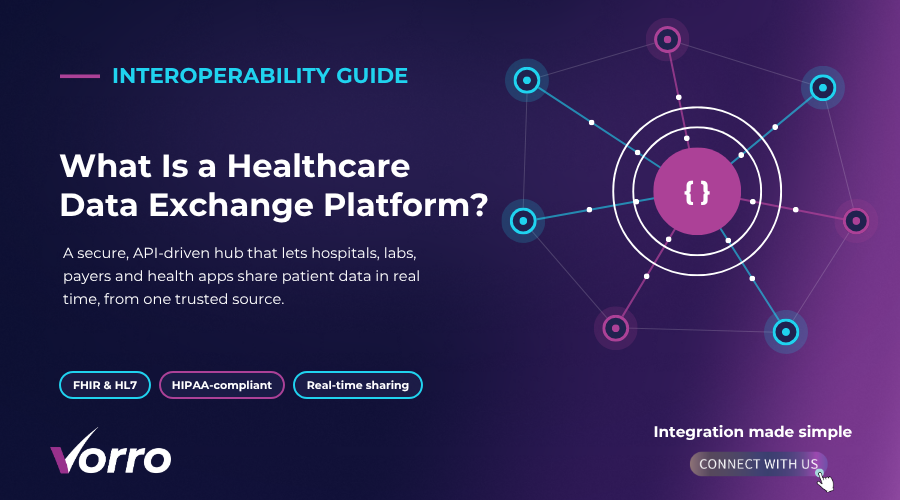
When you hear Healthcare Data Architecture: Governance & Scalable Platform Design”>Healthcare Data Integration Tools: Choosing the Right Platform”>healthcare data exchange platform you might picture a cloud server full of patient charts. In reality it’s a network?enabled hub that lets hospitals, labs, payers and even mobile apps share clinical info securely. Think of it as the modern “health information exchange” (HIE) dressed up with APIs, FHIR resources and real?time messaging.
Why platforms matter today
And the pressure is on: 70% of clinicians say fragmented data slows treatment. A seamless exchange cuts that friction, letting you see the full picture at the bedside. With value?based care contracts rolling out, providers can’t afford to guess whether a lab result exists somewhere else.
Core Benefits
Improved patient outcomes
Patients who get their full medication history see 22% fewer adverse drug events. That’s not hype; it’s a direct win from having a single source of truth across providers. When the emergency department knows you’re allergic to penicillin before the first dose, you’re already healthier.
Reduced duplicate testing and cost savings
Duplicate imaging costs the U.S. health system roughly $30?billion a year. By sharing imaging reports instantly, a data exchange can shave 15?20% off that number. Imagine a clinic that orders a CT scan only to discover the radiology center already performed it last week—that’s money back in the budget.
Faster care coordination
So you’ve just discharged a heart?failure patient. The home?care nurse needs the latest echo, the pharmacist needs the discharge summary, and the primary care doctor wants the follow?up plan. With a real?time platform, all three receive the same packet within minutes, not days.
Enhanced public health reporting
During flu season, public health agencies rely on timely lab feeds. An exchange that pushes standardized CCD files automatically helps authorities spot outbreaks faster than the old weekly fax system ever could.
Key Features and Technical Standards
Standardized protocols
FHIR has become the lingua franca of modern exchanges. It sits alongside legacy HL7 v2/v3 and CCD documents, letting you talk to both old and new systems. When a hospital implements a FHIR?based API, it can publish observations, allergies and medication lists in a format that any partner app can consume.
Real?time vs batch exchange
But not every use case needs milliseconds. Critical alerts—like a sepsis flag—use real?time messaging over HL7?v2. Routine reporting, such as quarterly quality metrics, can be batch?processed overnight to save bandwidth.
API?first architecture and SDKs
Developers love platforms that expose RESTful endpoints with clear Swagger docs. A solid SDK in Java, .NET or Python speeds up integration by up to 40%, according to a recent survey of 120 health?IT projects.
Master patient index and record linkage
Accurate matching is the backbone of any exchange. A robust MPI uses probabilistic algorithms, demographic weighting and even biometric tokens to stitch together records that might have slight name variations.
Consent management and patient access
Patients now expect to pull their own records from any portal. A consent engine that records opt?in/opt?out preferences—compatible with GDPR and state privacy laws—keeps you on the right side of the regulator and the consumer.
Security, Privacy, and Compliance
HIPAA, GDPR, HITRUST requirements
Compliance isn’t a checklist; it’s a mindset. A platform must encrypt data at rest and in transit, enforce audit trails and support role?based access controls that align with HIPAA’s “minimum necessary” rule.
Encryption, audit trails, role?based access
Now imagine a breach where a rogue user pulls 10,000 records. With end?to?end AES?256 encryption and immutable audit logs, you can pinpoint the exact user, time and dataset—often stopping the leak before it spreads.
Data governance best practices
Effective governance means defining data stewards, establishing quality metrics (like 99.5% completeness for vital signs) and conducting quarterly reviews. It’s the difference between “we have data” and “we have trustworthy data.”
Implementation Roadmap
Assessing readiness and stakeholder mapping
First step? Conduct a readiness survey across clinicians, IT staff and payers. You’ll discover hidden silos—maybe the radiology department still runs on a legacy PACS that refuses to speak FHIR. Mapping those stakeholders early saves painful surprises later.
Integration with EHRs, PMS, and payers
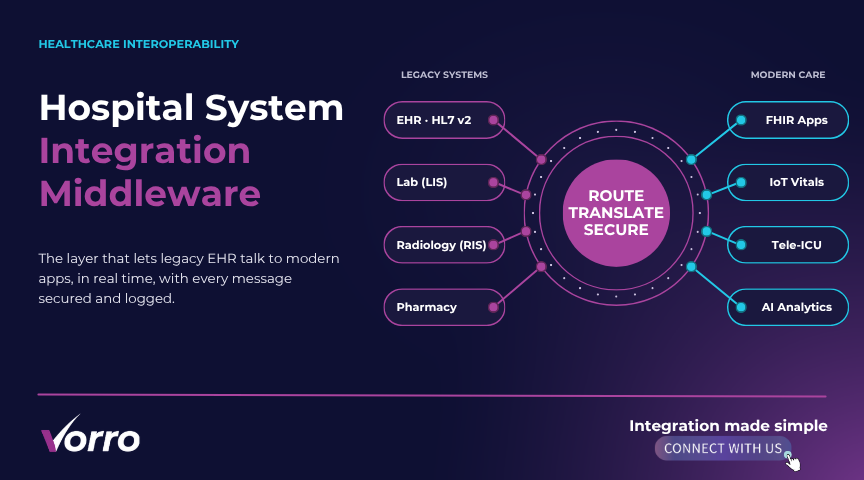
Integration isn’t a one?size?fits?all plug. You’ll need adapters for Epic, Cerner, Meditech, as well as specialty systems like oncology EMRs. A middleware layer that translates HL7?v2 messages into FHIR resources often does the heavy lifting.
Testing, certification, and go?live support
But testing isn’t just unit tests. End?to?end simulations with synthetic patient data verify that a consent change in one system propagates correctly to all partners. Certification with the ONC Health IT Safety certification program adds credibility.
Training and change management
Now comes the human side. A two?day “train?the?trainer” session for clinical staff, followed by quick?reference videos, can raise adoption rates from 55% to 88% within three months.
Choosing the Right Platform
Vendor evaluation checklist
- Scalability: Can it handle 1?million messages per day without latency?
- Pricing model: Subscription vs transaction?based fees—what aligns with your budget?
- Support: 24/7 SLA, dedicated success manager, and a clear escalation path.
- Interoperability ecosystem: Does the vendor plug into national exchanges or regional HIEs?
Cloud vs on?premise
Cloud solutions offer rapid deployment and automatic updates, but some organizations—especially those handling highly sensitive mental?health data—prefer on?premise installations for tighter control.
Interoperability ecosystem
And consider the partner network. A platform that already connects to the eHealth Exchange, CommonWell and local state HIEs gives you instant reach to thousands of providers.
Real?World Case Studies
eHealth Exchange national rollout
The eHealth Exchange linked over 70?million patient records across 90?% of U.S. hospitals. Post?implementation analyses showed a 12% drop in duplicate lab orders and a 9% reduction in readmission rates for chronic disease patients.
Oracle Health Clinical Data Exchange
Oracle’s solution enabled a multisite health system to ingest 3?TB of imaging data per month, delivering reports to radiologists in under 30 seconds—cutting diagnostic turnaround time by 40%.
Health Gorilla HIP implementation
Health Gorilla’s HIP platform gave a regional network of 12 clinics access to a unified MPI, resulting in a 15% increase in accurate patient matching and a $2.3?million annual ROI from avoided duplicate tests.
Emerging Trends and Future Outlook
AI?driven data analytics on exchanged data
Imagine a machine?learning model that scans every inbound lab result, flags outliers and suggests early interventions—all without a human ever opening the chart. Early pilots show a 6% improvement in sepsis detection.
Blockchain for provenance and trust
Blockchain can create immutable trails for every data transaction, giving patients confidence that their records haven’t been tampered with. A pilot in Boston used Hyperledger Fabric to verify consent changes in real time.
Patient?controlled data exchange and FHIR Smart apps
Patients are demanding more control. With SMART on FHIR, individuals can authorize a mobile app to pull their immunization history directly from the exchange, empowering self?service and reducing administrative calls by up to 30%.
Frequently Asked Questions
Cost considerations
Costs vary widely. A subscription model might start at $0.10 per transaction, while on?premise licensing can run $500?k?$1?M upfront plus maintenance. Running a simple ROI calculator—factoring saved test costs, reduced readmissions and staffing efficiency—often shows payback in 12?18 months.
How to ensure data quality?
Data quality hinges on standardized vocabularies (SNOMED CT, LOINC) and regular validation scripts. Conduct monthly completeness checks; aim for >98% record fidelity before advancing to analytics.
What is the difference between HIE and a data exchange platform?
An HIE is a broad concept—a community effort to share health information. A data exchange platform is the technology stack that makes that sharing possible, delivering APIs, security, consent management and governance in a single product.
ROI and Cost?Benefit Framework
We’ve talked about savings, but how do you prove them? Start with a baseline: current duplicate test rate, average readmission cost and staff time spent on manual record retrieval. Apply the platform’s projected reduction percentages (e.g., 18% fewer duplicate labs). Then calculate total annual savings, subtract the platform’s expense, and you’ll see the net benefit. Most organizations in the U.S. report a 1.8?to?1 ROI within the first year.
Patient Perspective: Empowering the Person Behind the Record
From a patient’s view, a seamless exchange feels like a single, always?on health record you can pull into any app. It reduces the “I have to repeat my story” moment and gives you the power to grant or revoke access on the fly. Surveys show 73% of patients who can view their data online report higher satisfaction and better medication adherence.
Practical Vendor Selection Checklist with Scoring Matrix
Use a simple 0?5 scoring system for each criterion, then total the points. Below is a sample matrix you can copy into Excel:
| Criterion | Weight | Score (0?5) | Weighted Score |
|---|---|---|---|
| Scalability (transactions per second) | 20% | ||
| Compliance (HIPAA, HITRUST) | 15% | ||
| API flexibility (FHIR, SDKs) | 15% | ||
| Cost structure (total cost of ownership) | 15% | ||
| Support & training | 10% | ||
| Partner ecosystem | 10% | ||
| Patient?centric features | 5% | ||
| Innovation roadmap (AI, blockchain) | 5% | ||
| Total | |||
Set a threshold—say 80% of the maximum weighted score—and any vendor below that gets filtered out.
Conclusion
Choosing a healthcare data exchange platform isn’t just a tech upgrade; it’s a strategic move that can improve outcomes, cut costs and put patients back in the driver’s seat. By understanding the core benefits, the technical standards that keep everything speaking the same language, and the security safeguards that protect sensitive info, you’ll be ready to pick a solution that scales with your organization. Remember to run a solid ROI analysis, involve patients early, and use a weighted scoring matrix to keep the selection process objective. The result? A more connected health ecosystem where data works for you—not the other way around.
Frequently Asked Questions
How does a healthcare data exchange platform ensure patient data privacy and HIPAA compliance?
The platform encrypts data in transit and at rest, enforces role?based access controls, and logs all access events for audit trails. It also incorporates Business Associate Agreements and supports de?identification tools to meet HIPAA requirements.
What are the main differences between FHIR and HL7 v2 for data exchange?
FHIR uses modern RESTful APIs and JSON/XML payloads, making it easier to integrate with web and mobile apps, while HL7 v2 relies on older, pipe?delimited messages suited for legacy systems. FHIR also provides granular resources and versioning, whereas HL7 v2 is more message?centric and less flexible.
Can small clinics integrate a data exchange platform without large IT budgets?
Yes—many vendors offer cloud?based, subscription models that require minimal on?premise hardware and provide ready?to?use connectors. These solutions often include hosted support and configuration tools that reduce the need for in?house developers.
How quickly can a provider see ROI after implementing a data exchange platform?
Providers typically observe cost savings within 6?12 months from reduced duplicate testing, shorter patient stays, and streamlined billing. Additional revenue may appear as referral networks expand and care coordination improves.
What steps are involved in onboarding providers to a new exchange network?
Onboarding usually includes assessing data standards, configuring interface engines, mapping local records to standard formats, testing data flows, and training staff on consent and security policies before going live.