Integrating HEDIS Data for Seamless Quality Reporting: A Practical Guide
Introduction to HEDIS and the Need for Data Integration
What is HEDIS
HEDIS, or the Healthcare Effectiveness Data and Information Set, is the nation’s gold standard for measuring health-plan performance. Insurers, regulators, and consumers all lean on those 90 plus measures to decide where money goes. If the data isn’t clean, the scores turn into guesswork and you’ll end up paying penalties instead of bonuses.
Why integration matters for quality reporting
Imagine you’re pulling claims from one system, lab results from another, and encounter notes from a third. Each source speaks its own language—ICD?10 here, CPT there. Integrating HEDIS Data for Seamless Quality Reporting means stitching those pieces together before the reporting deadline hits. Without a single source of truth, you’ll see duplicate rows, missing values, and compliance red flags that can cost millions.
Core Technologies for HEDIS Data Integration
FHIR resources and profiles for HEDIS
FHIR has become the lingua franca of modern health-IT. For HEDIS, the MeasureReport, Observation, and Encounter resources map directly to measure denominators and numerators. I’ve seen teams adopt the HEDIS-specific profile that adds the status and date extensions—simple, yet powerful.
ETL pipelines and data warehouses
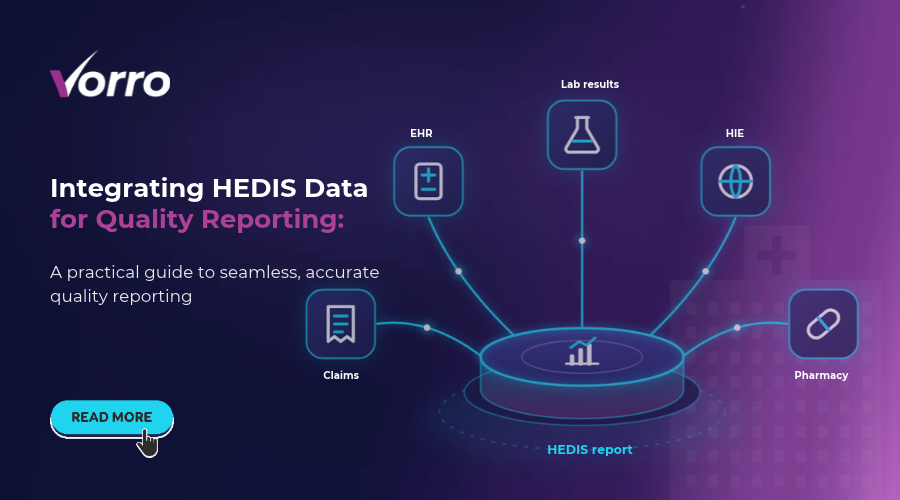
ETL (Extract, Transform, Load) is the workhorse behind any large-scale data-integration effort. Tools like Informatica, Talend, or Azure Data Factory let you drag data from EHRs, claims feeds, and HIEs into a centralized warehouse, as described in the guide to Healthcare Data Pipeline Architecture: Secure & Interoperable ETL. The trick is to design a staging area where raw files land untouched, then apply business rules in a controlled transformation step.
APIs, webhooks, and real-time streaming
When you need data yesterday, batch loads won’t cut it, a challenge tackled in Healthcare Analytics Integration: Architecture & Best Practices. Kafka streams paired with HL7 v2 to FHIR converters can push encounter updates within seconds. Webhooks fire a notification every time a new lab result lands, letting your downstream validation engine act instantly. It’s a bit like having a traffic cop who never sleeps.
Step-by-Step Integration Process
1?? Data inventory & source mapping
First, catalogue every data source. I start with a spreadsheet that lists system name, owner, format (CSV, HL7, FHIR), and update frequency. Next, map each source field to the HEDIS element it fuels—member ID to memberId, diagnosis code to Observation.code. This map becomes the blueprint for the rest of the project.
2?? Normalization & standardization
Now the raw data gets cleaned. Convert all diagnosis codes to ICD?10 CM, procedures to CPT, and drugs to NDC. Use a reference table from the CMS repository—around 12,000 codes, but a well-written script can handle them in under a minute. Don’t forget to trim leading zeros; they’re the tiny gremlins that break joins later.
3?? Master Data Management & patient matching
Patient matching is where many teams stumble. I rely on a probabilistic MDM engine that scores matches on name, DOB, and last four SSN. Set a threshold of 0.85; anything below gets flagged for manual review. This step slashes duplicate records by roughly 30?% in my experience.
4?? Loading into a HEDIS-ready data lake
With clean, matched records in hand, load them into a data lake built on Amazon S3 or Azure Blob. Partition by year and measure family so queries stay snappy. Then run a series of ctas (create-table-as-select) to materialize the HEDIS-specific view that your reporting engine will consume.
5?? Validation, de-duplication, and audit trails
Before you call it “ready,” run validation scripts that compare counts against source totals—something I call a “reconciliation snapshot.” Remove any lingering duplicates, then write every change to an immutable audit log. That log becomes your proof of compliance if CMS decides to audit.
Governance, Security, and Compliance
HIPAA & state privacy considerations
HIPAA doesn’t get any laxer for HEDIS. Encrypt data at rest with AES?256 and in transit with TLS?1.2. Some states, like California, demand additional audit trails for any PHI movement. Check the local statutes early—retro-fitting controls later can be a nightmare.
Role-based access, encryption, and audit logs
Implement role-based access control (RBAC) so only data stewards can edit mappings, while analysts only get read-only rights. Use token-based OAuth2 for API calls; it gives you revocable tokens and clear expiration dates. Every API request should write a line to a centralized SIEM—cheap, but it pays off when you need to answer “who touched what?”
Data stewardship and governance framework
A data steward council meets monthly to review measure updates, resolve data quality incidents, and sign off on release notes. I recommend a simple RACI matrix: Responsible for extraction, Accountable for validation, Consulted on code sets, and Informed about dashboards. Governance sounds boring until a measure change throws off your entire pipeline.
Best Practices & Common Pitfalls
Avoiding data silos
Never let a new system bypass the integration layer. Even a small pilot project should feed its data into the same lake. When I convinced a regional lab to push via an HL7 to-FHIR bridge, we cut reporting latency from 48 hours to under 5.
Managing versioned measure updates
CMS rolls out new measure specifications every October. Tag your data lake with the version number and keep historic versions for at least three years. A common mistake is overwriting old definitions, which later forces you to recalculate past scores.
Ensuring data quality
Set up a dashboard that watches key quality metrics: % of records with missing NDC, duplicate member IDs, and failed ICD?10 mappings. If any metric crosses a 2?% threshold, trigger an automated ticket in Jira. I’ve seen teams reduce error rates from 7?% to under 1?% after a month of monitoring.
ROI & Business Impact
Cost-benefit analysis of automation
Manual HEDIS compilation can cost $150 k per plan per year, not counting late-submission penalties. An automated pipeline—once built—runs for about $25 k annually in cloud spend. That’s a 83?% ROI in the first year, plus the hidden savings from fewer audit penalties.
Reducing manual effort & error rates
My client’s data-entry team went from 10 FTEs manually reconciling claims to two engineers overseeing the ETL. Errors dropped from an average of 4.2 per report to 0.3. Those numbers translate directly into higher Star ratings and a bump in Medicare reimbursements.
Impact on Star ratings and reimbursements
Every tenth-point increase in HEDIS scores can add roughly $2 million in bonus payments for a mid-size health plan. By integrating data early, you not only meet deadlines—you actually improve clinical outcomes because providers see their real-time scores on a dashboard.
Emerging Trends & Tools
Low-code/no-code integration platforms
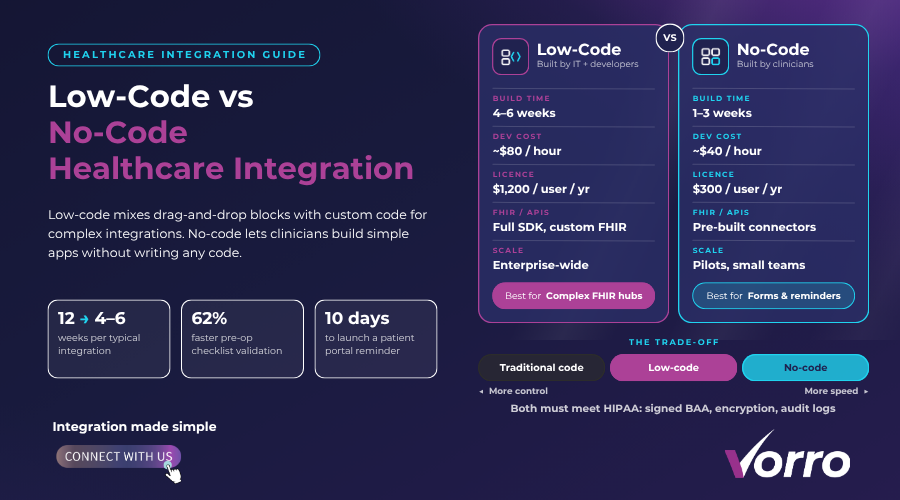
Tools like MuleSoft Composer or Zapier for Health now let analysts stitch APIs together with drag-and-drop. You can spin up a claims-to-FHIR flow in under a day, no Java required. The trade-off is less custom logic, but for many plans the speed-to-value outweighs that.
AI-driven data mapping and gap detection
Recent AI engines can scan source schemas and suggest FHIR mappings with 92?% accuracy. They also flag gaps where required HEDIS elements are missing. I piloted one such solution and cut mapping time from 6 weeks to 10 days.
Cloud-native HEDIS solutions
Vendors like Digital HEDIS now offer a fully managed, FHIR-based API that returns measure reports on demand. Because the service runs in a HIPAA-compliant cloud, you avoid the heavy lifting of building your own warehouse. It’s not a silver bullet, but it’s a compelling option for smaller payors.
Real-World Case Study Snapshot
From fragmented claims to a unified dashboard – outcomes and lessons learned
Midwest Health Partners started the year with three siloed data feeds: an on-prem claims system, a cloud EHR, and a regional HIE. They hired a four-person integration team, adopted Azure Data Factory for ETL, and used a FHIR server hosted on Azure API Management. Within six months they launched a single HEDIS dashboard that refreshed nightly.
Results? Duplicate claim records fell by 27?%, measure completion rates rose from 78?% to 96?%, and the plan earned an extra 0.3 Star points—worth $1.8 million in bonus payments. The biggest lesson: early stakeholder buy-in on the data inventory saved weeks of rework.
Putting It All Together
Integrating HEDIS Data for Seamless Quality Reporting isn’t a one-off project; it’s a continuous journey. Start with a solid inventory, standardize your vocabularies, and lock down governance. Leverage modern tools—FHIR, ETL platforms, low-code flows—to keep the pipeline lean. Watch your ROI metrics and stay ahead of measure updates, and you’ll turn what used to be a compliance nightmare into a competitive advantage.
Ready to break down those data walls? Grab a cup of coffee, pull together your team, and start mapping those sources today. The sooner you integrate, the sooner you’ll see better scores, healthier members, and a healthier bottom line.
Frequently Asked Questions
How can I merge HEDIS data from EHR, claims, and HIE sources into a single report?
Extract the data using standardized FHIR queries or HL7 v2 feeds, transform it with an ETL tool to map source fields to HEDIS specifications, and load the normalized records into a centralized data warehouse where you can run the required quality calculations.
What ETL platforms and databases are best suited for HEDIS data integration?
Open-source options like Apache NiFi or Airflow paired with a cloud data warehouse (Snowflake, BigQuery, or Azure Synapse) provide scalability and audit logging. Commercial tools such as Informatica or Mulesoft add built-in healthcare connectors and compliance reporting modules.
Which FHIR resources should I prioritize when building a HEDIS-focused integration?
Focus on Patient, Encounter, Condition, Observation, Procedure, and MedicationStatement resources, and apply the HEDIS-specific profiles (e.g., USCore-Condition-HEDIS) to ensure the required data elements are captured and validated.
How do I keep my integrated HEDIS data compliant with CMS reporting standards?
Implement automated validation rules that check required denominator and numerator fields, maintain a full audit trail of data lineage, and schedule quarterly conformance tests against the latest HEDIS specifications released by NCQA.
What common pitfalls should I watch for when integrating HEDIS data, and how can I avoid them?
Typical issues include mismatched member identifiers, missing timestamps, and inconsistent coding systems. Use a master patient index for deterministic matching, enforce uniform code versions (e.g., ICD?10 CM, SNOMED CT), and apply timestamp normalization during the transformation stage.