
Data Lake for Hospitals: Transforming Patient Care and Operations
When you hear “Data Lake for Hospitals,” you might picture a massive digital reservoir holding every lab result, billing record, and sensor reading a health system generates. That’s exactly what it is—a single, scalable platform that lets clinicians, finance teams, and operations staff tap into raw data without the bottlenecks of traditional warehouses. In the next few minutes, I’ll walk you through why a data lake is becoming a must-have, how to build one that stays HIPAA-compliant, and which real-world results you can expect.
What Is a Data Lake?
At its core, a data lake stores data in its native format—think PDFs, HL7 messages, CSVs, even video streams—until you need it. There’s no upfront schema, so you can dump a bedside monitor’s feed one day and a financial claim file the next.
Definition vs. Data Warehouse vs. Datamart
A data warehouse forces you to structure data early, which is great for reporting but terrible for exploratory analytics. A datamart is a smaller, department-level slice of that warehouse. By contrast, a data lake gives you freedom: ingest first, shape later. That flexibility is why hospitals can start with a pilot—say, readmission risk—and expand to population health without rebuilding the foundation.
Why Hospitals Need a Data Lake
Hospitals juggle massive, siloed data sets. One day you’re looking at a cardiology echo, the next you’re reconciling a $45 million supply chain invoice. A data lake unites these streams, making cross-functional insights possible.
Unifying Clinical, Financial, and Operational Data
Imagine pulling a patient’s lab results, their insurance eligibility, and the staffing ratios on the unit they’re in—all from a single query. That’s not a pipe dream; it’s what a well-designed lake delivers, including the ability to integrate HEDIS data for seamless quality reporting. In fact, a recent study showed that hospitals that integrated clinical and financial data cut billing errors by 23%.
Enhancing Care Delivery & Population Health
With all data in one place, predictive models can flag high-risk patients before they leave the ER. One health system used a lake-based algorithm to reduce 30 day readmissions from 18% to 12%—a $4.2 million savings in a single year.
Core Architecture of a Hospital Data Lake
Building a lake isn’t just throwing files into a bucket. You need structure, even if the data itself stays raw.
The Four Essential Zones
- Ingestion: Real-time feeds from monitors, nightly batch loads from the EHR, and API pulls from billing.
- Storage: Object storage that scales to petabytes, with tiered pricing for hot vs. cold data.
- Governance: Metadata catalog, lineage tracking, and data quality checks.
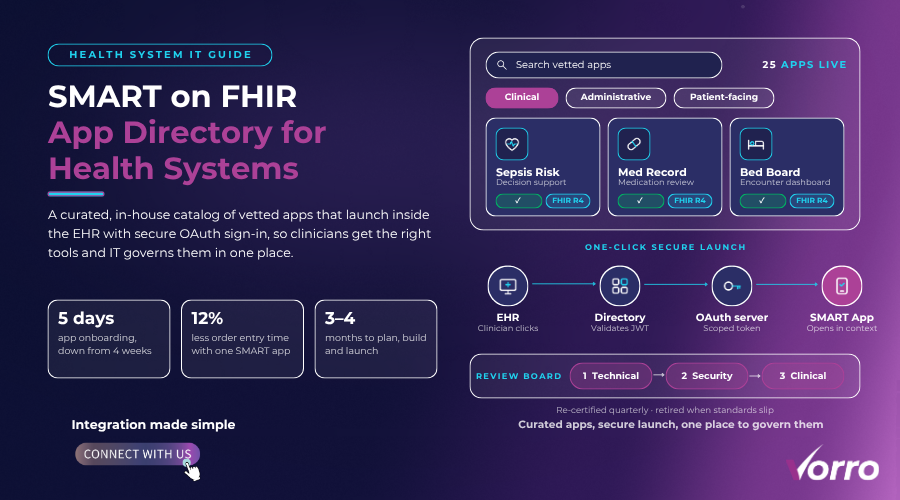
- Consumption: Jupyter notebooks for data scientists, Tableau dashboards for execs, and FHIR-based APIs for third-party apps.
Technology Stack
Most hospitals opt for a cloud-first approach—Amazon S3 or Azure Blob for storage, Apache Hive or AWS Glue for cataloging, and a security layer like IAM combined with encryption at rest and in transit. On-prem options still exist, especially for legacy systems, but the cost differential is shrinking fast.
HIPAA & Regulatory Compliance
Compliance isn’t an afterthought; it’s baked into every lake component.
Encryption Access Controls Auditing
All data should be encrypted with AES?256, and access must be role-based. Every read or write event gets logged to a tamper-proof audit trail—think CloudTrail or Azure Monitor. If an unauthorized user tries to peek, the system raises an alarm before any PHI leaves the lake.
Governance Frameworks
Establish a data stewardship committee that defines data classifications, retention periods, and who can publish datasets. A metadata service like Amundsen or DataHub makes it easy to see who owns what and why.
Step-by-Step Implementation Guide
Ready to turn ambition into action? Here’s a roadmap that most CIOs find useful.
Assessing Data Sources & Prioritizing Use Cases
Start with a quick inventory: EHR, lab information system, radiology PACS, HR payroll, and supply chain. Rank use cases by impact—predictive readmission, fraud detection, and operating room utilization usually sit at the top.
Building the Lake Integrating with EHRs
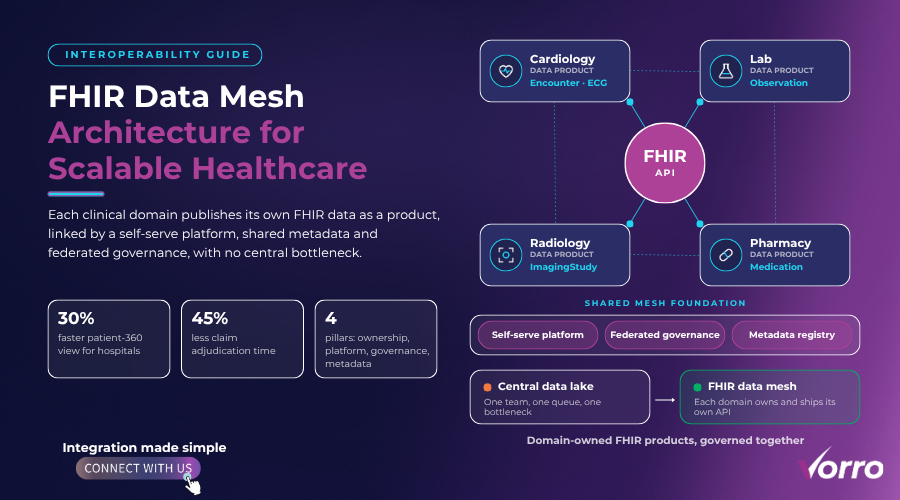
Connect to Epic or Cerner via their native APIs or by leveraging the FHIR data mesh architecture for scalable healthcare integration. Use an ETL tool like Talend or a streaming platform such as Apache Kafka to move data into the ingestion zone. Remember: you don’t need a perfect schema now; just get the bits in the bucket.
Scaling and Ongoing Management
Set up auto-scaling policies so storage grows with demand. Implement cost-monitoring dashboards—most clouds let you see dollars spent per terabyte per month. And schedule quarterly reviews to prune stale data; that keeps the lake performant.
High-Impact Use Cases for Hospitals
Once the lake is humming, the real magic begins.
Clinical Decision Support & Predictive Analytics
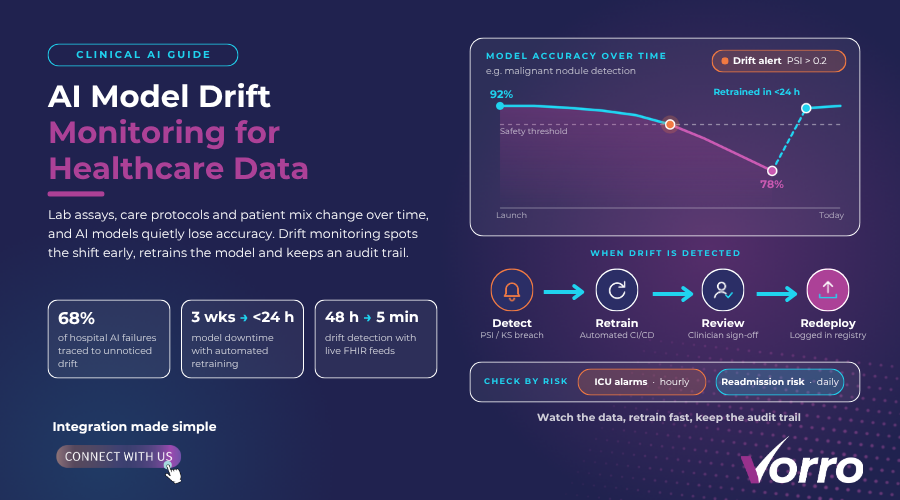
Data scientists can train models on historical encounters, and by incorporating integrated genomics data, surface risk scores directly in the EHR workflow. One pediatric hospital saw a 15% drop in sepsis mortality after deploying a lake-powered alert system.
Revenue Cycle Optimization
Combine claim denial codes with clinical documentation timestamps to pinpoint bottlenecks. A mid-size system cut its average days in A/R from 47 to 31, improving cash flow by $7 million annually.
Patient Journey & Experience Analytics
Map every touchpoint—from appointment scheduling to post-discharge surveys—and identify drop-off points. Hospitals that acted on these insights boosted Net Promoter Scores by up to 12 points.
Measuring ROI and Business Value
Executives love numbers. Here’s how you prove the investment pays off.
Cost-Benefit Analysis KPI Dashboard
Track upfront costs (cloud storage, tooling, staff) against savings: reduced LOS, lower readmission penalties, and faster billing cycles. A typical ROI calculation looks like this: Year-1 savings $3.2 M ÷ Year-1 spend $1.5-M = 213% ROI.
Real-World Case Study Snapshot
St. Mary’s Medical Center deployed a data lake in 2022. Within 18 months they achieved:
- 30% faster data onboarding for new research projects.
- 12% reduction in medication errors thanks to cross-referencing pharmacy and lab data.
- A $5 million net profit increase from optimized supply chain analytics.
Future Trends & Opportunities
The lake isn’t a static pond; it’s evolving into a river of real-time insights.
Real-time Data Lakes for Precision Medicine
Streaming patient vitals into the lake lets clinicians react in seconds, not minutes. Imagine a sepsis algorithm that updates every 5 seconds as labs roll in—that’s the future of bedside AI.
AI/ML Model Deployment at Scale
With a lake, you can train a model once and serve it across multiple departments via REST APIs. That means radiology, oncology, and ICU teams all benefit from the same predictive engine without rebuilding pipelines.
Frequently Asked Questions
- How secure is a data lake? With end-to-end encryption, role-based access, and continuous audit logs, a properly configured lake meets all HIPAA requirements.
- What does it cost? Cloud storage averages $0.023 per GB per month; add $0.10 per GB for data processing. Most hospitals see a pay-back within 12?18 months.
- Which vendor should I pick? Look for a partner with proven integrations to Epic or Cerner, strong metadata cataloging, and transparent pricing.
- Do I need a dedicated data team? At minimum, a data engineer, a data steward, and a data scientist. Over time you can expand to include domain experts.
- Can legacy systems join the lake? Yes. Use adapters or middleware to extract data from on-prem databases and feed it into the cloud bucket.
And that’s the whole picture. A Data Lake for Hospitals isn’t just a tech buzzword; it’s a strategic asset that unifies data, drives better care, and delivers measurable financial returns.
Now you have a roadmap, use-case menu, and ROI framework at your fingertips. The next step? Start small, measure wins, and let the lake grow with your organization’s ambitions. The future of patient care is already flowing—don’t let your data stay stranded on the shore.
Frequently Asked Questions
How does a data lake differ from a data warehouse in a hospital environment?
A data lake stores raw, unstructured and semi-structured data at scale, allowing any format to be retained, while a data warehouse requires predefined schemas and is optimized for structured queries. Hospitals use lakes to ingest diverse sources like imaging, IoT device streams, and notes, whereas warehouses support reporting on cleaned, aggregated data.
What are the key compliance considerations when building a data lake for patient data?
Hospitals must enforce HIPAA and GDPR safeguards, including encryption at rest and in transit, strict access controls, audit logging, and data lineage tracking. The lake should support de-identification and role-based permissions to ensure only authorized staff can view PHI.
Which technologies are commonly used for the ingestion zone of a hospital data lake?
Streaming platforms such as Apache Kafka or AWS Kinesis capture real-time feeds from monitors and EHRs, while batch tools like Apache NiFi or Azure Data Factory handle bulk loads from legacy systems. These connectors normalize formats before moving data into the storage zone.
How can a data lake improve population health management?
By aggregating clinical, sociodemographic, and claims data, analysts can identify risk cohorts, track disease trends, and evaluate preventive interventions across entire patient populations. Machine-learning models run directly on the lake can predict readmissions and suggest targeted care plans.
What real-world outcomes have hospitals reported after implementing a data lake?
Many institutions report faster data access (up to 70% reduction in query latency), higher predictive-model accuracy, and cost savings from retiring redundant data silos. Clinicians also cite more comprehensive patient views, leading to improved care coordination and reduced readmission rates.