Integration Incident Response Runbook for Healthcare: A Complete Guide
Every day a hospital swaps patient data through APIs, HL7 messages, and device feeds. If one of those links goes dark, you need an Integration Incident Response Runbook for Healthcare that moves faster than the breach itself.
Why Healthcare Integration Needs Its Own IR Runbook
Regulatory pressures
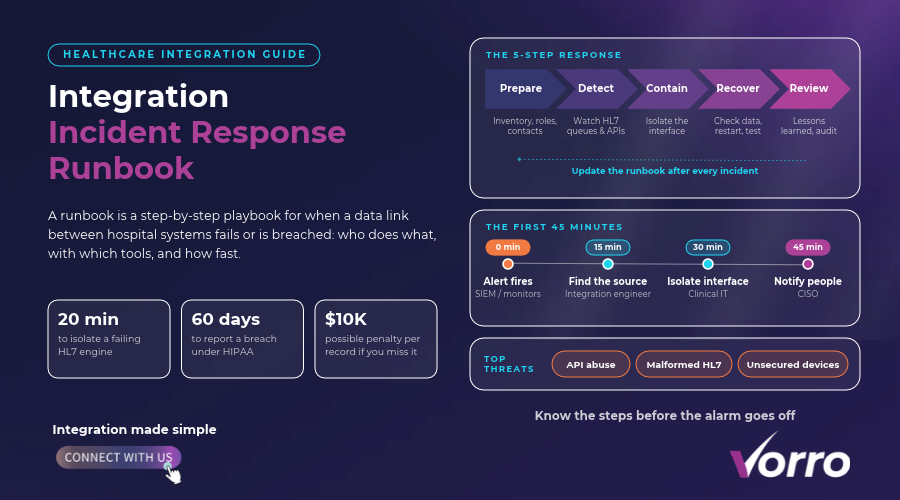
HIPAA, CMS, and HITECH demand a breach be reported within 60 days. Missing that window can cost $10,000 per record and damage trust.
Complexity of data exchanges and third-party vendors
One EHR may talk to three labs, a imaging PACS, and a mobile app. When a single interface fails, the ripple can touch dozens of systems.
Core Components of the Runbook
Preparation
Maintain an inventory of all integration points, assign clear roles, and draft a communication plan that includes patients and regulators.
Detection and Analysis
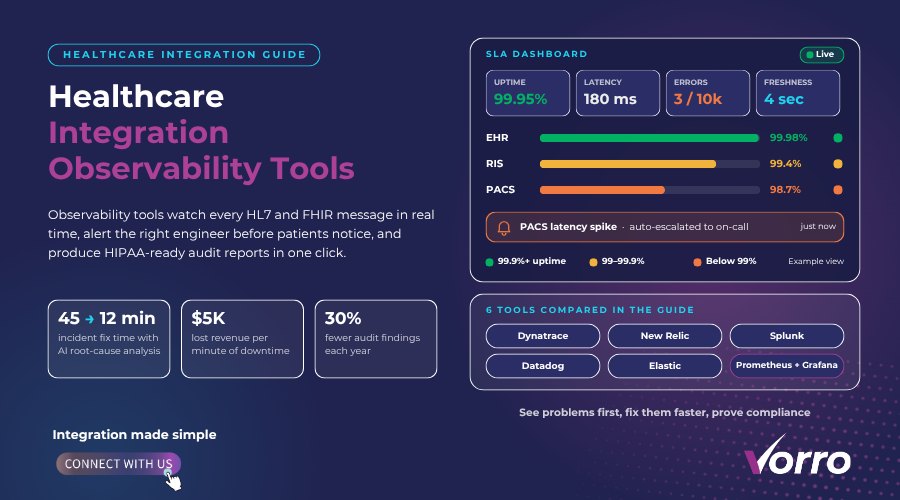
Deploy monitoring tools that watch API latency, HL7 error queues, and device telemetry. Follow a triage checklist to rank severity.
Containment
Isolate the compromised interface engine, shut down offending endpoints, and reroute traffic through a clean sandbox.
Eradication and Recovery
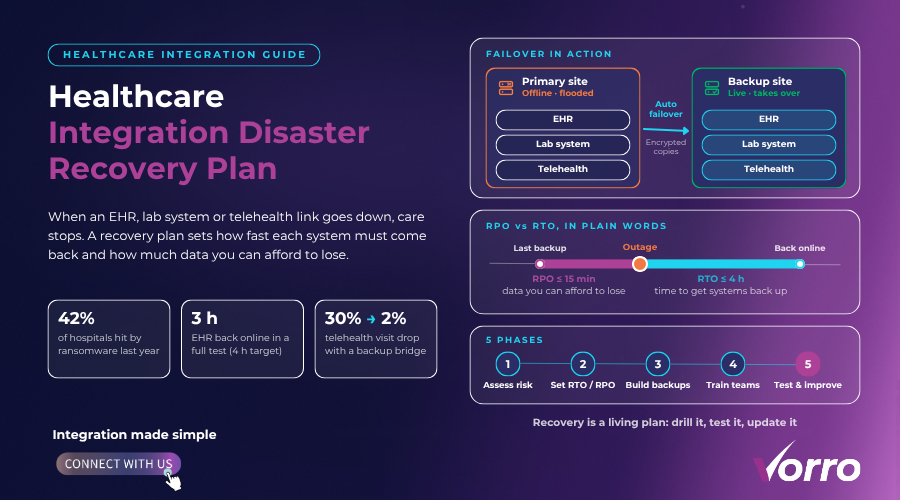
Validate data integrity with checksum tools, restart the affected services, and run end-to-end tests before going live.
Post-Incident Review
Document lessons learned, update the runbook, and run a compliance audit to prove you met HIPAA timelines.
Integration-Specific Threat Vectors
API abuse, malformed HL7 segments, and unsecured device pipelines are the top three risks. Treat each as a separate incident class with its own SLA.
Embedding the Runbook into Middleware
Most hospitals run Mirth Connect or similar engines. Attach the runbook steps as custom alerts in the engine’s dashboard, following best practices from our guide to building a Healthcare Data Pipeline Architecture: Secure & Interoperable ETL so the team sees them in real time.
Metrics to Track Runbook Effectiveness
Measure Mean Time to Detect, Mean Time to Contain, and audit scores after each breach simulation. Those numbers tell you if the process is getting tighter.
Template Example
Quick-Start table
| Step | Owner | Tools | Timeframe |
|---|---|---|---|
| Identify breach source | Integration Engineer | SIEM, API logs | 15 min |
| Isolate interface | Clinical IT | Network console | 30 min |
| Notify stakeholders | CISO | Email template | 45 min |
Automation & Integration Tools
Tools like Healthcare Data Integration Tools: Choosing the Right Platform help you pair a SIEM with a SOAR platform to trigger the runbook automatically when an abnormal API call spikes. API health-check scripts can close the loop on recovery, and following AI Governance: Principles, Frameworks & Best Practices ensures compliant automation.
Real-World Case Study
A Midwest health system saw an HL7 engine overload after a ransomware hit on a third-party lab. By following their runbook, they isolated the engine within 20 minutes, kept patient data safe, and filed the HIPAA notice in 58 days—well under the legal deadline.
Frequently Asked Questions
- Do I need a separate runbook for each vendor? Yes, at least a vendor-specific addendum.
- How often should I test the runbook? Quarterly drills keep everyone sharp.
- What if the breach involves a wearable device? Treat it as a device data pipeline incident and follow the same isolation steps.
In short, a tailored Integration Incident Response Runbook for Healthcare gives you the playbook, the tools, and the metrics to stay ahead of threats, protect patient data, and stay on the right side of regulators.
Frequently Asked Questions
Which regulatory frameworks must be addressed in a healthcare integration incident response runbook?
The runbook must cover HIPAA, HITECH, and CMS requirements, ensuring breach notification timelines, risk analysis, and documentation standards are met. Including these guidelines helps avoid penalties and maintain patient trust.
How do I create an inventory of all integration points and third-party vendors for the runbook?
Compile a centralized register that lists each EHR, HL7 interface, API, and medical device, along with vendor contacts, data flows, and criticality ratings. Regularly validate the list to capture new connections or decommissioned systems.
What key roles should be defined in a healthcare integration IR team?
Assign a lead Incident Commander, a technical analyst for data flow analysis, a compliance officer for legal reporting, and a communications liaison for internal and patient notifications. Clear responsibilities streamline decision-making during an incident.
Which monitoring tools are recommended for detecting integration-related security incidents?
Use SIEM platforms that ingest HL7 and API logs, along with specialized healthcare integration monitors that flag abnormal message volumes or schema violations. Real-time alerts enable rapid containment and analysis.
Is there a ready-made template I can adapt for my organization’s integration IR runbook?
Several industry groups provide free templates that outline preparation, detection, analysis, containment, and post-incident review steps; these can be customized with your inventory, role matrix, and compliance checklists.