Understanding the Healthcare Integration Maturity Model: A Step?by?Step Guide
What Is a Healthcare Integration Maturity Model?
Definition and purpose
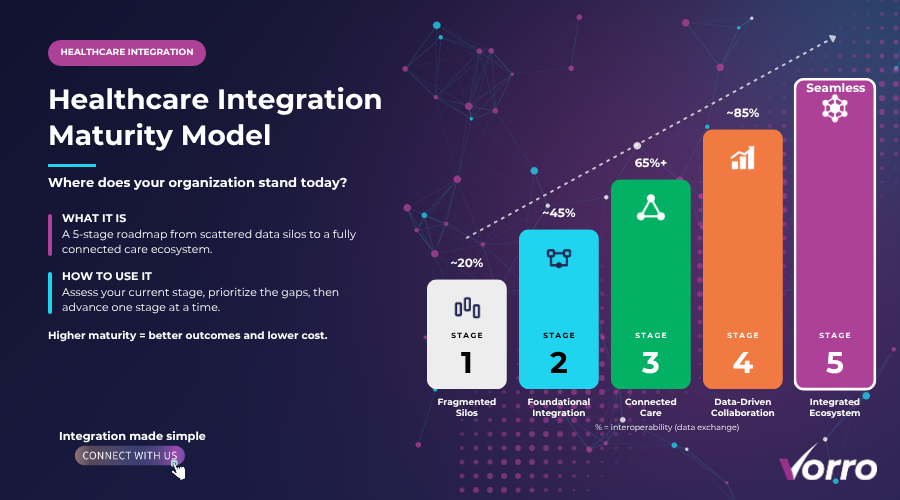
The healthcare integration maturity model is a roadmap that lets you see where your organization stands on the path from scattered data islands to a fully connected ecosystem. It’s not just a buzzword; it’s a practical tool for pinpointing gaps, prioritizing investments, and proving the value of every integration effort.
How it differs from general IT maturity models
Generic IT maturity frameworks focus on hardware, software, and project management. Our model, however, zeroes in on clinical data exchange, patient?centric workflows, and regulatory compliance. In short, it asks “Are you just sharing data, or are you delivering coordinated care?”
Why Maturity Matters in Healthcare Integration
Impact on patient outcomes cost and compliance
When you move from siloed EHRs to real?time data sharing, readmission rates can drop by up to 15?%. Costs shrink because duplicate tests disappear, and compliance improves as audit trails become automatic. That’s why CEOs treat maturity as a risk?management imperative.
Aligning with digital health strategy
Digital health isn’t a “nice?to?have” add?on any longer. It’s the backbone of telehealth, remote monitoring, and AI?driven diagnostics. If your integration maturity lags, you’ll watch competitors pull ahead with smarter care pathways.
Core Stages of the Model 5?Stage Framework
Stage 1 Fragmented Silos
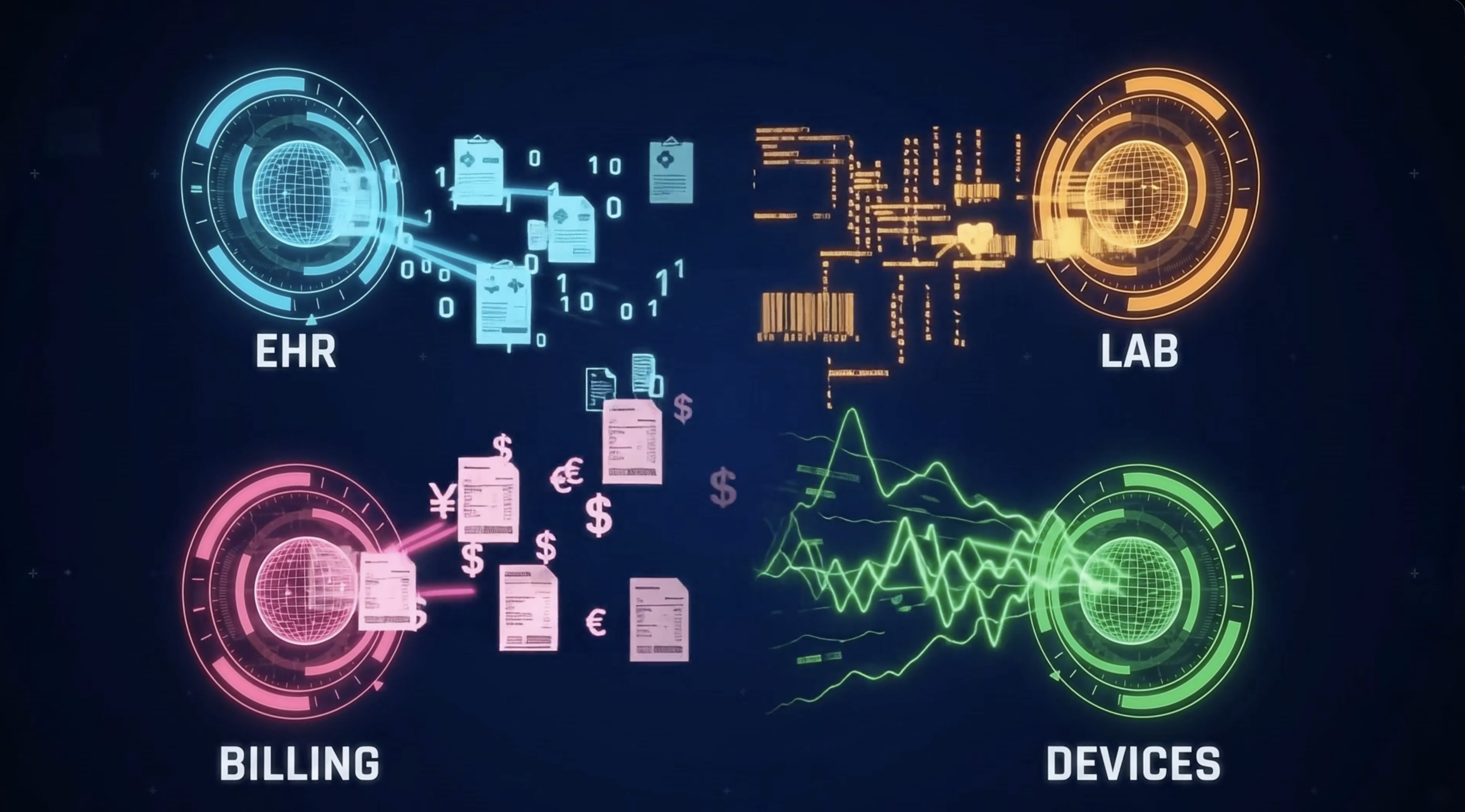
At this level, each department guards its own data like treasure. Exchanges happen via PDFs or fax. Interoperability scores hover around 20?% and clinicians spend hours hunting records.
Stage 2 Foundational Integration
You’ve rolled out basic HL7 interfaces and a central data warehouse. Exchange rates climb to 45?%, but analytics are still manual. Think of it as laying the tracks before the train runs.
Stage 3 Connected Care
Now apps talk to each other through robust APIs. Care teams see a unified patient view, and population health dashboards start to surface trends. Interoperability edges past 65?%.
Stage 4 Data?Driven Collaboration
Predictive models sit on top of clean, real?time data. AI helps flag sepsis, while external partners (labs, insurers) exchange data securely. You’re approaching 85?% integration maturity.
Stage 5 Integrated Ecosystem
This is the sweet spot: a living network where patients, providers, payers, and even wearables share data seamlessly. Automated workflows drive outcomes, costs drop, and compliance is baked into every transaction.
Conducting an Integration Maturity Assessment
Self?assessment questionnaire
Start with a 30?question survey covering data exchange, governance, and AI readiness. Rate each item on a 0?5 scale, then calculate an average to locate your stage. We’ve seen hospitals go from a score of 2.1 to 3.7 after a single review cycle.
Key metrics interoperability data governance AI readiness
- Interoperability score: % of successful message exchanges per month.
- Data governance index: Percent of data elements with documented owners.
- AI readiness rating: Number of AI?ready data pipelines versus total pipelines.
Using existing tools HIMSS InterSystems Rhapsody
Don’t reinvent the wheel. HIMSS Analytics offers a maturity calculator that maps directly to the five?stage framework. InterSystems and Rhapsody provide plug?in assessments that pull data from your integration engine, giving you a live dashboard instead of a static spreadsheet, while the top Mirth alternatives guide helps you compare open?source and paid integration engines.
Building a Roadmap to Advance Maturity
Prioritizing gaps
Plot each gap on a 2×2 matrix—impact versus effort. Quick wins (like enabling FHIR queries for lab results) go in the top?left, and you can reference a detailed guide on choosing the right FHIR data integration platform to ensure you select the best solution, while major architecture overhauls sit in the bottom?right. This visual helps leadership say “yes” to the right projects.
Change management and governance
Stakeholder buy?in is half the battle. Create a cross?functional steering committee, define clear decision rights, and celebrate every milestone. Remember, culture shifts slower than code.
Technology adoption timeline
Typical roadmaps span 24?36 months. Year?1 focuses on foundational integration, Year?2 on APIs and data lakes, and Year?3 on AI models and ecosystem partnerships. Adjust the cadence based on budget cycles and regulatory windows.
Calculating the Total Cost of Integration
Direct costs software APIs staffing
Software licenses can run $150,000?$300,000 per year for a medium?size hospital. Each API connection averages $12,000 in development fees. Staffing—project managers, integration engineers, and data stewards—adds another $200,000 annually.
Indirect costs training downtime
Training sessions often cost $1,500 per clinician, and you’ll lose roughly 0.5 FTE per department during go?live. Multiply that by 50 departments and you’re looking at $75,000 in hidden expenses.
ROI and cost?benefit analysis
Use a healthcare integration total cost calculator to compare total spend (direct + indirect) against savings from reduced duplicate testing, faster discharge, and avoided penalties. In one case study, a 12?month ROI of 18?% was achieved after moving from Stage?2 to Stage?4.
Real?World Case Studies
Hospital system achieving Stage 4
Midwest Health Network upgraded its integration engine in 2019, added a data lake, and launched sepsis?prediction AI. Within 18 months, mortality dropped 7?% and readmissions fell 12?%.
Payer provider integration example
A regional insurer partnered with a health system to exchange eligibility and claims data via FHIR. The joint effort cut claim processing time from 10 days to 3, saving $3.2?million in the first year.
Common Challenges How to Overcome Them
Data silos vendor lock?in regulatory hurdles
Break silos by adopting open standards like FHIR and SMART on FHIR, or explore top healthcare data silos solutions to guide your strategy. Negotiate contracts that include data?export clauses, and build a compliance checklist that tracks HIPAA and GDPR obligations.
Future Trends in Integration Maturity
AI enabled interoperability blockchain patient controlled data
Tomorrow’s maturity model will embed AI?driven data mapping, use blockchain for immutable audit trails, and give patients the keys to their own records. Early adopters are already piloting consent?driven data exchanges that could redefine Stage?5.
Quick?Start Checklist Resources
Assessment tools templates calculators
Grab a ready?made questionnaire, plug your numbers into the integration maturity assessment healthcare worksheet, and use our free total cost calculator template. Download links:
Putting It All Together
Understanding where you sit on the healthcare integration maturity model is the first step toward smarter, cheaper, and safer care. Start with a frank self?assessment, map out gaps, and use the cost calculator to speak the language of CFOs. Then, build a phased roadmap that blends technology, governance, and people?change. If you track ROI with clear KPIs—like reduced duplicate tests, faster discharge, and compliance scores—you’ll have the evidence needed to keep moving up the ladder.
Remember, maturity isn’t a destination; it’s a journey that rewards every organization willing to tie data to outcomes. So ask yourself: are you still stuck in silos, or are you ready to join the integrated ecosystem?
Frequently Asked Questions
How can an organization assess its current integration maturity level?
Use a self?assessment questionnaire that maps existing processes, data exchange standards, and governance to the five model stages. Compare scores against defined criteria for each stage to pinpoint gaps and prioritize improvements.
What are the key benefits of advancing from the Foundational Integration stage to the Connected Care stage?
Transitioning to Connected Care enables real?time information sharing across providers, improves care coordination, and reduces duplicate testing. It also supports more accurate clinical decision?making and enhances patient satisfaction.
How does the healthcare integration maturity model help meet regulatory compliance such as HIPAA or GDPR?
Higher maturity stages require standardized data security controls, audit trails, and consent management, which align with HIPAA and GDPR mandates. By following the model, organizations embed compliance into architecture rather than treating it as an afterthought.
What technologies are most effective for progressing through the integration maturity stages?
Interoperability standards like HL7 FHIR, API gateways, cloud?based integration platforms, and data?warehousing solutions facilitate each stage. Automation tools for mapping, transformation, and monitoring accelerate the move toward data?driven collaboration.
Is it realistic for a small clinic to achieve the Data?Driven Collaboration stage?
Yes, by leveraging scalable SaaS integration platforms and partnering with regional health information exchanges, small clinics can adopt advanced analytics without large upfront investments. Incremental upgrades aligned with the model make the goal attainable over time.