Why Healthcare Data Integration Matters
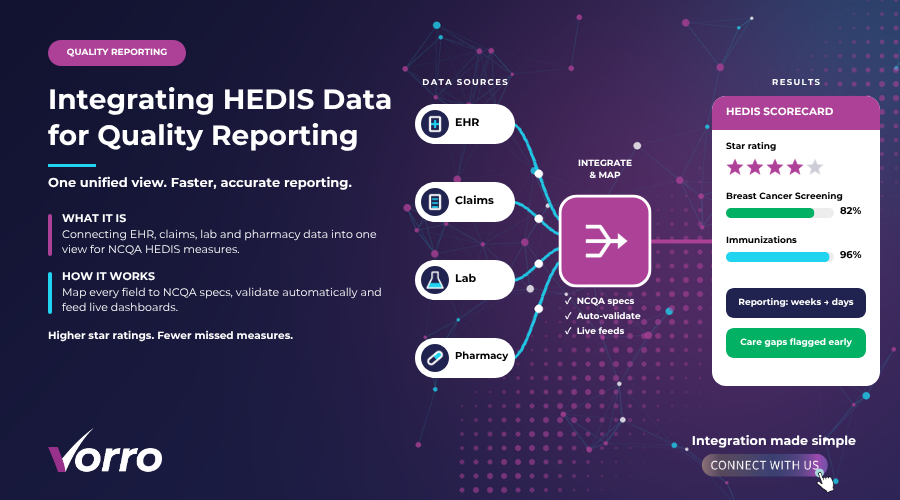
Imagine a doctor who can see every lab result, imaging study, and wearable reading without chasing down three different systems. That’s the promise of healthcare data integration. When patient information flows freely, decisions happen faster, errors drop, and costs shrink. I’ve seen hospitals cut reporting time from weeks to hours simply by breaking down data silos. And you? If you’re steering an IT team, the ability to stitch together EHR, RIS, PACS, claims and even smartwatch data isn’t a nice to have-it’s a competitive advantage.
Top Challenges in Healthcare Data Integration
Every integration project hits a few common roadblocks.
- Security fears. A breach can cost $4.2 million on average, so hospitals guard data like a vault.
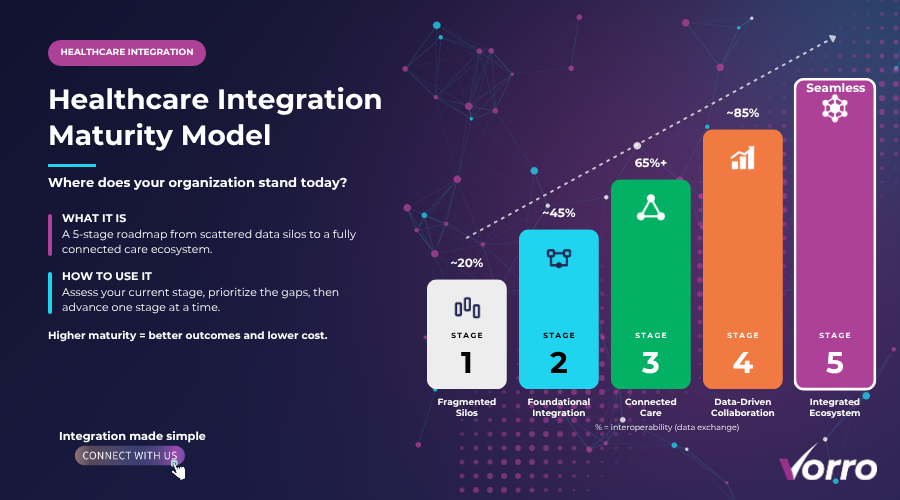
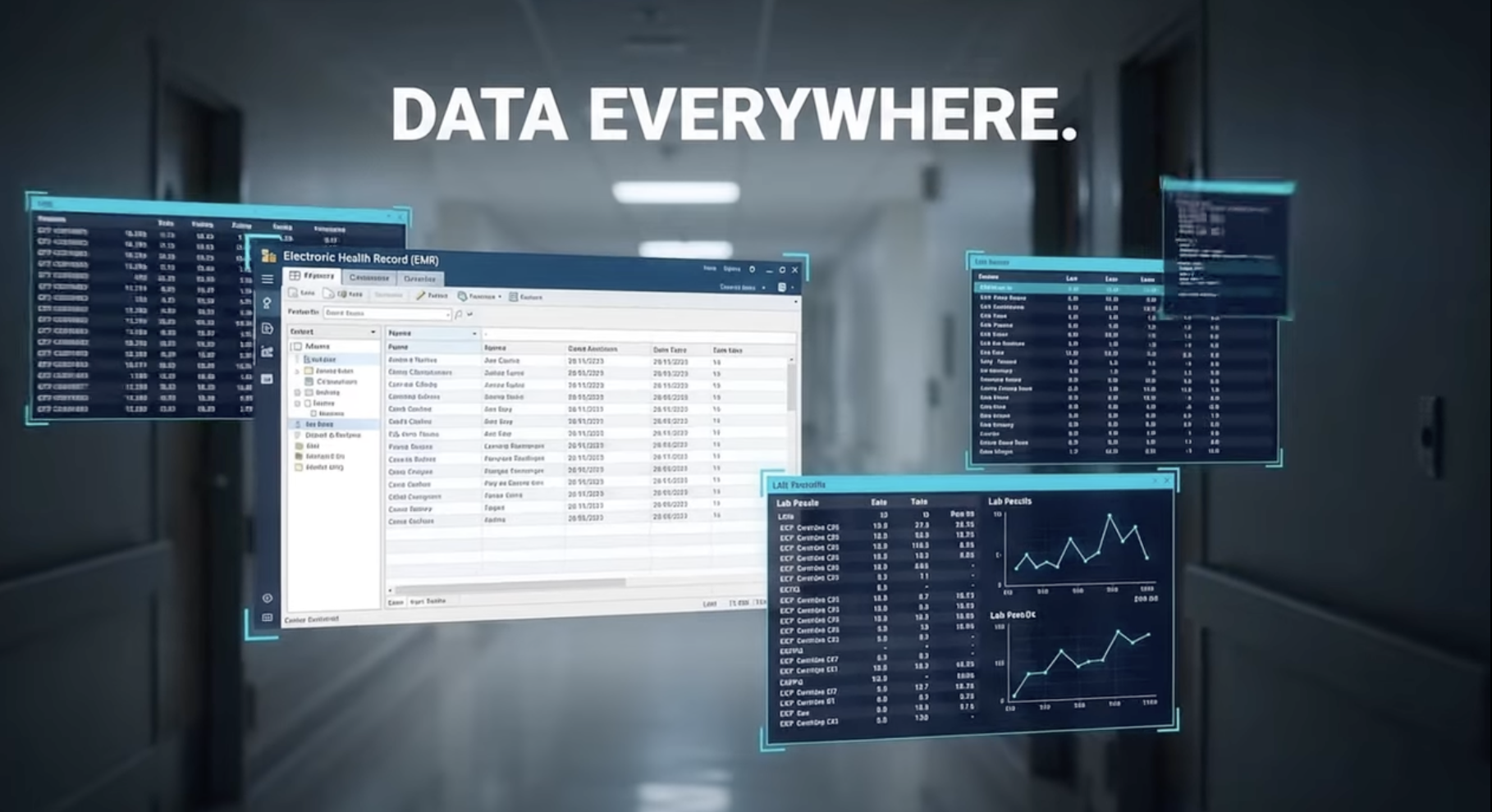
- Data silos. Legacy systems talk in different dialects. One system streams HL7, another pushes FHIR, and the rest just dump CSV files.
- Standardization nightmares. Without a common model, you end up with duplicate fields and mismatched codes.
- Regulatory pressure. HIPAA isn’t a suggestion; it’s a set of enforceable rules that penalize any slip up.
But the biggest trap? Assuming technology alone will solve everything. People, processes, and governance matter just as much.
Key Components of a Healthcare Data Integration Architecture
Here’s a quick snapshot of the building blocks you’ll typically see.
ETL Engines
Extract Transform Load tools pull data from source systems, reshape it to match a target schema, then load it into a repository. Modern ETL pipelines can handle more than 2 billion records per day, so they scale for big hospital networks.
APIs and Middleware
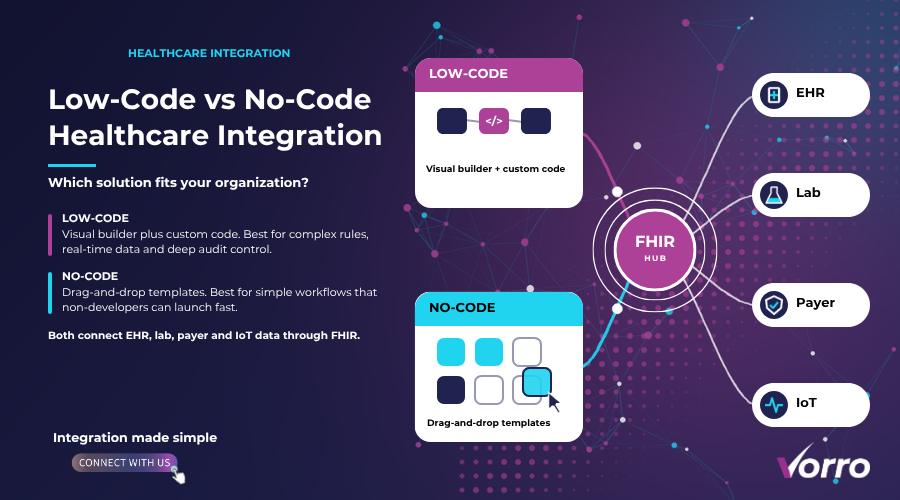
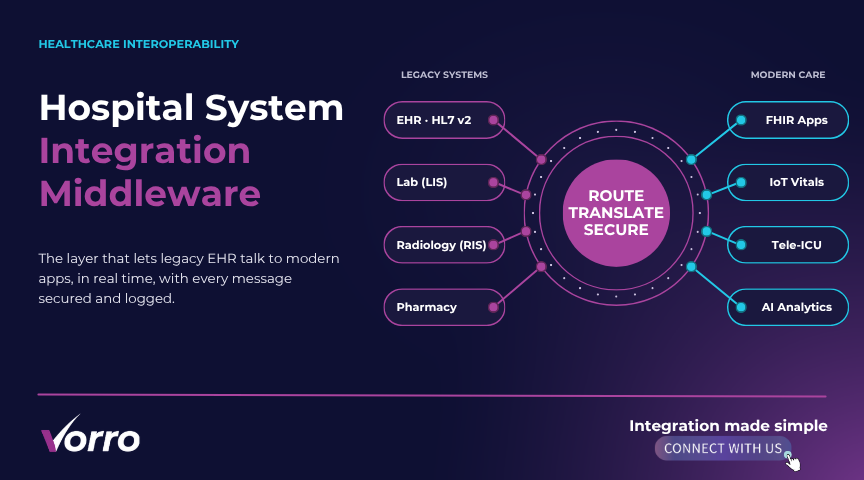
An API first approach lets you expose patient data in real time. Think of a middleware layer that converts HL7 messages into FHIR resources on the fly-developers love that.
Data Lakes and Warehouses
Data lakes store raw, unstructured feeds (think imaging blobs), while warehouses hold curated, query ready tables for analytics. A hybrid model often delivers the best ROI.
Security Controls
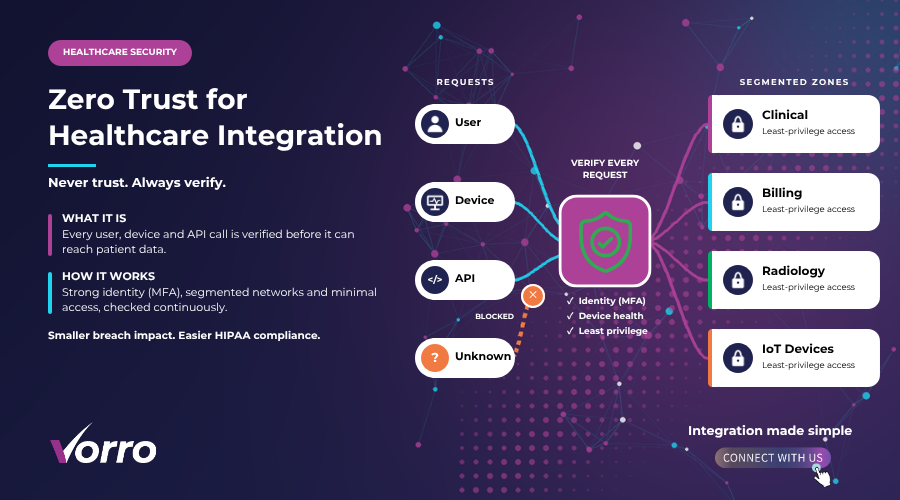
Encryption at rest and in transit, role based access, and immutable audit logs keep you HIPAA compliant. And don’t forget tokenization for PHI that travels across public clouds.
Governance Framework
Data stewards assign ownership, define data quality rules, and ensure that every new feed gets approved before it goes live. Without governance, you’ll drown in dirty data.
HIPAA Compliance Considerations
Compliance isn’t a checklist; it’s an ongoing culture.
- Risk assessments. Conduct them at least annually. Identify which data flows could expose PHI.
- Encryption standards. Use AES 256 for storage and TLS 1.2+ for transmission.
- Access controls. Implement least privilege policies and multi factor authentication for any user touching patient records.
- Audit readiness. Keep detailed logs for at least six years-auditors love that level of detail.
When you pick a healthcare data integration platform, make sure the vendor provides built in HIPAA features rather than bolting them on later.
How to Choose a Healthcare Data Integration Platform
Choosing the right solution feels like dating-you need chemistry, shared values, and long term potential.
- Scalability. Can it handle a 30 % surge in data volume during flu season?
- Support model. 24/7 support matters when a critical workflow stalls at midnight.
- Total cost of ownership. Look beyond license fees; factor in data transformation effort and training.
- Interoperability. Does it speak HL7, FHIR, CCDA out of the box?
- Vendor roadmap. AI driven analytics are becoming mainstream-does the vendor have a clear plan?
In practice, I start with a pilot: connect a single EHR to a data lake using the platform’s sandbox. If you can cut reporting time by 50 % in the pilot, you’ve got a winner.
Vorro’s Approach to Healthcare Data Integration
At Vorro, we built a solution that blends speed with security. Our stack includes a low code ETL engine, FHIR native APIs, and a micro services based middleware that auto generates audit logs. One client, a 500 bed regional hospital, saw a 40 % reduction in manual data entry after we deployed our clinical data integration solutions. The secret sauce? A governance portal that lets data stewards approve new feeds with a single click, while the platform enforces encryption and role based access automatically.
Future Trends in Healthcare Data Integration
What’s on the horizon? Real time analytics and AI are reshaping the landscape.
- Streaming data pipelines. Wearables now push a heartbeat every second. Platforms must ingest and act on that data within milliseconds.
- Machine learning enhanced matching. AI can reconcile duplicate patient records with 95 % accuracy, slashing manual cleanup costs.
- Predictive analytics. Integrated datasets enable population health models that forecast readmission risk before the patient even steps into the ER.
If you ignore these trends, you’ll be left playing catch up with competitors who already have AI powered dashboards.
Case Study: Successful Integration Implementation
Let’s walk through a real example.
Client: Sunridge Health System (12 hospitals, 8 000 physicians).
Goal: Consolidate EHR, claims, and remote monitoring data into a single analytics hub.
Solution: Deployed an enterprise healthcare data integration platform that used API first connectors for Epic, a custom HL7 adapter for the claims engine, and a Kafka stream for wearable data.
Results:
- Reporting cycle dropped from 14 days to 2 hours (an 86 % improvement).
- Annual IT spend on manual reconciliation fell by $1.2 million.
- Patient satisfaction scores rose 12 % after clinicians accessed a unified view at the point of care.
Notice how the ROI shows up in both cost savings and clinical outcomes-that’s the sweet spot we all chase.
How Integration Improves ROI, Cost Savings, and Patient Outcomes
Money talks, but health outcomes win hearts.
When you eliminate duplicate data entry, you save roughly $10 per record-a modest figure that balloons to millions across a large network. Add to that the reduction in adverse events; a 5 % drop in medication errors translates to $3 million less in liability claims, according to a 2023 study by the Healthcare Financial Management Association.
On the patient side, a unified view reduces average length of stay by 0.4 days, freeing up beds and boosting revenue per admission. So every dollar you invest in integration can return $4 $6 in combined financial and clinical value.
FAQs
What data sources are typically integrated?
EHRs, radiology (RIS), imaging archives (PACS), claims systems, pharmacy, lab information systems, and increasingly, consumer wearables and mobile apps.
Which integration method works best for small clinics?
Point to point connectors can be enough, but a hub and spoke model gives you room to grow without re architecting each time you add a new source.
Do I need a separate tool for compliance?
Most modern healthcare data integration tools embed encryption, audit logging, and role based access, so you don’t have to buy a compliance add on.
How long does a typical implementation take?
Small pilots can launch in 4 6 weeks. Full scale rollouts for a multi hospital system often span 6 12 months, depending on data volume and governance maturity.
Can AI improve data matching?
Absolutely. Machine learning models can detect duplicate patient records with over 95 % accuracy, cutting manual review time dramatically.
Wrapping It Up
Healthcare data integration isn’t just a tech project-it’s a catalyst for better care, lower costs, and future proof operations. By tackling security, silos, and standards head on, building a robust architecture, staying HIPAA compliant, and picking a platform that scales, you set the stage for AI driven insights and real time analytics. Remember the Sunridge story: a thoughtful integration delivered measurable ROI and happier patients. If you’re ready to move from fragmented spreadsheets to a unified, actionable data ecosystem, start small, govern tightly, and let the platform grow with you.