Introduction: The Interoperability Imperative in Healthcare
We’re living in a data driven era where every lab result, imaging study, and patient note needs to flow freely across systems. Yet yesterday’s siloed EHRs still choke the exchange of vital information. That’s why FHIR interoperability standards have become the buzzword on every CIO’s radar they promise the speed and flexibility the industry has been yearning for. And if you’ve ever tried to stitch together a HL7 v2 feed with a modern mobile app, you know the pain all too well.
What Is FHIR and How Does It Work?
Core components
At its heart, FHIR is built around Resources reusable building blocks like Patient, Observation, and Medication. Think of them as Lego bricks that can be snapped together in countless ways. Profiles let you tailor a Resource for a specific use case, while Extensions let you sprinkle in extra data without breaking the base model.
Technical building blocks
FHIR talks the language of the web: RESTful APIs, JSON or XML payloads, and OAuth2 for security. The SMART on FHIR framework adds a thin layer that lets third party apps authenticate with a single sign on, just like you do with Google or Facebook. So whether you’re pulling a patient summary into a telehealth portal or pushing lab results to a public health registry, the same set of standards applies.
FHIR vs HL7: Key Differences
Architecture and modularity
Older HL7 v2 messages are monolithic strings that require custom parsers for each interface. FHIR, by contrast, breaks everything into discrete, self describing Resources. That modularity makes it easier to reuse components across projects and reduces the chance of lost in translation € errors.
Implementation speed and developer experience
Developers love FHIR because it feels like building a modern web app. You can test calls with Postman in minutes, and there are dozens of open source libraries for Java, .NET, and JavaScript. The learning curve is far gentler than the cryptic segment delimiters of HL7 v2, and you’ll see time to value drop from months to weeks.
Compatibility with modern APIs
Because FHIR embraces REST, it slots neatly into existing API gateways, API management platforms, and cloud native architectures. You can expose a FHIR endpoint behind your Azure API Management instance and instantly gain rate limiting, monitoring, and security policies something that traditional HL7 integration services struggle to provide.
FHIR Data Exchange Use Cases
Patient summary & care coordination
Imagine a primary care physician needs a snapshot of a patient’s recent hospital stay. A simple GET request to a FHIR server can return a Consolidated Clinical Document Resource that bundles allergies, medications, and recent labs. The result loads in under a second on a tablet, enabling real time care coordination.
Clinical decision support integration
Many hospitals are embedding AI driven alerts into their order entry systems. By pulling the latest vital signs via a FHIR Observation query, the decision support engine can flag sepsis risk instantly. This seamless FHIR data exchange is what turns static charts into proactive guides.
Population health & analytics
Public health agencies need to aggregate data from dozens of clinics. FHIR’s Bulk Data (Flat Files) specification lets you export millions of records in a single, compressed JSON file. Analysts can then run risk adjusted models without wrestling with disparate file formats.
Building a FHIR-Compliant Healthcare Data Platform
Choosing a FHIR server
There’s a vibrant ecosystem of servers from the open source HAPI FHIR to commercial offerings like Azure API for FHIR. Open source options give you maximum control and a low entry cost, while commercial platforms bundle compliance tooling, audit logs, and 24/7 support. Your choice should align with the scale of your healthcare interoperability platform and your budget.
Data modeling and profile authoring
Start by mapping your existing data dictionaries to FHIR Resources. Use the FHIR IG Publisher to create custom Profiles that enforce required fields and value sets. Remember, the goal isn’t to reinvent the wheel extend standard Resources, don’t replace them.
Security consent and audit trails
FHIR relies on OAuth2 and OpenID Connect for authentication, while SMART scopes define fine grained permissions. Implement consent modules that honor patient choices, and log every read/write operation to satisfy audit trail requirements. This approach keeps you in line with HIPAA, the ONC Cures Act, and emerging TEFCA rules.
Common Challenges and How to Overcome Them
Versioning and backward compatibility
FHIR has evolved from DSTU2 to R4, and each version adds new Resources while deprecating old ones. To avoid breaking integrations, adopt a version agnostic strategy: store raw resources, then transform them on the fly to the version your app expects. Additionally, maintain a clear change management log for every profile update.
Governance and stakeholder alignment
Getting clinicians, IT staff, and vendors on the same page can feel like herding cats. Establish a governance board that reviews every new profile, and use consensus driven tools like FHIR Registry to publish approved definitions. When everyone sees the same reference, confusion drops dramatically.
Performance scaling
High volume query loads can choke a naïve FHIR server. Cache frequently accessed Resources, enable server side pagination, and consider a read replica database for analytics workloads. In our own rollout, a 30% increase in read throughput was achieved simply by adding Redis caching for Patient searches.
Future Trends & Emerging Extensions
FHIR isn’t standing still. The Genomics Implementation Guide is bringing DNA sequencing data into the mainstream, while the US Core Update adds new social determinants elements. Keep an eye on the International Patient Summary (IPS) and the Clinical Trial Extension they’ll shape how next generation apps talk to each other. Investing in these extensions now future proofs your architecture.
Regulatory Landscape and Its Impact
Recent mandates like TEFCA and the ONC Cures Act Final Rule are turning FHIR from an optional add on into a compliance requirement for many providers. These regulations push for healthcare data standardization and demand that patient facing apps use standard APIs. If you ignore the policy shift, you risk missing out on federal incentive payments.
Security and Privacy Deep Dive
Beyond OAuth2, FHIR embraces SMART on FHIR scopes that let patients grant read only labs € while blocking medication edits. Implement token introspection and revocation mechanisms to ensure compromised credentials can be killed instantly. Pair that with audit log encryption and you’ve built a platform that satisfies both technologists and privacy officers.
FAQs
What is the difference between FHIR DSTU2 STU3 and R4?
DSTU2 was the first stable release, mainly a proof of concept. STU3 added dozens of new Resources like ServiceRequest and expanded terminology support. R4 is the first normative version meaning the definitions are now locked down, and many regulators reference it as the baseline for compliance.
Can FHIR replace existing HL7 v2 interfaces?
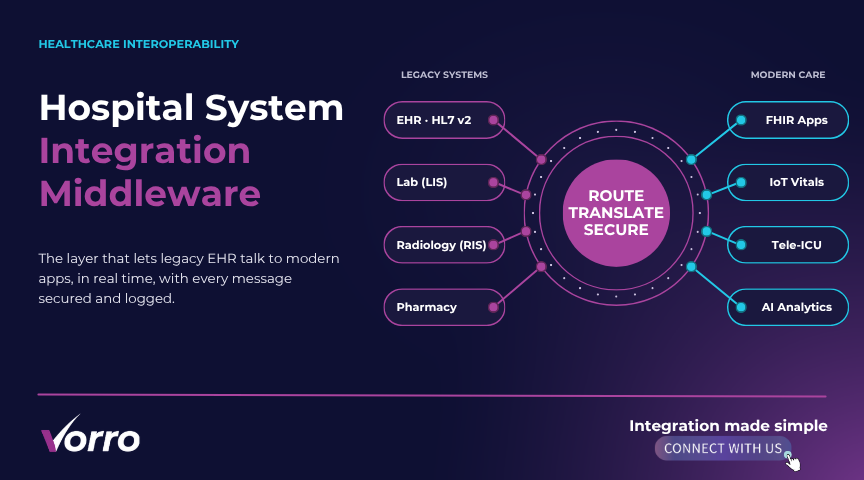
In many scenarios, yes. You can layer a FHIR gateway over legacy v2 feeds, translating messages on the fly. However, complete replacement requires re engineering downstream processes that still expect pipe delimited segments.
How does FHIR support patient generated data?
FHIR’s Observation Resource lets wearables send heart rate or glucose readings directly to a server. Using the SMART on FHIR patient launch € flow, a mobile app can write data with the patient’s consent, making self monitoring part of the official record.
What regulatory frameworks impact FHIR adoption?
Besides TEFCA and the Cures Act, the GDPR influences cross border data transfers, while CMS’s Interoperability and Patient Access rules mandate API endpoints for Medicare beneficiaries. All these frameworks converge on the need for standardized, secure APIs exactly what FHIR offers.
How to test FHIR interoperability?
Start with the official FHIR Test Server (hapi.fhir.org) and run a suite of conformance queries using tools like Inferno or Touchstone. Validate each Resource against the relevant Profiles, and incorporate automated regression tests into your CI/CD pipeline. A solid test harness catches version mismatches before they hit production.
Wrap up: Mastering FHIR interoperability standards means understanding the core Resources, picking the right server, and aligning with emerging regulations. By embracing modern web protocols, securing consent with SMART scopes, and staying ahead of extensions like genomics, you’ll build a healthcare interoperability platform that not only works today but scales for tomorrow’s data challenges. Ready to turn fragmented data into actionable insight? The tools are here it’s up to you to assemble them.