Introduction
In the fast-evolving healthcare industry, data is a critical asset. It powers clinical decision-making, optimizes operational efficiency, and supports research innovations. However, the increasing volume and complexity of healthcare data pose significant challenges. As healthcare organizations embrace technology to manage their data, the barriers to effective healthcare data utilization become more evident. From data integration issues to data security concerns, the challenges in healthcare industry data are multi-faceted and need strategic solutions.
In this blog, we will explore the key challenges in healthcare data, delve into healthcare data analytics, and discuss how healthcare integration software can provide valuable solutions.
Data Quality and Accuracy Issues
One of the most pressing challenges in healthcare data is ensuring its quality and accuracy. Healthcare data often comes from multiple sources, including electronic health records (EHRs), laboratory results, medical imaging, and patient surveys. Inaccurate, incomplete, or outdated data can lead to serious consequences, from misdiagnoses to improper treatment plans. Also, about 60% of healthcare organizations report that inaccurate data affects their clinical decision-making.
To overcome these challenges, healthcare providers need robust systems to validate and standardize data across multiple platforms. This requires integrating data sources and maintaining up-to-date records for every patient. Efficient healthcare integration software can help streamline this process, ensuring that data is consistent, accurate, and easily accessible.
Data Security and Privacy Concerns
Healthcare continues to face the highest data breach costs, with the 2024 IBM Cost of Data Breach Study reporting an average of $10.93 million USD per breach in 2023, significantly higher than other industries. The U.S. leads globally, with an average breach cost of $9.48 million USD. These breaches often remain undetected for 213 days, much longer than the 194 days across other sectors. The rising trend of large breaches involving millions of records, particularly those stemming from stolen credentials, makes the healthcare sector especially vulnerable. Furthermore, compliance with HIPAA and GDPR regulations adds to the complexity and cost. Healthcare organizations that implement AI and automation in their cybersecurity efforts can reduce breach costs by $1.76 million USD and shorten breach lifecycles by 108 days.
Healthcare organizations must invest in advanced cybersecurity measures, such as data encryption, firewalls, and access control systems, to protect patient data from unauthorized access. Additionally, adopting secure healthcare integration software can streamline the secure transfer and storage of sensitive information, ensuring compliance with privacy regulations.
Data Fragmentation and Lack of Interoperability
A significant issue in healthcare data management is data fragmentation. Healthcare data is often siloed in different departments, systems, and organizations. This lack of interoperability between systems makes it difficult for healthcare providers to access a complete patient record, leading to inefficiencies and delayed treatments.
The challenges in healthcare data analytics arise when systems can’t communicate effectively. The result is disconnected care, which impacts patient outcomes and operational efficiency. And so there’s no denying the fact that more than 50% of hospitals struggle with interoperability issues.
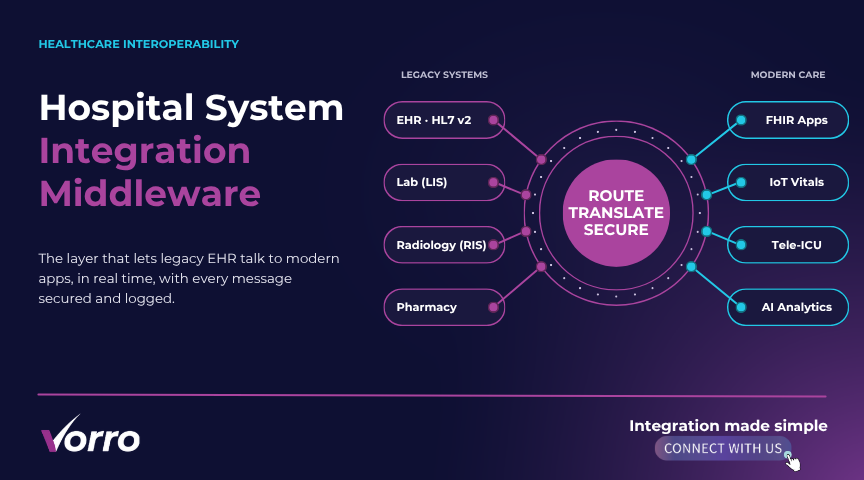
A solution to this is healthcare integration software that can unify disparate data sources into a single platform. By enabling seamless communication between different systems, healthcare providers can ensure that data is accurate, up-to-date, and readily available across the organization.
Data Overload and Management Challenges
With the rise of digital health tools, wearable devices, and real-time monitoring, healthcare organizations are now dealing with an overwhelming amount of data. Big data analytics in healthcare can provide valuable insights, but it also brings challenges in terms of storage, processing, and analysis. Many healthcare organizations lack the infrastructure or resources to effectively manage large volumes of data.
Additionally, healthcare data often comes in various formats (structured, unstructured, text, images, etc.), further complicating its management. To extract actionable insights from this data, healthcare providers need advanced analytics tools and a streamlined approach to data management.
Regulatory Compliance and Legal Issues
Healthcare data is subject to numerous regulations, including HIPAA, GDPR, and others depending on the country. These regulations are designed to protect patient privacy and ensure that data is handled securely. However, they also create significant compliance challenges for healthcare organizations. Non-compliance can result in hefty fines and legal repercussions.
In addition, healthcare providers must ensure that their data collection, storage, and sharing practices align with both local and global data protection laws. A thorough understanding of these regulations and the adoption of healthcare integration software can help healthcare organizations stay compliant while handling patient data securely.
Lack of Skilled Workforce and Technological Resources
The growing complexity of healthcare data has created a demand for skilled data analysts, IT professionals, and clinicians who can effectively utilize this data. However, there is a shortage of skilled workers in the healthcare data sector. This skill gap exacerbates the challenges associated with data management and analytics.
Healthcare organizations must invest in training programs and recruit skilled personnel to address this shortage. Additionally, partnering with vendors that provide advanced healthcare integration solutions can help bridge this gap, enabling healthcare organizations to leverage technology and data analytics without requiring an in-house data science team.
Cost of Implementation and Upkeep
Implementing data management systems and healthcare integration software can be costly, especially for smaller healthcare organizations. The cost of purchasing and maintaining these systems, training staff, and ensuring compliance with regulations can be a significant burden.
However, the long-term benefits of adopting integrated healthcare systems far outweigh the initial costs. By improving data accuracy, streamlining workflows, and ensuring secure data sharing, healthcare organizations can improve patient outcomes and operational efficiency.
Conclusion:
The challenges in healthcare industry data are vast and multifaceted, ranging from data accuracy issues to compliance hurdles. However, with the right strategies, such as the implementation of healthcare integration software, healthcare organizations can mitigate these challenges and unlock the full potential of their data. By ensuring data quality, improving security, enhancing interoperability, and addressing regulatory concerns, the healthcare industry can pave the way for more efficient, patient-centered care.
As technology continues to evolve, healthcare data management will become even more critical in shaping the future of healthcare. By adopting advanced analytics, robust integration solutions, and a proactive approach to data management, healthcare organizations can overcome the obstacles standing in the way of delivering high-quality care.

Akshita is a Senior Content Writer and Marketer with over a decade of experience crafting narratives that convert, rank, and build lasting brand authority. She has worked across SaaS, FinTech, HealthTech, and Education spaces, delivering everything from HIPAA-compliant medical content to multilingual campaigns for the International Labour Organization, United Nations. Her content has reached audiences across the globe, and she has worked for Fortune 500 brands, global agencies, and startups alike. Fluent in English, Spanish, and German, Akshita brings a rare cross-cultural edge to brand communication. A literature graduate from Delhi University, she balances strategic thinking with a storyteller's instinct, but when she isn’t architecting content roadmaps, she channels her creativity into poetry and painting or dedicates her time to caring for stray animals - pursuits she credits for making her a more empathetic and perceptive communicator.