Introduction
When you hear “payer integration solution,” think of the digital bridge that keeps claims, eligibility, and member data flowing without a hiccup. In today’s fast?paced health?care landscape, that bridge isn’t optional—it’s the highway to faster reimbursements and happier patients.
Unique Integration Needs of Health Plans
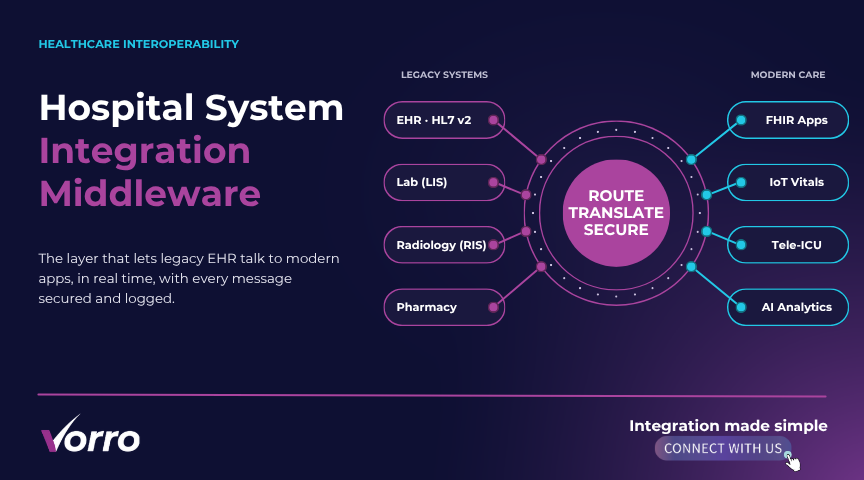
Health plans speak a different language than provider EHRs. A payer’s system churns out X12 transaction files, while a hospital might rely on FHIR?based APIs. The data flows—claims, eligibility checks, enrollment updates—must be translated on the fly.
And when a member updates their address, that single change needs to ripple through eligibility integration, claims integration, and reporting dashboards in real time.
Must Have Capabilities
- Real?time eligibility checks – a patient’s insurance status verified under a second.
- Claims submission and adjudication – automated X12 837 files that reduce manual rework by up to 40%.
- Data normalization and mapping – turning disparate HL7 messages into a single, usable format.
- Scalability and API support – handling spikes of 10,000+ transactions per minute without lag.
Compliance Requirements
CMS and HIPAA aren’t just checkboxes; they’re the guardrails that keep patient data safe. A solid payer integration solution must log every access, encrypt data at rest and in transit, and provide audit trails that survive a federal review.
But don’t forget NIST guidelines—many health plan integration projects use them as a baseline for security controls.
Evaluation Criteria
Choosing a vendor feels like dating: you need chemistry, track record, and clear expectations.
- Experience with health?plan integration projects (look for at least three successful case studies).
- Support for interoperability standards—FHIR, HL7, and X12 are non?negotiable.
- Transparent cost model and realistic implementation timeline (most firms promise 90?day go?live).
- Robust support team that can troubleshoot API hiccups around the clock.
Future Trends
AI?driven claims validation is the next big thing. Machine learning models can flag erroneous codes before they hit the payer, trimming denial rates by up to 18%.
Now imagine a payer data integration platform that learns each insurer’s quirks and auto?optimizes mapping—speed meets smarts.
Real World ROI Snapshot
One Midwest health system swapped a manual EDI workflow for an automated payer interoperability platform. Within six months they saw a 22% reduction in claim cycle time and reclaimed $1.3?million in delayed reimbursements.
Putting It All Together
In short, a modern payer integration solution delivers speed, compliance, and measurable ROI. Start by mapping your data flows, score vendors against the checklist above, and watch your revenue cycle transform.
Frequently Asked Questions
- What is a payer integration solution? It’s a software layer that connects health?plan systems with provider applications to exchange claims, eligibility, and member data securely.
- How does real?time eligibility improve revenue cycle? Immediate verification cuts denial rates, accelerates patient intake, and boosts cash flow.
- Which standards ensure compliance? FHIR, HL7, and X12 work hand?in?hand with HIPAA and CMS regulations.
- Can legacy systems be connected? Yes—most solutions offer direct connect or middleware adapters to bridge old EDI engines.
- What ROI can be expected? Organizations typically see 15?25% faster claim settlements and multi?million dollar recoveries within the first year.