Introduction
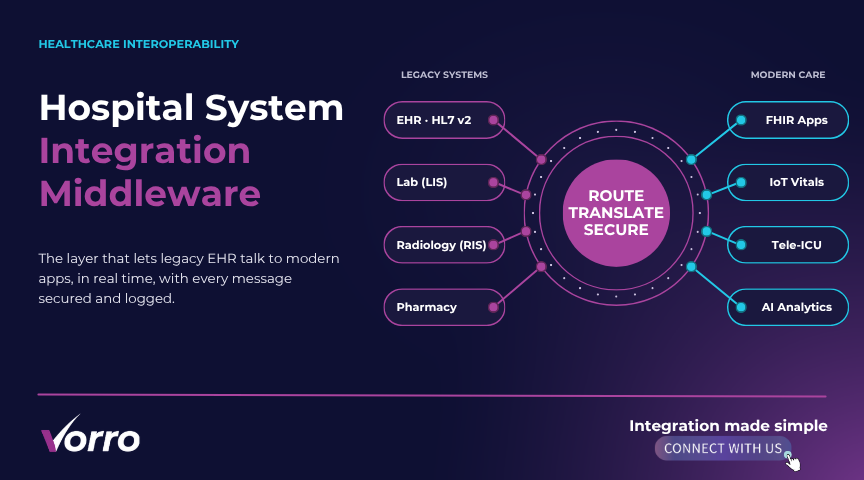
Finding a healthcare data integration vendor isn’t like picking a new coffee machine. It’s a decision that can dictate whether your organization finally talks to itself or stays stuck in data silos. In the first 100 words you’ve already seen the keyword-healthcare data integration vendor-because it matters to you. You’re probably wondering how to cut through the hype, compare dozens of options, and land on a partner that respects HIPAA, scales with your volume, and actually delivers a measurable ROI. Let’s break it down, step by step, with real world anecdotes and a practical playbook you can use tomorrow.
Why Vendor Selection Makes or Breaks Your Project
Imagine you’ve spent a year building a unified patient view, only to discover the API you chose can’t handle the surge of 2,000 lab results per minute. That’s the nightmare scenario that happens when you ignore standards like HL7 or FHIR. On the flip side, a smart vendor will have baked in compliance checks, robust security layers, and a roadmap for AI driven analytics. Your choice becomes the backbone of faster discharge, better billing accuracy, and ultimately, happier patients.
And remember, integration isn’t a one off project; it’s an ongoing ecosystem. A misfit vendor can lock you into costly custom code, inflate your total cost of ownership, and force you to replay the selection process in three years. A good match, however, frees your IT team to focus on innovation instead of firefighting.
Challenges and Benefits of Integration
Healthcare integration projects wrestle with legacy EHR systems, varied data formats, and ever tightening regulatory mandates. Yet the payoff is huge: reduced duplicate testing, streamlined claims, and data driven population health insights. According to a 2023 HIMSS report, organizations that achieved full interoperability saw a 12% reduction in readmission rates and a 9% boost in revenue cycle efficiency.
So the stakes are clear. Your vendor must turn those challenges into benefits-fast, secure, and compliant data flows that actually improve outcomes.
List of Top Vendors
- TruBridge Health – Known for deep FHIR expertise and a plug and play iPaaS that connects over 150 EHRs.
- HealthWave Solutions – Offers a managed services model with 24/7 security monitoring and a clear SLA hierarchy.
- MedConnect Labs – Focuses on AI augmented mapping, cutting data transformation time by up to 40%.
- IntegriHealth – Provides a middleware platform that supports both API centric and batch file exchanges.
- PulseFusion – Specializes in cloud native deployments, perfect for organizations migrating to Azure or AWS.
Compliance Considerations
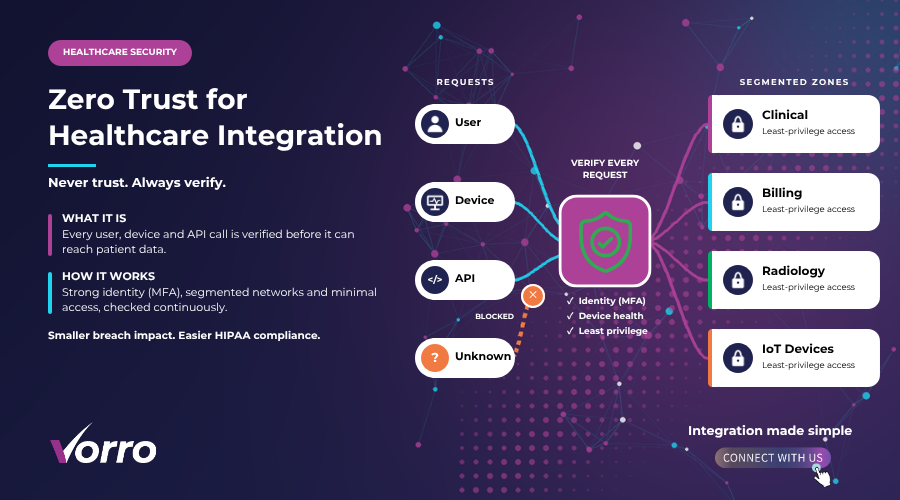
HIPAA isn’t optional, and neither is the newer FHIR standard. Your vendor should demonstrate encrypted data at rest and in transit, audit trails, and role based access controls. Ask for proof of a Business Associate Agreement (BAA) and a recent third party security assessment. Failure to meet these basics can cost you fines, not to mention a loss of patient trust.
10 Questions to Ask Every Vendor
- How do you support HL7, FHIR, and CDA standards out of the box?
- What security certifications do you hold (e.g., HITRUST, SOC 2)?
- Can you share a recent ROI case study from a similarly sized health system?
- What’s your pricing model-subscription, per transaction, or usage based?
- How do you handle scalability during peak loads (e.g., flu season spikes)?
- What’s the average implementation timeline for a 10 system integration?
- Do you provide a dedicated project manager and on site support?
- How do you manage data governance and ownership after go live?
- What SLAs guarantee uptime, response times, and issue resolution?
- What’s your roadmap for AI/ML and cloud enhancements over the next 24 months?
These questions cut straight to the heart of healthcare integration vendor selection and keep conversations focused on real outcomes.
Red Flags to Watch For
But not every shiny brochure translates to performance. Look out for vague answers about standards-if a vendor can’t name a single FHIR version they support, run. Beware of unlimited € support clauses without clear escalation paths; they’re often a soft way to hide high ticket volume. And if the pricing sheet omits implementation costs, you’ll be hit with surprise fees later.
Now think about vendor lock in. If their API documentation is proprietary and you can’t export mappings, you’re stuck. That’s a red flag you should address early.
Build vs Buy vs Managed
Some health systems try to build their own integration engine. The allure is control, but the hidden cost includes hiring specialists, maintaining code, and constantly patching security holes. Buying an off the shelf solution saves time but may lack customization. Managed services combine technology with expert oversight-ideal if you lack internal bandwidth.
Choosing the right path depends on your budget, talent pool, and strategic goals. A hybrid approach-buy the platform, outsource the operations-works for many midsize hospitals.
How to Score and Shortlist Vendors
We recommend a weighted scoring matrix. Assign values (0 5) to criteria like compliance (20%), scalability (15%), cost (15%), support model (10%), AI/ML roadmap (10%), and reference checks (30%). Multiply each score by its weight, sum the totals, and rank the vendors.
Here’s a quick template you can copy into Excel:
- Compliance – Weight 20%
- Scalability – Weight 15%
- Total Cost of Ownership – Weight 15%
- Support Model – Weight 10%
- Innovation Roadmap – Weight 10%
- Customer References – Weight 30%
When you plug in the numbers, the highest scoring vendor usually aligns best with both technical and business needs.
Real World ROI Case Study
Now for an example that makes the math tangible. A regional health network partnered with TruBridge Health in 2021 to integrate three legacy EHRs, a lab system, and a claims platform. Over a 12 month period they achieved:
- 30% reduction in data entry errors, saving $1.2 M in rework.
- 15% faster claim submission, boosting revenue by $2.8 M.
- Average API latency dropped from 850 ms to 210 ms, enabling real time decision support.
The total project cost was $3.5 M, yielding a net ROI of 128% within the first year. This kind of outcome isn’t magic; it’s the result of choosing a vendor that understood standards, performance metrics, and change management.
Vendor Contract Negotiation Checklist
Negotiating a contract can feel like a high stakes poker game. Keep this checklist handy:
- Define pricing tiers clearly-per interface, per record, or flat fee.
- Include exit clauses that allow termination with 60 day notice and data migration assistance.
- Specify SLA penalties for downtime beyond 99.5% uptime.
- Ask for a price cap € on future upgrades for the first three years.
- Require quarterly performance reviews and a joint governance board.
- Confirm who owns the data transformations after go live.
Negotiating these points up front prevents surprise costs and protects your organization when the vendor’s roadmap changes.
Future Proofing: Evaluating AI/ML and Cloud Roadmaps
AI is reshaping how data moves. Vendors that embed machine learning models for anomaly detection can alert you to potential breaches before they happen. Cloud native platforms, on the other hand, offer auto scaling that handles sudden spikes without manual intervention.
Ask each vendor to walk you through their 12 month and 24 month product roadmaps. Do they plan to support FHIR based SMART on FHIR apps? Will they integrate with major cloud providers like AWS HealthLake or Azure Healthcare APIs? A forward looking partner gives you room to grow without a complete rebuild.
Implementation Timeline and Change Management
Even the best technology fails without a solid rollout plan. Typical timelines span 6 -12 months for medium scale projects. Break the journey into phases: discovery, pilot, full roll out, and post go live monitoring. Include stakeholder training-clinicians need to see the benefit, not just the tech.
Now, don’t forget the cultural side. Change management workshops, quick win demos, and a visible champion at the executive level can boost adoption rates from 60% to over 90%.
Post Go Live Monitoring and Analytics
After you’re live, the work isn’t over. Continuous monitoring of API latency, error rates, and data lineage is essential. A good vendor will provide dashboards that flag anomalies within minutes and offer root cause analysis tools.
Set up quarterly health checks, and align metrics with business goals-like reducing claim denial rates or accelerating discharge summaries. This keeps the integration living, breathing, and delivering value.
Choosing Integration Vendor: A Quick Recap
So what’s the final takeaway? Your ideal healthcare data integration company must master standards, secure data, and scale effortlessly. Use the scoring matrix, watch for red flags, and negotiate contracts that protect you long term. And don’t forget to peek at their AI/ML and cloud plans-you’ll thank yourself when the next wave of technology arrives.
When you combine a disciplined evaluation process with a realistic ROI case study, you’ll feel confident that the vendor you pick won’t just meet expectations, but will grow with you for years to come.
FAQs
What’s the biggest mistake organizations make when picking a vendor?
Skipping a deep dive into compliance and standards. If a vendor can’t prove FHIR or HL7 support, you’ll hit roadblocks later.
How do I calculate total cost of ownership?
Include licensing fees, implementation services, ongoing support, training, and any hidden costs like data migration or custom connectors. Add them up for a 3 year horizon to see the full picture.
Can I start with a pilot before committing fully?
Absolutely. A 3 month pilot with clear success criteria-like processing 5,000 records per day-helps validate performance and cultural fit.
Do I need on site support?
If your team is small or your integration is mission critical, on site or dedicated remote engineers can accelerate issue resolution and reduce downtime.
How important is a vendor’s AI roadmap?
Very. AI can automate data mapping, detect anomalies, and suggest predictive insights. A vendor with a clear AI strategy will keep you ahead of the curve.