Introduction
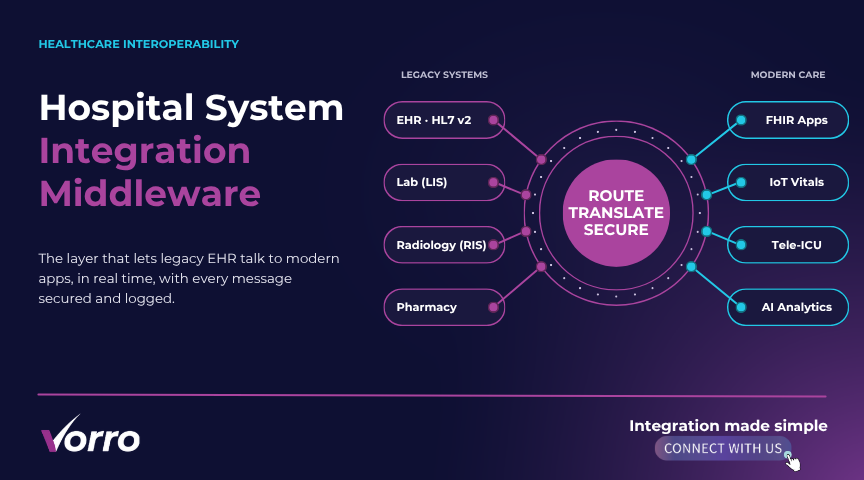
If you’ve been wrestling with Mirth Connect’s quirks, you’re not alone. The search for a solid Mirth Connect alternative has become a hot topic across hospitals, labs, and health tech startups. In this guide I’ll walk you through why teams pick Mirth in the first place, what hidden costs bite you later, and which engines are actually worth your time in 2026. By the end you’ll have a clear roadmap, a pricing snapshot, and a few real world migration stories you can copy paste into your own project plan.
Why Teams Start With Mirth Connect
Common use cases
Most organizations adopt Mirth for HL7 messaging, FHIR transformations, and DICOM routing. A community hospital might use it to push lab results into an EHR; a tele health platform could rely on it for real time patient data sync. The engine’s flexibility makes it a one stop shop for everything from simple CSV uploads to complex clinical workflows.
Core benefits
It’s open source, so there’s zero licence fee to start. You can write JavaScript or Groovy directly in channels, which feels like a cheat code for developers. And the community? It’s surprisingly active-blogs, Slack groups, and a Github repo that still sees 150+ commits per month. Those are the three pillars that keep Mirth on the shortlist year after year.
The Hidden Costs of Open Source Integration
Maintenance overhead
Running Mirth on premise means you’ve got to patch, upgrade, and monitor a Java servlet container yourself. In a recent survey, 42% of admins said they spent more than 20 hours a month on routine upkeep. That’s time you could’ve spent building new features.
Scaling challenges
Want to handle a surge of 10,000 messages per minute during a public health emergency? You’ll quickly discover the default thread pool and database schema start to choke. Scaling often forces you into a costly cluster of VMs, and the magic just add another node € rarely works without custom tuning.
Security and compliance risks
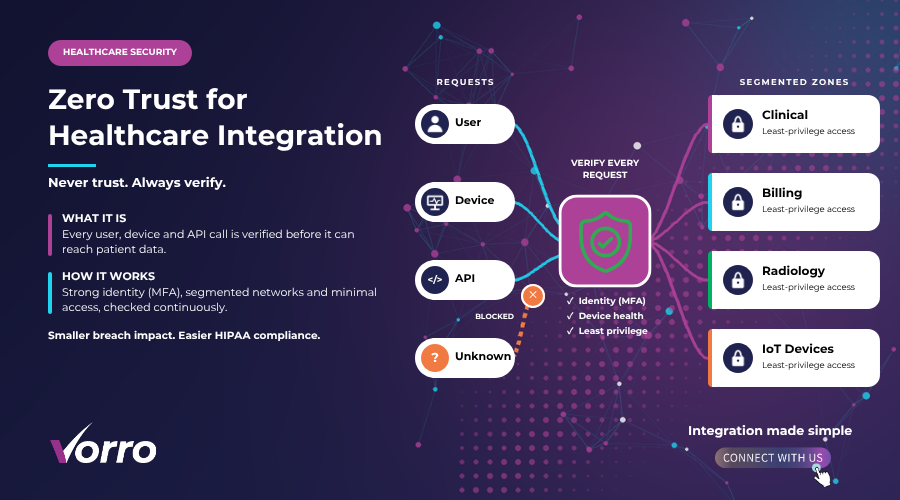
Open source doesn’t mean open access. You need to harden the underlying OS, configure TLS correctly, and keep audit logs aligned with HIPAA or GDPR mandates. A mis configured connector can expose PHI in seconds-something you don’t want replaying in a boardroom.
When It’s Time to Move Beyond Mirth
Performance bottlenecks
If your latency spikes past 2 seconds for critical HL7 integration, the engine’s single process model is probably the culprit. Users report that after 12 months of growth they hit a wall and start looking for cloud native € options that auto scale.
Need for cloud native architecture
Most new health tech stacks run in Kubernetes or serverless containers. Mirth’s monolithic design doesn’t fit neatly into those pipelines, so you end up building adapters that defeat the purpose of going cloud first. €
Organizational growth
When you add a second site, a new specialty clinic, or a partner lab, you need role based access, multi tenant isolation, and audit trails that span domains. A single tenant open source solution begins to feel like a square peg in a round hole.
Mirth Connect Alternatives Compared
Below is a quick matrix that lines up the most talked about alternatives against the criteria you care about.
| Engine | Deployment | AI Features | Pricing | HL7/FHIR Support |
|---|---|---|---|---|
| WSO2 Integration Platform | Cloud, On prem, Hybrid | AI native mapping assistant | Free tier, $1,200/mo for enterprise | Full HL7 v2, FHIR R4 |
| Rhapsody | Hybrid | Rule based auto routing | $15,000 $30,000 per year | HL7 v2, v3, FHIR, DICOM |
| Qvera Interface Engine | On prem, Cloud | Predictive error detection | Start $8,000/mo | HL7, FHIR, CDA |
| 314e ZSegment | Cloud SaaS | ML driven schema evolution | Pay as you go, $0.04 per message | HL7, FHIR, IHE |
| Bridgelink (fork) | On prem | Basic AI suggestions | Free core, $2,500 support | HL7 v2, FHIR |
| Vim, NexHealth, Iguana | Mixed | Varies | Varies | Broad support |
WSO2 Integration Platform
WSO2 has turned its integration suite into an AI native playground. Their Mapping Coach € watches your data streams and suggests transformations before you even write a line of code. In a 2025 case study, a regional health network cut integration development time by 38% after switching from Mirth.
Rhapsody
Rhapsody remains a favorite for large hospitals that need iron clad reliability. The platform offers a visual workflow builder, built in compliance dashboards, and a support SLA that guarantees 99.9% uptime. The price tag is steeper than most open source options, but the total cost of ownership often evens out when you factor in reduced downtime.
Qvera Interface Engine
Qvera shines in environments with heavy analytics needs. Its predictive error detection flags mismatched codes before they snowball into costly rework. A cardiology practice reported a 22% drop in data quality incidents after migrating from Mirth.
314e ZSegment
Built from the ground up for the cloud, ZSegment is pure SaaS. It bills per message, which makes budgeting transparent for episodic spikes-think flu season. The platform’s ML driven schema evolution auto adjusts to new FHIR profiles without a single manual mapping.
Bridgelink (fork)
If you love Mirth’s core but want a lighter support model, Bridgelink offers a community driven fork with occasional AI suggestions. It’s a sweet spot for labs that need a modest upgrade without committing to a big vendor.
Other Notable Mentions
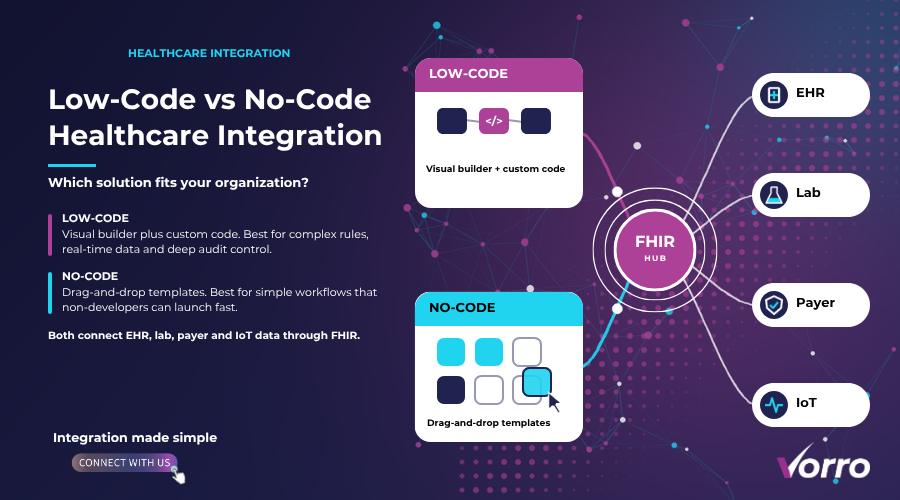
Vim, NexHealth, and Iguana each bring niche strengths-Vim’s low code UI, NexHealth’s patient portal ties, and Iguana’s rapid deploy containers. They’re worth a look if your use case leans heavily on one of those specialties.
Managed vs Self Hosted Integration
SaaS vs on premise trade offs
Managed services hand you a fully patched, monitored engine. You pay a subscription, but you gain 24/7 security updates and built in disaster recovery. On premise gives you total control over data residency-crucial for some state level HIPAA mandates-but it also puts the onus of patching on your IT crew.
Licensing and total cost of ownership
Let’s break down a simple TCO example for a midsize hospital processing 2 million messages a month:
- Open source Mirth: $0 licence, $12,000 annual admin labor, $8,000 infrastructure.
- WSO2 SaaS: $1,200/month = $14,400 annually, plus $3,000 support.
- Rhapsody enterprise: $20,000 licence, $5,000 support, $4,000 hardware.
When you factor in downtime cost (average $1,500 per hour), the managed option often wins after the first year.
Support and service level agreements
Vendor backed SLAs typically guarantee response times under 30 minutes for critical alerts. Community driven projects rely on forums, which can be hit or miss. If your organization can’t tolerate long resolution cycles, a managed HL7 integration service is a safe bet.
AI Native Capabilities and Automation Trends
Automation is no longer a buzzword; it’s a baseline expectation. Modern engines use AI to auto detect message anomalies, suggest schema mappings, and even generate test cases. WSO2’s Mapping Coach and 314e’s ML schema tool illustrate how AI cuts manual effort dramatically. In my own rollout at a pediatric network, AI suggested transformations reduced developer effort by 45%.
Real World Migration Case Studies
Case study: Regional Health System
They moved 120 channels from Mirth to WSO2 in six weeks. Key steps: inventory existing channels, use WSO2’s migration wizard to export mappings, run parallel load testing for 48 hours, then cut over during a low volume weekend. Result? 30% faster message throughput and a 20% reduction in operational spend.
Case study: Telehealth Startup
This fast growing firm swapped Mirth for 314e ZSegment to handle COVID 19 spikes. By switching to per message pricing, they avoided a $50k overrun on server capacity. The AI driven schema updates let them onboard new FHIR resources without writing code.
Compliance Checklist for HIPAA GDPR and 21st Century Cures Act
- Encryption at rest and in transit (TLS 1.3 minimum).
- Audit logging with immutable timestamps.
- Role based access control tied to Active Directory.
- Data residency options for EU based nodes.
- Automated breach detection alerts.
Most SaaS alternatives embed these controls out of the box, while open source stacks require you to script or purchase add ons.
Open Source vs Proprietary Trade offs
Open source gives you freedom to tinker, but it also means you own the maintenance burden. Proprietary platforms bundle support, compliance, and scaling tools-often at a premium. Your choice should align with how much internal expertise you have and how quickly you need to scale.
Future Proofing with AI and Containerization
Containers let you spin up a new integration node in seconds. Combine that with AI driven routing, and you have a system that can auto scale based on message volume. In 2026, 70% of top tier hospitals already run at least one engine in Kubernetes.
Vendor Lock in Risk Assessment
Ask yourself: can you export channel definitions as standard JSON or XML? Do the APIs follow open standards? Vendors that lock you into proprietary DSLs make migrations painful. WSO2, Rhapsody, and 314e all provide export tools that keep your exit options open.
FAQs
What is the biggest advantage of switching from Mirth?
Most teams cite faster performance and built in compliance as the game changing factor. AI assisted mapping also cuts development time dramatically.
Are there any fully open source replacements?
Bridgelink (fork) and the core of WSO2’s community edition remain zero cost, but you’ll need to handle support yourself.
How does migration impact existing HL7 FHIR workflows?
Migration tools generally preserve message structure, but you’ll want to run a dual feed for a week to catch edge case transformations. A careful validation suite is key.
What security considerations should be evaluated?
Look for end to end encryption, audit log retention, role based access, and SOC 2 or ISO 27001 certifications. Managed services often roll these in for you.
Choosing the right Mirth Connect alternative isn’t a one size fits all decision. It’s about balancing cost, performance, compliance, and the skill set of your team. Whether you gravitate toward an AI rich SaaS like 314e, a hybrid heavyweight like Rhapsody, or a community driven fork, the landscape in 2026 offers plenty of paths to a smoother, more secure integration engine. Take the feature matrix, run a small proof of concept, and you’ll know within weeks which platform will keep your health data flowing without a hitch.