Introduction: Why Real-Time Data Matters in Healthcare
When the next patient walks into the ER, every second counts. That’s why real-time healthcare data integration isn’t just a buzzword-it’s a lifesaver. I’ve seen bedside monitors flash abnormal vitals and clinicians instantly receive a flagged alert, cutting minutes off the decision loop.
Immediate clinical decision support
Imagine a sepsis protocol that triggers the moment a lactate level spikes. With streaming data, you get a concise, actionable notification while the lab result is still being processed. No more waiting for nightly batch loads.
Operational efficiency & cost reduction
Hospitals that move from nightly reconciliations to continuous feeds report up to 20% lower administrative overhead. Why? Because the same data that fuels clinical alerts also powers capacity dashboards in real time.
Patient safety and outcomes
Real time insights help you catch medication mismatches before they reach the bedside. A simple rule engine, fed by live feeds, can slash adverse drug events by double digits-something I witnessed at a midsize health system last year.
Key Challenges in Real-Time Healthcare Data Integration
Getting that instant flow of data across silos is easier said than done. Below are the hurdles you’ll likely hit.
Data silos and interoperability gaps
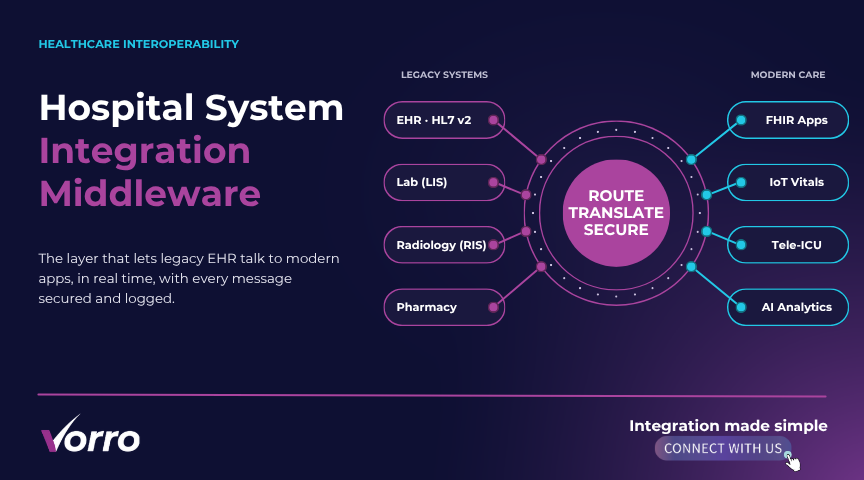
Most EHRs, lab systems, and imaging platforms speak different languages. Without a common dialect, you end up with islands of information. I’ve spent months translating HL7 v2 messages into FHIR bundles just to get a single patient view.
Latency and performance constraints
Even a 500 millisecond lag can turn a timely alert into a missed opportunity. You need infrastructure that guarantees sub second delivery at peak loads-think thousands of events per second during flu season.
Regulatory & privacy compliance
HIPAA and GDPR don’t take a break for real time pipelines. Encryption in transit, tokenization at rest, and audit trails are mandatory, not optional.
Scaling and infrastructure costs
Streaming platforms can look pricey, especially when you factor in redundancy and disaster recovery. Yet many organizations underestimate the hidden cost of data loss or delayed care.
FHIR and HL7 Standards Powering Real-Time Exchange
Standards are the backbone of any real-time healthcare data integration effort. Let’s unpack the two heavyweights.
Overview of FHIR resources for streaming
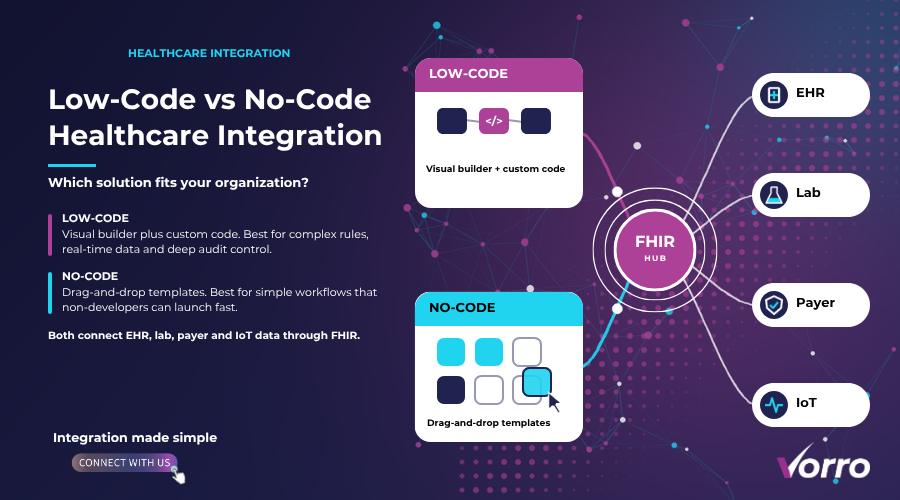
FHIR defines resources like Observation and Encounter that can be pushed via web sockets or HTTPS subscriptions. In practice, you publish a JSON payload the moment a vital sign registers, and downstream apps subscribe to that endpoint.
HL7 v2 v3 vs FHIR in real-time scenarios
Legacy HL7 v2 messages are still the workhorse in many labs. They’re lightweight but lack a native streaming model. FHIR, on the other hand, embraces RESTful patterns and has a built in subscription mechanism. When you need to bridge the gap, an HL7 to FHIR transformer does the heavy lifting.
Implementation tips and common pitfalls
Don’t try to convert every message on the fly-pick a core set of high value resources and map them first. Watch out for version mismatches; a mismatched Observation.status field can cause downstream validation failures.
Real-Time Healthcare ETL Architecture
Think of a real time data pipeline as a three track race: ingest, transform, and load. Each track needs its own guardrails.
Ingestion layer
Here you pull data from APIs, message queues, or healthcare data streaming services. Kafka topics, AWS Kinesis streams, and Azure Event Hubs are the de facto choices for high throughput intake.
Transformation layer
This is where real-time healthcare ETL happens. Change Data Capture (CDC) monitors source databases for inserts or updates, while a schema mapping engine aligns HL7 fields to FHIR resources. Enrichment steps-like adding patient consent flags-keep compliance baked in.
Load layer
After transformation, data lands in a purpose built store: a fast operational data store for bedside apps, a data lake for research, or an analytics warehouse for population health.
Monitoring, error handling, and data quality
A real time pipeline must self heal. Set up dead letter queues for malformed messages, and use dashboards to watch latency (target < 200 ms) and error rates (< 0.1%). Data quality rules-duplicate detection, field validation-prevent garbage from propagating.
Tools for Real-Time Patient Data Analytics
Once the pipeline is humming, you need engines to turn the flow into insight.
Streaming platforms
Apache Kafka, AWS Kinesis, and Azure Event Hubs dominate the landscape. Kafka’s exactly once semantics make it a favorite for real-time data pipeline reliability; Kinesis shines when you’re fully locked into AWS.
Real-time analytics engines
Spark Structured Streaming and Apache Flink let you run windowed aggregations, anomaly detection, and predictive models on the fly. I’ve used Flink to flag abnormal heart rate trends within 30 seconds of detection.
Visualization & alerting
Power BI and Grafana can subscribe to streaming topics and render dashboards with sub second refresh rates. Custom web dashboards, built on React, let clinicians click through a patient’s live data trail.
Case Study: Real-Time Integration in Practice
Here’s a snapshot of a regional hospital network that went all in on real-time healthcare data integration.
Hospital network consolidating EHR, labs, and IoT devices
The system tied together Epic’s FHIR server, a legacy lab interface (HL7 v2), and hundreds of bedside IoT monitors. Each device published vitals to an MQTT broker, which fed a Kafka topic.
Architecture diagram and tech stack
At ingestion, MQTT and HL7 messages entered Kafka via Connectors. CDC from the EHR database ran in Debezium, feeding change events into the same stream. A Flink job performed HL7 to FHIR conversion, added consent metadata, and wrote to a Snowflake warehouse for analytics while also updating an Elasticsearch index for fast UI lookup.
Measured outcomes: reduced LOS, faster sepsis detection
Within six months, average length of stay dropped by 0.8 days-a 12% improvement. The sepsis alert engine, running on Flink, cut detection time from 3 hours to under 10 minutes, saving an estimated 15 lives per year.
Data Governance and Auditing for Streaming
Streaming changes the audit game. Traditional batch logs don’t capture the instant nature of a patient’s heart rate spike.
- Data lineage: Tag each event with a UUID, source system, and transformation version. Tools like OpenLineage help you trace a data point from sensor to dashboard.
- Consent management: Embed consent flags in the FHIR resource’s
meta.securityelement. Reject any stream that lacks a valid token. - Audit trails: Store immutable logs in a tamper evident object store (e.g., AWS S3 with Object Lock). Regulators love a clear, time stamped trail.
Future Trends in Real-Time Integration
The horizon is buzzing with possibilities. Edge processing on wearable devices will push preliminary analytics right to the sensor, trimming latency to milliseconds. AI driven alerts, trained on streaming data, will predict deterioration before the vitals even cross a threshold.
And don’t forget emerging standards like SMART on FHIR and FHIR Bulk Data, which promise smoother bulk exports without sacrificing real time freshness. The next wave will blend IoT, AI, and streaming into a seamless care fabric.
FAQs
How does real-time differ from batch integration?
Batch pulls data at set intervals-often nightly-while real time pushes each change the moment it happens. The result? Faster alerts, up to the minute dashboards, and reduced data staleness.
Is FHIR mandatory for real-time streams?
No, but it’s the most flexible choice. You can still stream HL7 v2 messages, but you’ll need a conversion layer to reap the benefits of modern APIs and subscription patterns.
What security measures protect live patient data?
Encrypt data in transit with TLS, use token based authentication (OAuth 2.0), and apply field level encryption for PHI. Continuous audit logs are a must.
How to estimate cost and ROI?
Start with baseline metrics: current alert latency, LOS, and readmission rates. Then model the cost of streaming infrastructure (e.g., $0.10 per GB for Kinesis) against expected savings-often a 10 15% reduction in adverse events translates to millions saved.
Can legacy systems participate?
Absolutely. HL7 integration services like Mirth Connect or Rhapsody can act as bridges, translating v2 messages into FHIR or feeding them directly into Kafka.
Real time healthcare data integration isn’t a nice to have; it’s becoming the baseline for safe, efficient, and patient centric care. By mastering standards, building a resilient real-time data pipeline, and tightening governance, you’ll unlock faster decisions, lower costs, and better outcomes. The future is already streaming-don’t let your organization lag behind.