Introduction
If you’re juggling appointments, coding, and chase?down calls for unpaid claims, you already know the pain points of a disjointed revenue cycle. Revenue cycle management integration can turn that chaos into a smooth, data?driven flow. In this article I’ll walk you through why integration matters, the systems that need to talk to each other, common data roadblocks, and how to pick a solution that actually delivers ROI.
Why RCM Integration Matters
Financial impact
Did you know that organizations that connect their EHR to billing see up to a 12% drop in claim denials? That’s not magic – it’s clean data moving faster. When eligibility checks happen in real time, you’re not sending bogus claims to payers, and the cash?flow cycle shortens by an average of 7 days.
And the bottom line improves dramatically. A mid?size hospital that completed a full revenue cycle integration reported a $3.4?million uplift in net collections within the first twelve months. That’s the kind of impact executives love to see on their quarterly decks.
Operational efficiency
Think about the time your staff spends re?entering patient info from the front desk into the billing console. It’s wasted effort and a breeding ground for errors. Integration cuts that duplication in half, freeing up clerks to focus on patient engagement instead of data entry.
Now imagine a scheduler who can see real?time reimbursement estimates while booking. That simple switch can boost productivity by 15% and reduce the average registration time from 12 minutes to under 6. You’ll feel the difference on the floor instantly.
Systems Across the Revenue Cycle
Front?end
The front?end starts the journey: scheduling, eligibility verification, and patient intake. When the scheduling engine talks directly to the payer eligibility service, you avoid the infamous “insurance mismatch” error that stalls appointments.
Key point: An integrated front?end can flag high?risk accounts before they ever hit the claims desk.
Mid?cycle
Mid?cycle is where the rubber meets the road – claim creation, coding, and submission. A seamless claims workflow integration pulls procedure codes straight from the clinical documentation system, applies the latest payer edits, and shoots the claim out in seconds.
Hospitals that adopted this approach cut their claim turnaround time from 4.2 days to 2.1 days, slashing the window where denials can creep in.
Back?end
Back?end processes include payment posting, patient balance reconciliation, and financial reporting. When the billing platform auto?matches remittances to posted charges, you eliminate manual reconciliation headaches.
And because the data is already normalized, generating month?end reports becomes a click?away task rather than a week?long spreadsheet marathon.
Where Data Breaks Down
Duplicate entry points
Most organizations still have separate forms for registration, insurance verification, and billing. That creates at least three chances to mistype a patient ID. The result? orphaned claims that sit in limbo.
Eliminating duplicate entry points is the first step toward a clean, auditable data stream.
Inconsistent coding standards
Some teams use ICD?10, others still cling to legacy CPT mappings. When codes don’t line up, payers reject the claim outright. A unified coding engine, governed by a single master file, wipes out that inconsistency.
It’s a small change that saves thousands in avoidable denial fees.
Lag between EHR and billing platforms
Even a 30?minute lag can cause a cascade of problems. The billing system may submit a claim before a lab result updates the diagnosis, triggering a denial for “missing information.”
Real?time APIs close that gap, ensuring every data point is current at the moment of submission.
What to Look for in a Solution
Interoperability standards
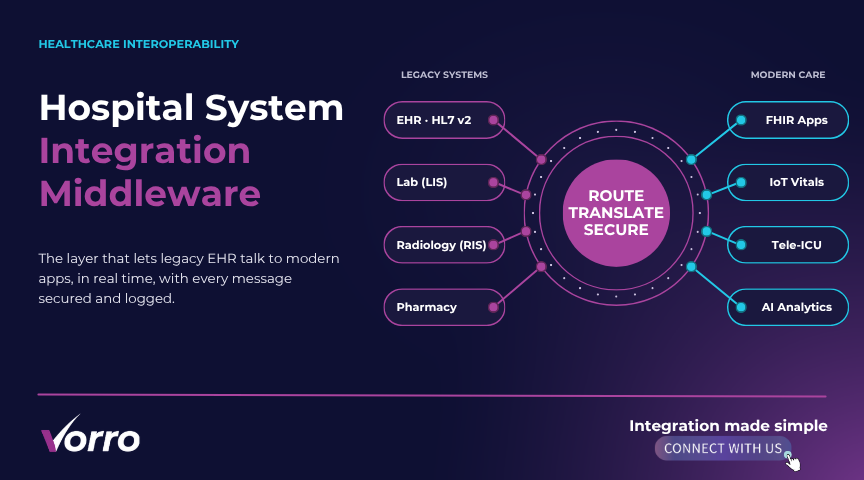
Look for tools that speak HL7, FHIR, and modern RESTful APIs. Those standards are the glue that lets your EHR, practice management, and payer portals dance together without tripping.
When a vendor markets RCM interoperability as a core feature, you can expect out?of?the?box connectors for the major EMR vendors.
Security & compliance
HIPAA isn’t optional – it’s the floor. A solid solution will encrypt data in transit and at rest, keep immutable audit trails, and support role?based access controls.
Ask for documentation on how often the platform undergoes third?party penetration testing. That’s the only way to be sure your patients’ PHI stays locked down.
Scalability & cloud readiness
Whether you’re a 20?bed clinic or a 500?bed health system, the platform needs to grow with you. Cloud?native architectures let you add users, locations, and new payer connections without a hardware overhaul.
And don’t forget disaster recovery – a multi?region failover can keep your revenue cycle humming even if a data center goes dark.
Vendor support & implementation services
Integration projects rarely succeed on a “set?and?forget” basis. You’ll want a partner that offers dedicated project managers, on?site training, and post?go?live support.
Check references for how quickly the vendor resolves tickets – a 48?hour response time is a good benchmark.
Measuring ROI
Most competitors gloss over ROI, but you can’t justify spend without hard numbers. Track key performance indicators like denial rate, days in A/R, and cost per claim before and after go?live.
Set a baseline, then measure the delta at 30, 90, and 180 days. If you see a 10% reduction in denial cost and a 6?day improvement in cash collection, you’ve hit the sweet spot.
ROI Measurement Framework
Here’s a practical framework you can apply tomorrow:
- Baseline audit: Capture current metrics – average denial rate, A/R days, staffing hours per claim.
- Goal setting: Aim for a 5?10% reduction in denials and a 7?day cut in cash?cycle time.
- Post?integration monitoring: Use a dashboard that pulls data from the integrated system in real time.
- Cost?benefit analysis: Compare the total cost of ownership (license, implementation, training) against the realized financial uplift.
When a regional health network applied this model, they uncovered a $2.1?million net gain in just eight months – a clear proof point for any CFO.
Change Management and Training Plan
Technology is only half the battle; people determine success. A structured change?management plan keeps staff on board and reduces resistance.
Start with a kickoff workshop that explains billing system integration benefits in plain language – no jargon, just “you’ll spend less time correcting errors.” Then roll out role?specific training modules, followed by a “super?user” pilot group.
Finally, schedule weekly check?ins for the first 60 days. Celebrate quick wins – like a claim posted in under two minutes – and adjust the rollout based on real?world feedback.
Real World Case Study
Mid?size hospital, Midwest – 250 beds, 30?day average claim turnaround. The leadership team invested in a cloud?based RCM integration platform that linked their Epic EHR to a modern billing engine.
Key outcomes after six months:
- Denial rate dropped from 13% to 7% (a 46% improvement).
- Days in accounts receivable fell from 46 to 31.
- Staff time spent on manual data entry decreased by 38%.
- Net revenue increase of $4.8?million, exceeding the projected ROI timeline by three months.
This story shows that the right mix of technology, metrics, and people can move the needle fast.
Key Takeaways
Revenue cycle management integration isn’t a buzzword – it’s a proven strategy to cut denials, accelerate cash flow, and free staff for higher?value work. Focus on interoperability standards, security, and scalability, but also build a solid ROI framework and change?management plan. When you align technology with clear metrics and real?world training, the financial and operational gains become undeniable.
Frequently Asked Questions
What is the typical timeline for an RCM?EHR integration?
Most projects finish in 4?6 months, assuming a clear scope and dedicated resources. Complex multi?site networks may stretch to nine months, but a phased rollout can keep disruption low.
How does integration affect claim denial rates?
By eliminating manual data entry and ensuring up?to?date coding, integration often reduces denial rates by 5?10%. The exact impact depends on baseline performance and payer mix.
Which security standards should be enforced?
Look for end?to?end encryption, role?based access, audit logging, and regular HIPAA?compliant penetration testing. FHIR?based APIs also support OAuth?2.0 for secure token exchange.
Can legacy billing systems be integrated?
Yes, most modern platforms offer middleware or API adapters that bridge old on?premise billing engines to newer cloud solutions. Still, evaluate the long?term cost of maintaining legacy ties.
What metrics prove ROI after integration?
Key metrics include denial rate, days in A/R, cost per claim, staff hours saved, and net revenue growth. Compare these against your pre?integration baseline to quantify success.