Introduction
If you’re staring at a dashboard full of FHIR errors and wondering whether the Redox alternative you’ve been hearing about can actually save you time, you’re not alone. Healthcare IT pros are hustling to stitch together EHRs, labs, and apps without breaking a sweat-or a budget. In this guide we’ll walk you through the why, what, and how of moving beyond Redox, complete with pricing snapshots, feature breakdowns, and a step by step migration roadmap.
What Redox Does Well
Redox built its reputation on a simple promise: get data from point A to point B without you writing a line of code. It offers a cloud native platform, out of the box HL7 v2/v3, FHIR, and a growing library of pre built connectors. That plug and play € vibe helped dozens of hospitals go live in weeks instead of months.
But even a solid platform can feel limiting when you need granular control, custom mapping, or a pricing model that scales with your transaction volume. That’s where the search for a Redox alternative typically begins.
Common Reasons Teams Look for an Alternative
- Escalating per message fees that outpace growth projections.
- Need for on premise deployment to meet strict data residency rules.
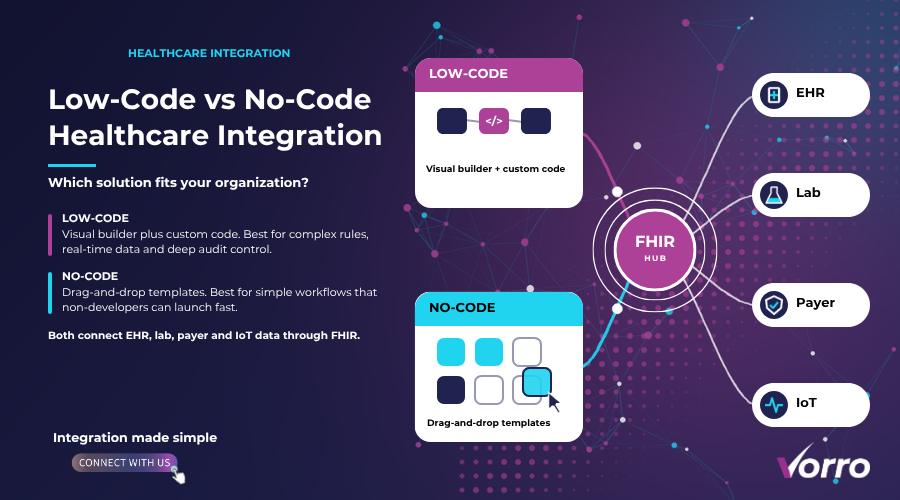
- Desire for deeper custom logic beyond the no code € interface.
- Vendor lock in concerns after years of reliance on a single API layer.
- Requests from compliance teams for more transparent audit trails.
And let’s be honest-if your integration stack feels like a black box, you’ll spend more time troubleshooting than delivering patient value.
What to Evaluate in a Redox Alternative
Integration capabilities
First, check the nuts and bolts: does the platform support native FHIR R4, HL7 v2.x, and modern RESTful APIs? Some vendors, like Iguana, let you write custom scripts in Lua, while others rely on visual mapping tools. The right mix of flexibility and out of the box support will dictate how fast you can launch new use cases.
Security and compliance
HIPAA isn’t optional, and if you operate in the EU, GDPR compliance is equally non negotiable. Look for built in audit logging, encrypted at rest storage, and certifications such as ISO 27001. A vendor that can hand you a compliance report on demand will keep your legal team sleeping soundly.
Pricing and licensing models
Redox’s usage based pricing works for low volume startups but can become a financial cliff for larger health systems. Alternatives often offer tiered subscriptions, per connector fees, or even perpetual licensing. Compare the total cost of ownership-not just the headline per message rate.
Scalability and performance
Can the engine handle spikes of 10,000 messages per minute during a mass vaccination drive? Does it guarantee 99.9% uptime? Look for documented benchmarks and real world case studies that prove the platform can scale without throttling.
Vendor support and community
When a mapping error throws a curveball, you’ll need fast, knowledgeable support. Some vendors run 24/7 NOC teams, while others rely on community forums. A vibrant developer community can also speed up custom connector creation.
Top Redox Alternatives Compared
Iguana
Iguana (by iNTERFACEWARE) markets itself as an integration engine for healthcare. € It supports HL7, FHIR, DICOM, and even proprietary JSON formats. Pricing starts at $3,500 per month for the cloud tier, with an on premise option that runs on a single VM for about $8,000 annually. The platform shines in custom scriptability-your team can drop Lua code right into the data flow.
Qvera Interface Engine
QIE is a heavyweight, on premise solution favored by large health networks. It offers built in support for over 130 standards, advanced message routing, and a visual mapping interface that rivals Redox’s ease of use. Licensing is a one time fee of $120,000 plus annual support, making it a solid long term investment for enterprises that need full control.
Corepoint Integration Engine
Corepoint sits in the sweet spot between cloud agility and on premise security. The platform provides a drag and drop builder, FHIR R4 support, and a marketplace of pre built connectors. Prices start at $4,200 per month, with volume discounts after 2 million messages.
ConnectPointz
ConnectPointz is a newer player focused on rapid deployment. Its integration as a service € model bundles connectors, monitoring, and compliance checks for a flat $2,500 monthly fee. While it doesn’t have deep custom scripting, its low cost makes it attractive for small clinics looking for an EHR integration alternative.
BlueConic
Originally a marketing data platform, BlueConic has pivoted into healthcare data integration with a focus on patient engagement APIs. It offers real time FHIR streaming and a flexible pricing model based on active users rather than messages. If your organization cares about consent driven data flows, take a look.
Others
Don’t overlook niche options like Simba (great for legacy HL7 v2 mapping), Linx (excellent API gateway features), and Apify (offers low code web scraping for ancillary data). They each bring something unique to the table, even if they lack the breadth of a full scale engine.
Comparison table
| Platform | Core Standards | Deployment | Pricing (starting) | Support |
|---|---|---|---|---|
| Iguana | HL7, FHIR, DICOM, JSON | Cloud / On premise | $3,500/mo | 24/7 NOC, community |
| Qvera Interface Engine | 130+ standards | On premise | $120,000 one time | Dedicated account manager |
| Corepoint | HL7, FHIR, CCD | Hybrid | $4,200/mo | Priority email & phone |
| ConnectPointz | FHIR, REST APIs | Cloud | $2,500/mo | Standard SLA |
| BlueConic | FHIR, custom APIs | Cloud | Based on users | Account level support |
How a Managed Platform Approach Compares
Benefits of managed services
Managed platforms take away the day to day ops: patching, scaling, and compliance reporting are all handled by the vendor. That frees your team to focus on building value added services-think patient portals or AI driven analytics-rather than firefighting infrastructure.
Trade offs vs. self hosted solutions
On the flip side, you surrender some control over data residency and custom runtime environments. If your organization has strict firewall policies, a fully managed cloud may not meet your security posture. The key is to weigh operational savings against the need for bespoke configurations.
Implementation roadmap for switching from Redox
Now that you’ve scoped the options, here’s a practical roadmap to migrate without causing downtime:
- Assess current flows. Export all Redox connectors, map message types (ADT, ORU, FHIR resources), and note volume spikes.
- Choose a target platform. Align the decision with the evaluation framework above-security, cost, scalability.
- Prototype core use cases. Build a sandbox environment, recreate 2 3 high priority integrations, and validate data fidelity.
- Run parallel pipelines. Keep Redox live while the new engine processes a duplicate stream. Compare logs side by side for any mismatches.
- Cutover and decommission. Once confidence reaches 99.5% parity, switch traffic, monitor for 48 hours, then retire Redox contracts.
And remember: communication with clinical teams is vital. A sudden change in message latency can ripple into bedside workflows.
Total Cost of Ownership analysis
Rather than looking at headline pricing, calculate the three year TCO for each contender. Below is a simplified snapshot based on a midsize health system processing 5 million messages per year.
| Platform | Year 1 | Year 2 | Year 3 | 3 Year Total |
|---|---|---|---|---|
| Redox | $250,000 | $260,000 | $272,000 | $782,000 |
| Iguana (cloud) | $180,000 | $190,000 | $200,000 | $570,000 |
| Qvera (on premise) | $140,000 (incl. hardware) | $30,000 (support) | $30,000 (support) | $200,000 |
| ConnectPointz | $120,000 | $125,000 | $130,000 | $375,000 |
These numbers underscore why many large systems gravitate toward an on premise engine after the initial investment-steady support fees beat per message inflation.
Future trends in healthcare API integration
Looking ahead, a few waves will reshape how integration teams operate:
- AI driven mapping. Machine learning models can auto generate transformation scripts from sample messages, cutting implementation time by up to 40%.
- Decentralized data exchange. Blockchain based consent registries will let patients authorize data flows without each provider maintaining a separate ledger.
- Event first architecture. Pub/sub platforms like MQTT are creeping into clinical telemetry, demanding real time validation layers.
Choosing a platform that already embraces these trends-or at least offers open APIs for future plug ins-will future proof your integration strategy.
Conclusion
There’s no one size fits all answer when you search for a Redox alternative. € Your decision should hinge on how heavily you weigh cost, control, and compliance. Iguana and Corepoint give you cloud flexibility with deep scripting. Qvera offers rock solid on premise control for massive enterprises. ConnectPointz shines for clinics chasing a low cost, managed experience. Whichever path you take, follow the migration roadmap, run the TCO model, and keep an eye on emerging AI driven mapping tools. In the end, the right integration engine lets you deliver better patient care-without the integration nightmare.
FAQs
What is the biggest advantage of Redox over its competitors?
Redox’s biggest selling point is its extensive library of pre built connectors that let you go live in days rather than weeks. That speed to value can be a game changer for fast moving health tech startups.
How does pricing differ between Redox and alternatives?
Redox typically charges per message, which can climb quickly at high volumes. Alternatives like Qvera use a one time licensing fee plus support, while cloud only engines such as ConnectPointz offer flat monthly rates. Your TCO will depend on traffic patterns and the chosen licensing model.
Can I migrate existing HL7 integrations to a new platform?
Absolutely. Most modern engines support HL7 v2.x out of the box and include mapping tools to translate to FHIR or custom JSON. Follow the parallel run steps in the implementation roadmap to ensure data fidelity during the cutover.
Which alternative offers the best FHIR support?
Corepoint and Iguana both provide full FHIR R4 compliance, but Iguana’s scripting flexibility often makes it easier to handle complex resource extensions. If you need a pure play FHIR gateway, look for a platform that advertises R5 readiness.
Is a managed platform necessary for small teams?
Not always. Small teams can thrive on low cost cloud solutions like ConnectPointz, which handle scaling and compliance behind the scenes. However, if you have in house dev resources and strict data residency rules, a lightweight on premise engine might still make sense.