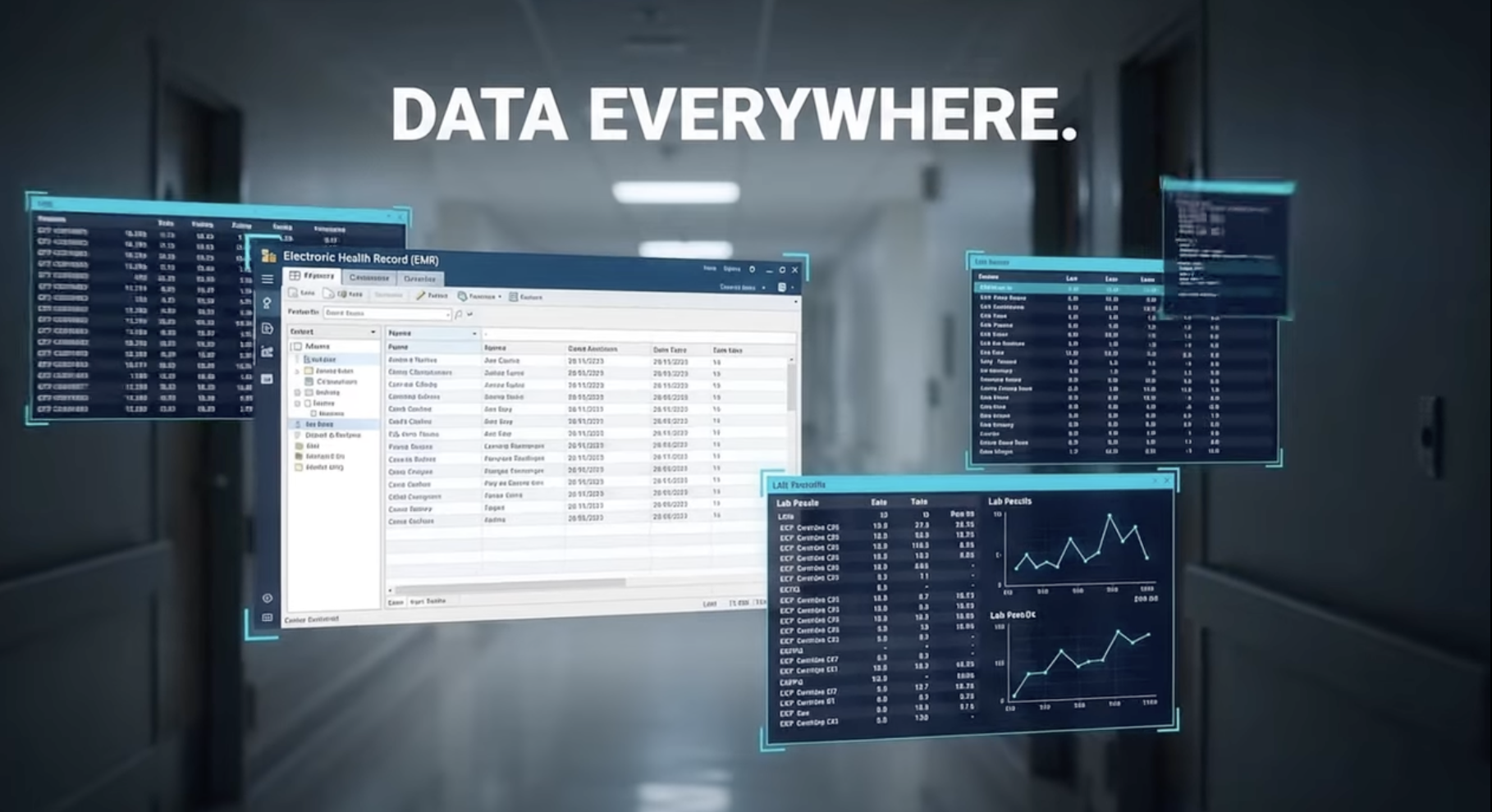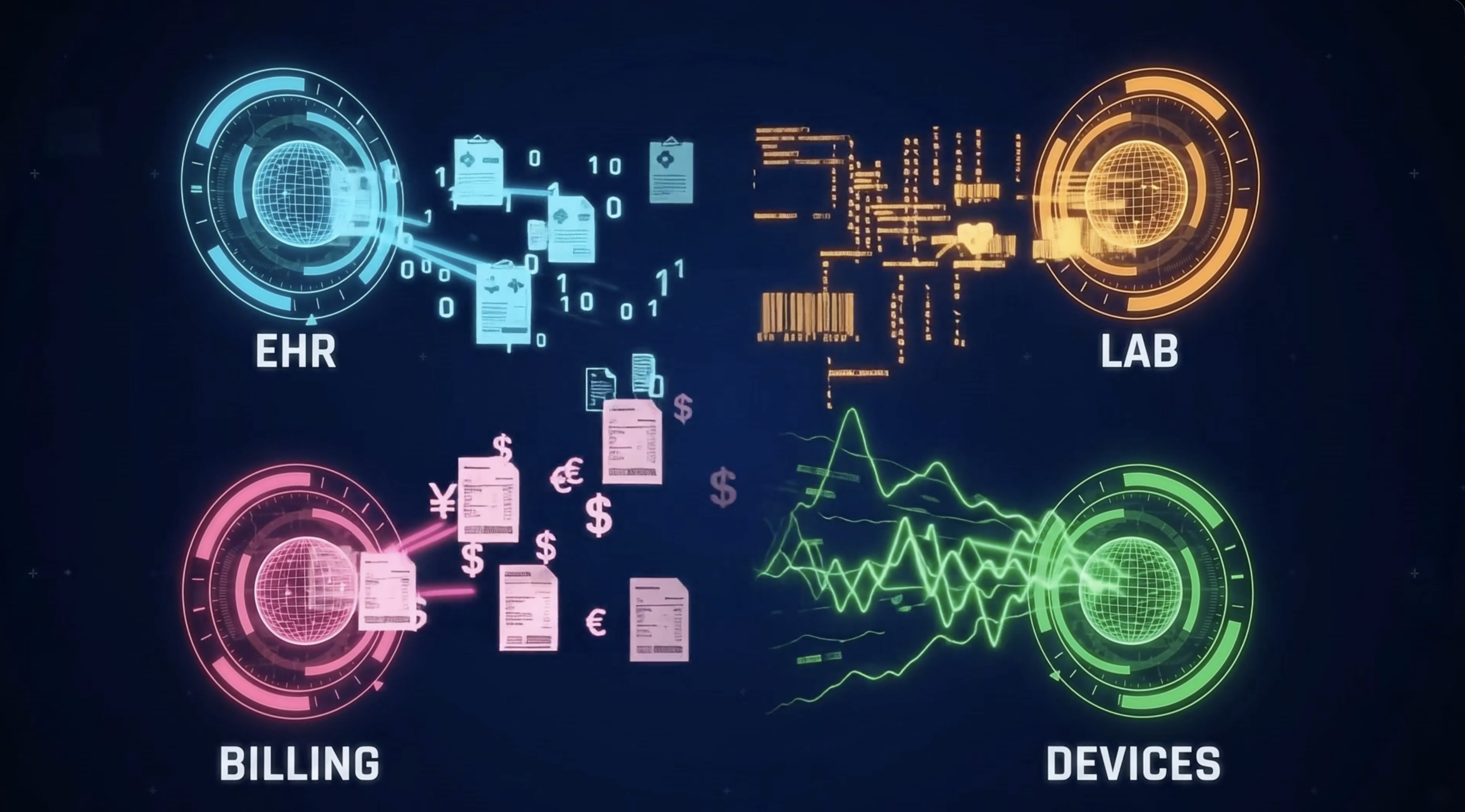
Electronic Health Records (EHR) are essentially digital footprints of your medical history. They help healthcare organizations keep track of critical statistics like your health, treatments, and test results, ensuring that you get optimum care. But, there’s a huge challenge. Different EHR systems used by hospitals and doctor’s offices don’t always “talk” to each other seamlessly, neither do they interact smoothly with healthcare organizations’ internal systems. This makes it hard for doctors in different places to quickly share important information about your health, which can slow down medical care across the board. Imagine trying to play a game with different controllers that don’t work together, and running out of battery at your own base station-it’s frustrating and can cause delays!
In this blog, we’re diving into how to fix such EHR interoperability issues and uncovering solutions that can make sharing healthcare data a breeze!
Understanding EHR Interoperability Issues?
EHR interoperability issues refer to the challenges that arise when different electronic health record systems cannot communicate with other systems effectively. This lack of seamless communication between healthcare providers, hospitals, clinics, and other stakeholders leads to fragmented patient data, inefficiencies, and delays in treatment.
As of the end of 2021, a substantial share of physicians worldwide, including 71 percent in the United States, agreed that the volume of patient data available to them was overwhelming.
Understanding EHR Interoperability Standards
To address EHR interoperability issues, understanding the established EHR interoperability standards is crucial. These standards ensure that EHR systems are capable of sharing and receiving patient information, regardless of the platform.
Key EHR interoperability standards include:
- HL7 (Health Level 7): This set of international standards for the transfer of clinical and administrative data in healthcare is foundational to improving interoperability. HL7’s Fast Healthcare Interoperability Resources (FHIR) framework offers a modern solution for data exchange.
- CCD (Continuity of Care Document): The CCD is a document standard that allows for the transfer of critical patient information between healthcare providers in a consistent format.
- FHIR (Fast Healthcare Interoperability Resources) is a global industry standard for exchanging health information between systems. It’s free and open, based on Internet standards, and uses APIs to represent and share EHRs.
Adhering to these standards is essential for resolving interoperability challenges and enabling seamless communication among healthcare systems.
EHR Interoperability Solutions: How to Fix the Issues?
To overcome EHR interoperability issues, healthcare organizations must adopt effective solutions that address both technological and process-related barriers. Here are a few solutions that can help:
Adopt Healthcare Integration Software
Integration software can bridge gaps between different EHR systems, improving communication and enabling real-time data exchange. A robust solution like Healthcare integration software ensures that different platforms work together smoothly and that data is shared across systems without data loss or inconsistency. To this end, deploying a middleware solution helps mitigate the challenges of inconsistent data formats, while adhering to global and regional compliance and standards. Needless to say, a middleware-based integration solutions also ensures patient data security, and unlocks opportunities for healthcare organizations to derive valuable insights from the data.
Implement Data Standardization
Standardizing data formats and ensuring adherence to EHR interoperability standards is a critical step in fixing interoperability issues. By adopting universal formats, such as FHIR, healthcare organizations can ensure that EHR systems, regardless of the vendor, can communicate effectively with each other.
Use Cloud-Based Solutions
Cloud technology provides a flexible and scalable platform for storing and sharing patient data across different systems. Cloud-based EHR solutions can help eliminate data silos and improve data exchange between healthcare providers. According to a 2023 report, 70% of healthcare organizations are expected to adopt cloud-based platforms by 2026, to improve interoperability.
Improve Interoperability Policies
Governments and regulatory bodies play an important role in improving EHR interoperability. The 21st Century Cures Act, passed in 2016, mandates the promotion of EHR interoperability and prohibits information blocking, ensuring that healthcare organizations make data available to patients and other providers. Strengthening these policies is essential for addressing the root causes of EHR interoperability issues.
Conclusion
Fixing EHR interoperability issues requires a multi-faceted approach, involving technological solutions, process improvements, and policy reforms. By adopting healthcare integration software, standardizing data formats, and working collaboratively with EHR vendors, healthcare organizations can improve the flow of patient information, leading to better care and more efficient healthcare delivery.
If you’re interested in learning more about how healthcare integration software can streamline EHR interoperability in your organization, check out our previous blog on EHR integration best practices.
By taking the necessary steps to improve EHR interoperability, we can move closer to a healthcare system that is truly connected, efficient, and patient-centric.