With the increasing adoption of digital transformation by businesses, smooth data flow between systems is a critical need. Cloud integration platforms and iPaaS have become essential technologies to simplify this process, especially in sectors such as healthcare, where data privacy and instant access to data are non-negotiable.
What does Cloud Integration entail?
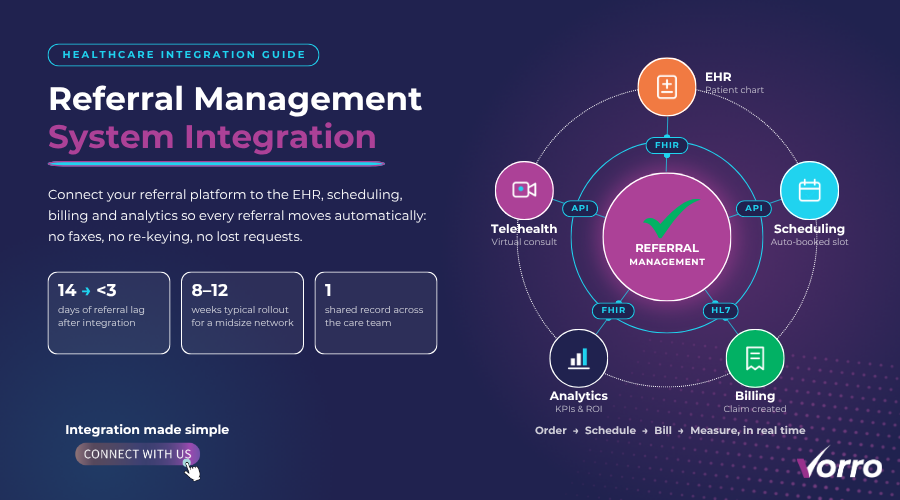
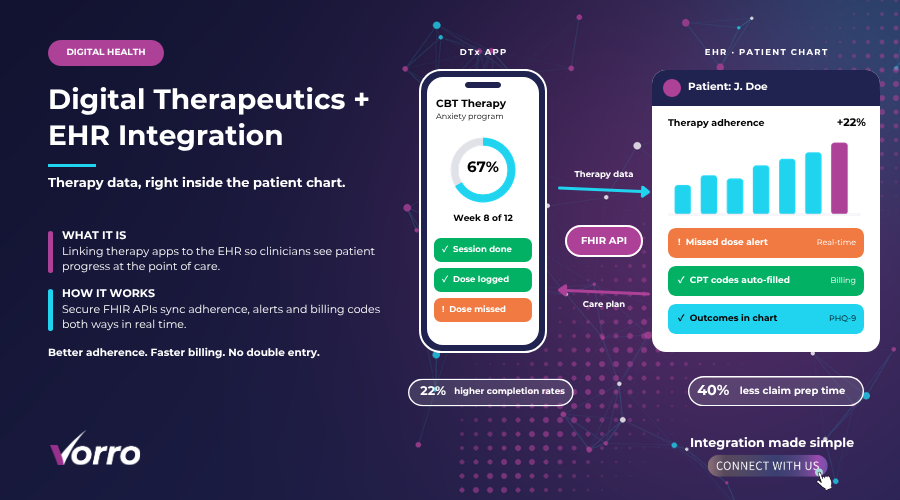
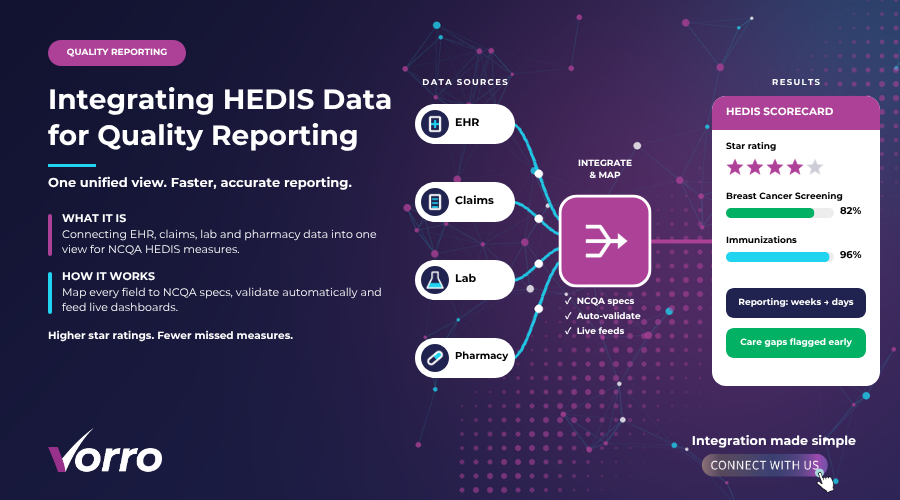
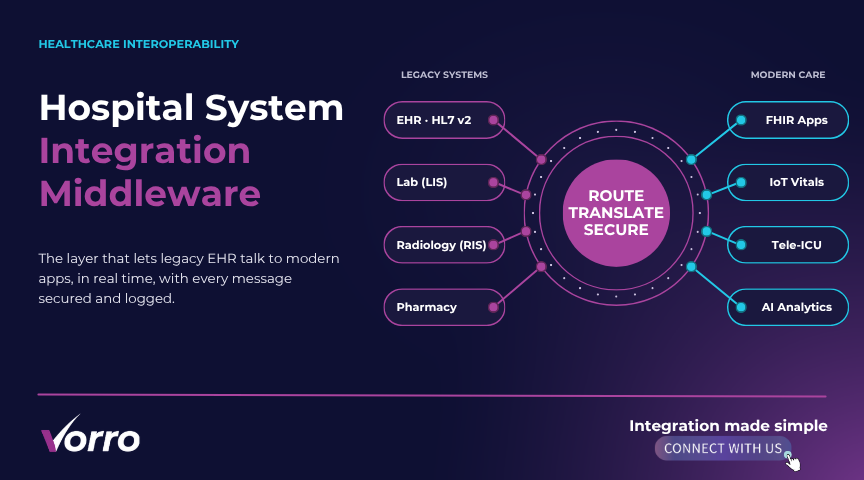
Connecting different systems, data, and services through cloud integration is necessary to create a single, unified cloud-based platform. It enables numerous programs to interact, collaborate, and share information autonomously. In the healthcare sector, for instance, this usually involves enabling instant connectivity between lab databases, billing software, and Electronic Health Records (EHR) systems.
What is iPaaS?
Cloud integration is simplified by iPaaS, or Integration Platform as a Service. A cloud-based solution called iPaaS makes it easier to automate and combine apps and services across various environments. It provides development tools, ready-made connectors, and a unified platform for on-premises and cloud system integration. IN other words, iPaaS can seamlessly integrate with your public cloud, private cloud or an on-premise server ecosystem
Healthcare providers can seamlessly connect all their disparate systems with Vorro’s iPaaS solutions, ensuring secure and immediate data sharing. Discover more about Vorro’s iPaaS designed specifically for the healthcare industry, improving both clinical and operational efficiency.
The Role of iPaaS in Healthcare
Instantaneous data access is critical for healthcare facilities, wherein iPaaS is highly advantageous. 87% of healthcare providers are currently using cloud technologies, with 60% using cloud platforms for data integration, according to a 2024 survey. Healthcare organizations anticipate a rise in demand for these solutions as a means of leveraging networked technologies to improve patient care and operational efficiency.
Key Benefits of iPaaS Integration for Healthcare:
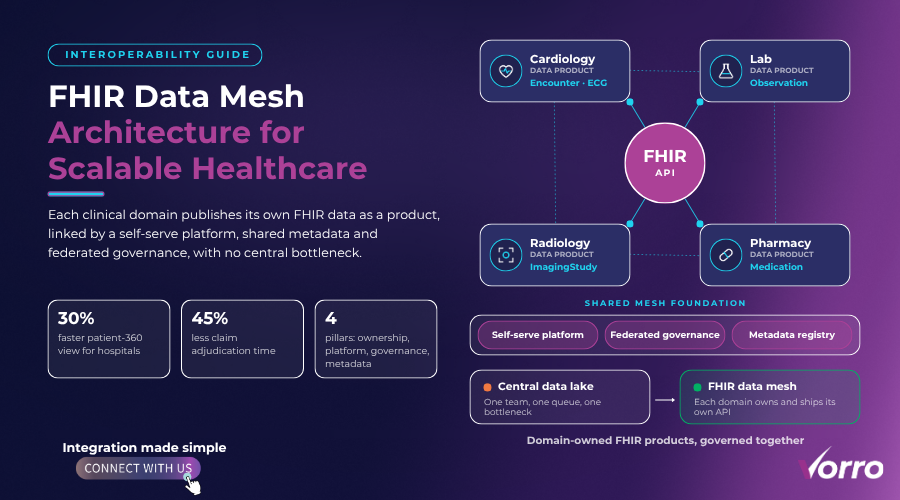
- Improved compatibility: iPaaS enables efficient communication between various systems. For example, iPaaS can seamlessly integrate patient records, laboratory results, and medical imaging systems to decrease errors and enhance patient outcomes.
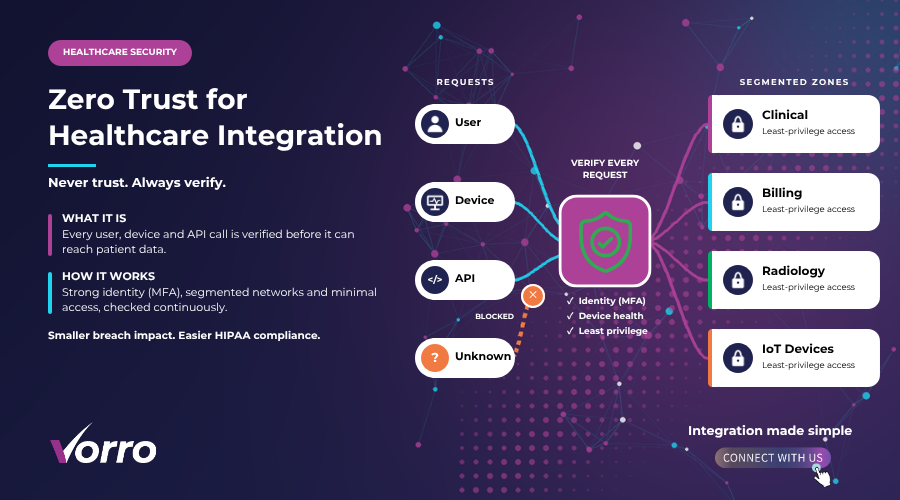
- Data Security: Healthcare data in the U.S. is subject to strict regulations like HIPAA. iPaaS ensures secure data transfer with encryption, role-based access, and compliance updates.
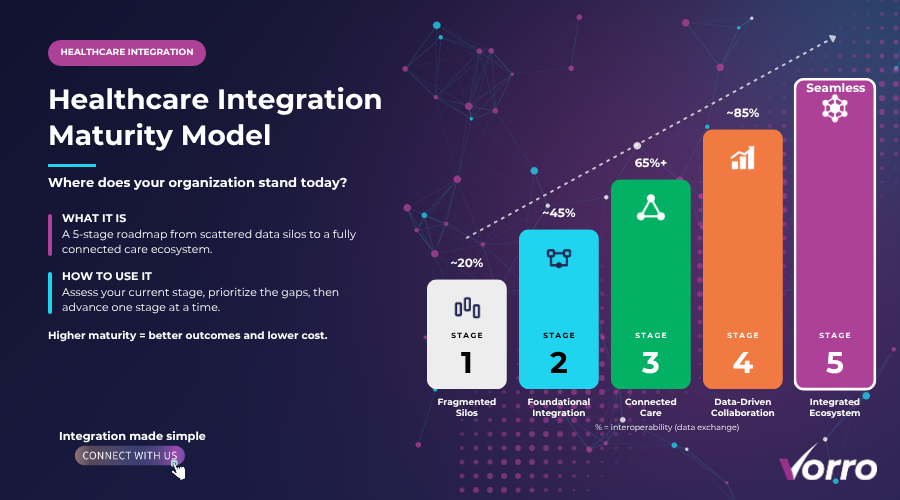
- Scalability is essential for healthcare organizations as they expand, requiring iPaaS to handle increased data and integrations effectively while maintaining performance and security.
- Real-Time Data: iPaaS enables the swift sharing of data between systems, enhancing the speed of clinicians’ access to vital patient data.
Why Cloud Integration and iPaaS Matter
Both cloud integration platforms and iPaaS play a crucial role in enhancing operational efficiencies. As healthcare organizations increasingly utilize these solutions, they are experiencing:
- Quicker Execution: Conventional integrations typically demand a significant amount of time and effort for establishment. Using iPaaS allows healthcare companies to implement integrations at a quicker rate and with greater efficiency.
- Cost Optimization: Through the automation of manual tasks and improved data sharing, iPaaS lowers labor expenses and decreases data entry mistakes.
- Enhanced patient results: Instant access to data allows healthcare workers to make quicker, more informed choices, enhancing the quality of patient care.
iPaaS Integration: A Game Changer in Healthcare
The use of iPaaS integration is increasingly common in the healthcare industry owing to its ability to streamline tasks and improve patient care. Healthcare providers are turning more to iPaaS for their integration needs as the global healthcare cloud computing market is projected to reach $71.2 billion by 2024.
Vorro’s iPaaS platform is a top choice for healthcare organizations looking to simplify their data exchange processes. See how Vorro assisted a top EMR provider in achieving smooth integration through iPaaS technology.
Conclusion
Cloud integration and iPaaS integration are game-changing technologies in the healthcare sector. In fact, iPaaS takes the power of data integration to the next level. Modern healthcare providers find them essential tools due to their streamlined data sharing, improved security, and scalability. As healthcare evolves, iPaaS will be crucial in helping healthcare organizations efficiently and securely meet the needs of patients. For more insights, visit Vorro’s blog and explore their EiPaaS Healthcare solutions.